Session: Neonatal Hematology & Transfusion Medicine 2
170 - The Use of Intravenous Ferric Carboxymaltose for Iron Replacement in Infants with Intestinal Failure in the Neonatal Intensive Care Unit – A Case Series
Saturday, April 25, 2026
3:30pm - 5:45pm ET
Publication Number: 2164.170
Megan N. Murphy, Baylor College of Medicine, Houston, TX, United States; Kiely Fagundes, Baylor College of Medicine, Houston, TX, United States; Cynthia Toy, Texas Children's Hospital, Houston, TX, United States; Tanishq Chhabra, Hamdard Institute of Medical Sciences and Research, Gurgaon, Haryana, India; Amy B. Hair, Baylor College of Medicine, Houston, TX, United States; Jacquelyn Powers, Baylor College of Medicine, Houston, TX, United States; Muralidhar H. Premkumar, Baylor College of Medicine, Houston, TX, United States
Pediatric Resident Baylor College of Medicine Houston, Texas, United States
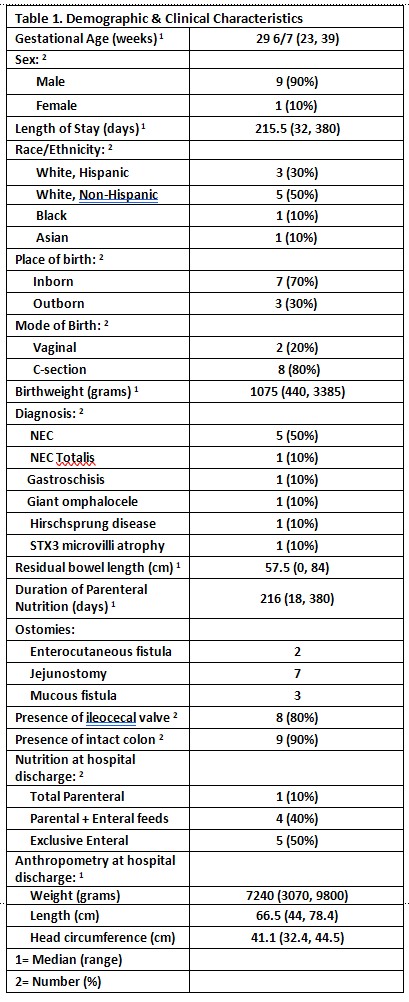
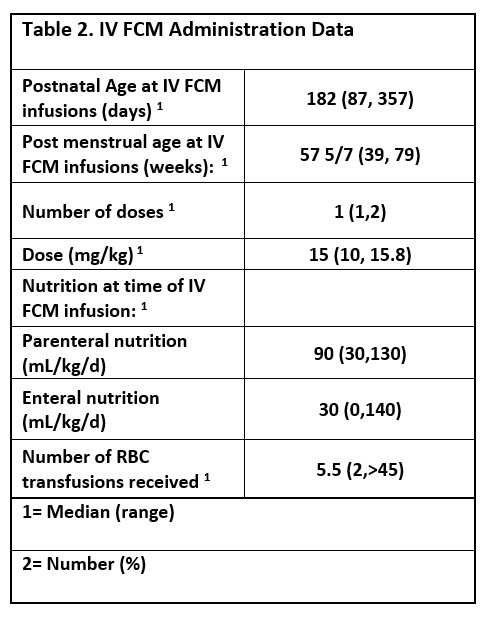
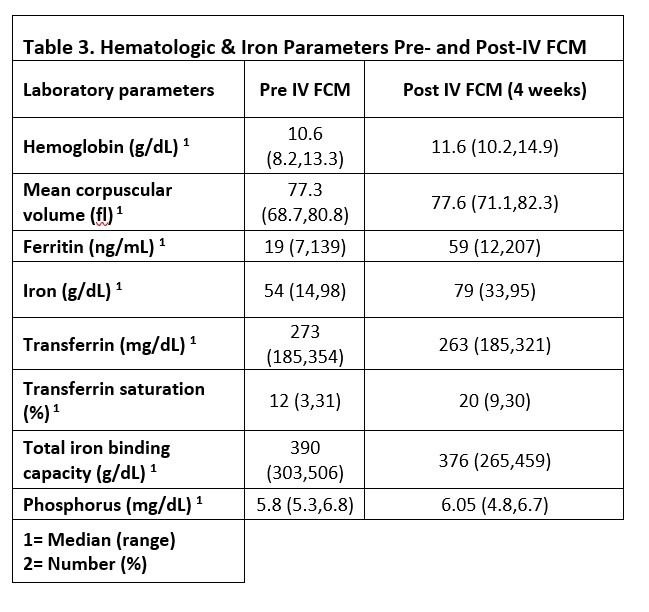
Background: Infants with intestinal failure (IF) have multiple risk factors for the development of iron deficiency (ID) yet many are unable to tolerate oral iron supplementation and require intravenous (IV) iron. Use of intravenous ferric carboxymaltose (IV FCM) has been described in children and adults but use in young infants has not been described in the literature. Objective: This project aims to determine the safety and efficacy of IV FCM in infants with IF. Design/Methods: A retrospective chart review was performed on infants admitted to a tertiary care neonatal intensive care unit (NICU) with a diagnosis of IF and ID (ferritin < 50 ng/mL and who received IV FCM between August 2018 and June 2025. During each admission, a multidisciplinary neonatal intestinal rehabilitation team followed these infants and management of ID was per institutional Hematology protocols. Patient demographics, clinical characteristics, pharmacological data, adverse reactions, and growth parameters were collected. Results: Ten infants were included with a median birth weight of 1075 g (IQR: 440, 3385) and median gestational age of 29 6/7 weeks (IQR: 23, 39). Necrotizing enterocolitis was the most common etiology of IF (60%) with a median residual bowel length of 57.5 cm (IQR: 0, 84). Majority of infants (90%) had intact colon and eight (80%) had retained the ileocecal valve. The median age and postmenstrual age (PMA) at receipt of IV FCM were 182 days (IQR: 87, 357) and 57 5/7 weeks PMA (IQR: 39, 79), respectively. Infants received one IV FCM infusion (IQR: 1, 2) with a median dose of IV FCM of 15 mg/kg/d (IQR: 10, 15.8). The median volume of parenteral and enteral nutrition was 90 ml/kg/day (IQR: 30, 130) and 30 ml/kg/day (IQR: 0, 140) respectively at the time of infusion. The median hemoglobin pre- and four weeks post-IV FCM infusions were 10.6 (IQR: 8.2, 13.3) and 11.6 (IQR: 10.2, 14.9); while serum ferritin at similar time points were 19 (IQR: 7, 139) and 59 (IQR: 12, 207) respectively. No short-term adverse events were observed including hypersensitivity reactions, darkening of skin at infusion site or severe hypophosphatemia. The subjects received parenteral nutrition for a median of 216 days (IQR: 18, 380). All subjects survived to discharge; five were enterally autonomous, four were receiving both parental and enteral nutrition, while one was entirely dependent on parenteral nutrition.
Conclusion(s): In these ten infants with IF, IV FCM was well tolerated, and no short-term adverse reactions were observed. The infants had appropriate hematologic responses and normalized ferritin values post-IV FCM.
Table 1. Demographics & Clinical Characteristics
Table 2. IV FCM Administration Data
Table 3. Hematologic & Iron Parameters Pre- and Post-IV FCM