331 - Caregiver Self-Efficacy and Quality of Life Following Pediatric Asthma Hospitalization
Saturday, April 25, 2026
3:30pm - 5:45pm ET
Publication Number: 2320.331
Monique Quinn, George Washington University School of Medicine and Health Sciences, Washington, DC, United States; Amy Law, Children's National Health System, Washington, DC, United States; Heather Gordish-Dressman, Children's National Health System, Washington, DC, United States; Janet A. Phoenix, George Washington University, Washington, DC, United States; Shilpa J.. Patel, Children's National Hospital, Bethesda, MD, United States; Stephen J. Teach, Robert Larner, M.D., College of Medicine at the University of Vermont, Burlington, VT, United States; Kavita Parikh, Children's National Health System, Washington DC, DC, United States
Assistant Professor George Washington University School of Medicine and Health Sciences Washington, District of Columbia, United States
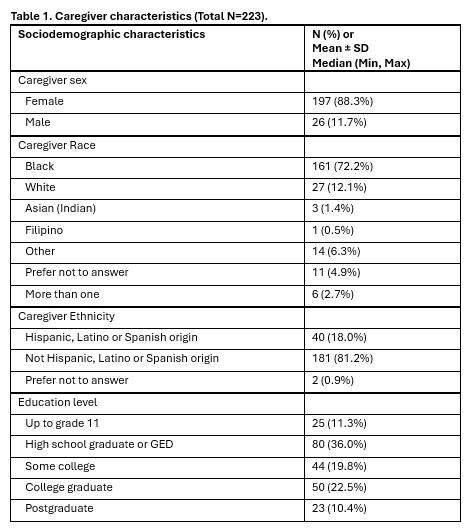
Background: Assessing caregiver asthma-specific self-efficacy and quality of life (QoL) following pediatric asthma hospitalization may reveal opportunities to support the hospital-to-home transition and improve asthma health outcomes. We hypothesized a positive association between increasing self-efficacy and QoL. Objective: To examine the relationship between asthma-specific caregiver self-efficacy and QOL following pediatric asthma hospitalization. Design/Methods: This study is a secondary cross-sectional analysis of baseline data collected for an ongoing prospective randomized control trial of an intervention that supports parents and children transitioning to home after hospitalization for asthma. Participants are caregivers and their 4-12 year old children hospitalized for an asthma exacerbation at either a large, urban children's hospital or a suburban community hospital. Sociodemographic characteristics of the cohort were obtained by caregiver report. Asthma severity was determined per the National Heart, Lung, and Blood Institute (NHLBI) guidelines. Caregiver self-efficacy was assessed through the Parent Asthma Management Self-Efficacy Scale (PAMSES). Caregiver QoL was assessed through the Pediatric Asthma Caregivers Quality of Life Questionnaire (PACQLQ). The relationship between caregiver self-efficacy and QoL was examined using a linear regression model adjusting for child's age, sex, and asthma severity, and for caregiver's education level. Regression models were performed separately to assess the relationship between PAMSES and overall PACQLQ score, as well as its domains of emotional function and activity. Results: 223 caregiver/patient dyads were included in the analysis. Caregivers were 88.3% female, 72.2% Black and 81.2% Non-Hispanic (Table 1). Patients were 8.04 years old (SD 2.59), 43.7% female, 71.8% Black, 79.8% Non-Hispanic, and 47.3% had severe persistent asthma (Table 2). Overall caregiver self-efficacy was positively associated with overall caregiver QoL (β = 4.672, p = 0.031). Caregiver self-efficacy was also associated with the PACQLQ emotional function domain score (β = 0.393, p = 0.014), but not the activity domain score (Table 3).
Conclusion(s): Increasing overall asthma-related caregiver self-efficacy and emotional domain scores were positively correlated with higher QoL. Future research is warranted to examine modifiable emotional factors (such as caregiver anxiety) and other determinants of self-efficacy that may influence caregiver QoL.










.png)
.png)
