699 - Neonatal-Perinatal Medicine Fellowship Recruitment and Signaling in a New Era: The Program Director Perspective
Saturday, April 25, 2026
3:30pm - 5:45pm ET
Publication Number: 2682.699
Erynn Bergner, University of Oklahoma College of Medicine, Oklahoma City, OK, United States; Cindy Crabtree, University of Louisville and Norton Children’s Hospital, Louisville, KY, United States; Morgan E. Hill, Cincinnati Children's Hospital Medical Center, Loveland, OH, United States; Jennifer M. Brady, Cincinnati Children's Hospital Medical Center, Cincinnati, OH, United States; Elizabeth A. Hillman, McGovern Medical School at the University of Texas Health Science Center at Houston, Houston, TX, United States; Christine Carlos, University of Chicago Division of the Biological Sciences The Pritzker School of Medicine, CHICAGO, IL, United States; Kristen Glass, Pennsylvania State University College of Medicine, Hershey, PA, United States; Brittany Schwarz, Johns Hopkins University School of Medicine, Baltimore, MD, United States; Megan M. Gray, University of Washington School of Medicine, Seattle, WA, United States
Associate Professor University of Oklahoma College of Medicine Oklahoma City, Oklahoma, United States
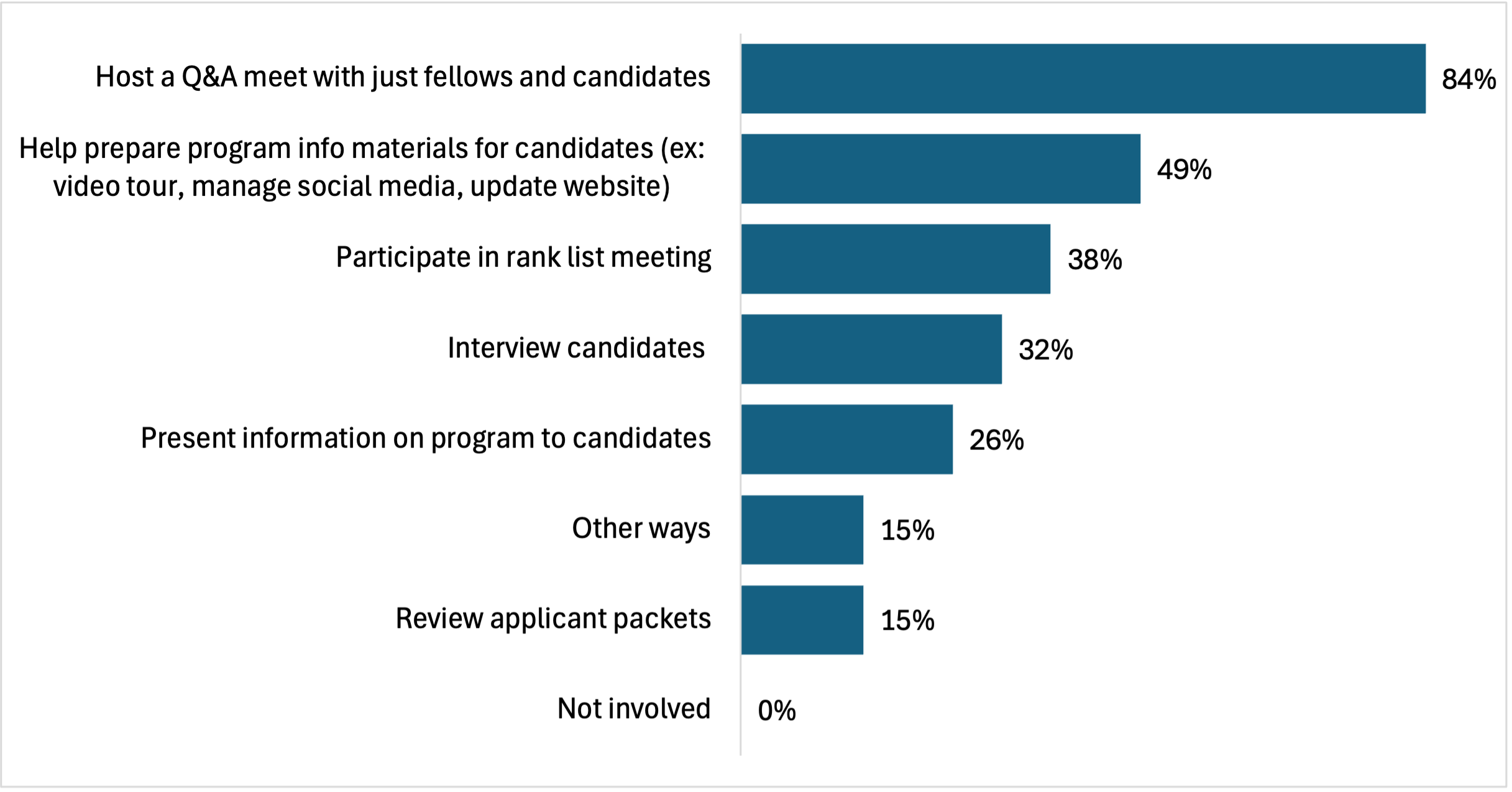
Background: Transitions to virtual interviews reduced candidate travel burden and inflated the number of programs to which they apply. Concurrently, the growth of Neonatal-Perinatal Medicine (NPM) positions in the MATCH outpaced the number of applicants, resulting in increased competition among programs. These shifts have altered recruitment strategies for both programs and applicants. Signaling within the Electronic Residency Application Service (ERAS) aims to improve alignment between applicants and programs. However, limited data exist on how signaling and interview practices in the virtual era impact NPM fellowship recruitment. Objective: To describe recruitment practices, signaling patterns, and program director perspectives on the utility and impact of signaling within NPM fellowship recruitment. Design/Methods: A national program data form was distributed via REDCap to NPM fellowship program directors through the Organization of Neonatal Training Program Directors in September 2025. Questions addressed applicant volume, signals, structure of interview day, and second-look opportunities. Descriptive statistics or Kruskal-Wallis were utilized where applicable. Results: Leadership from 93 of 107 (87%) NPM programs responded. Programs received a median (IQR) of 60 (42-89) applications, 5 (2-10) gold signals, and 9 (4-16) silver signals and offered 35 (25-40) interview positions, averaging 12 interviews per position. Programs in the higher quartiles of applications interviewed a lower percentage of their pool (p=0.0001) and received a higher percentage of gold (p=0.005) and silver (p=0.009) signals compared to programs who received fewer applications (Figure 1). Signals had more impact on interview than rank decisions. Feedback on adequacy of signal quantity varied (Figure 2). Interview days consisted of 4 (4-5) faculty interviews over a 4.5 (4-5) hour period. All programs involve fellows in recruitment, although approach differed (Figure 3). Under half of programs (48%) offered in-person second looks, 35% without and 13% with reimbursement.
Conclusion(s): Signaling appears to play a moderate role in NPM fellowship interview decisions although strategies are likely impacted by application volume and significant program variation exists. As applicant preference data are incorporated into ERAS, reengineered strategies such a second looks and diversified fellow involvement may aid programs in adapting to this new era. Further analysis is warranted to explore how applicant and signal volumes, program size, and geographic variation influence outcomes and inform optimal use of signaling in NPM fellowship recruitment.
Figure 1: Interviews and Signals by Program Application Quartile
Figure 2: Program Director Perspectives on Signaling Impact and Quantity









.jpg)
.png)