Medical Student Duke-NUS Medical School Singapore, Singapore
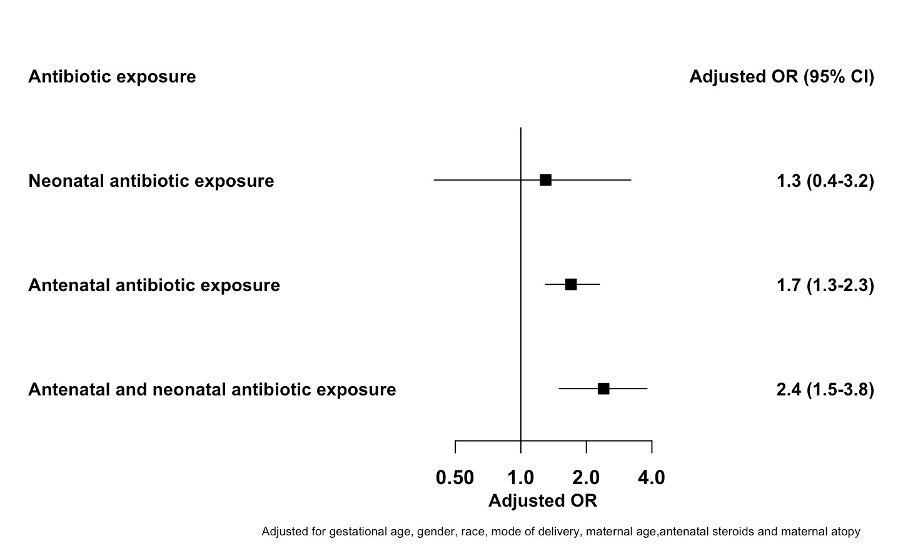
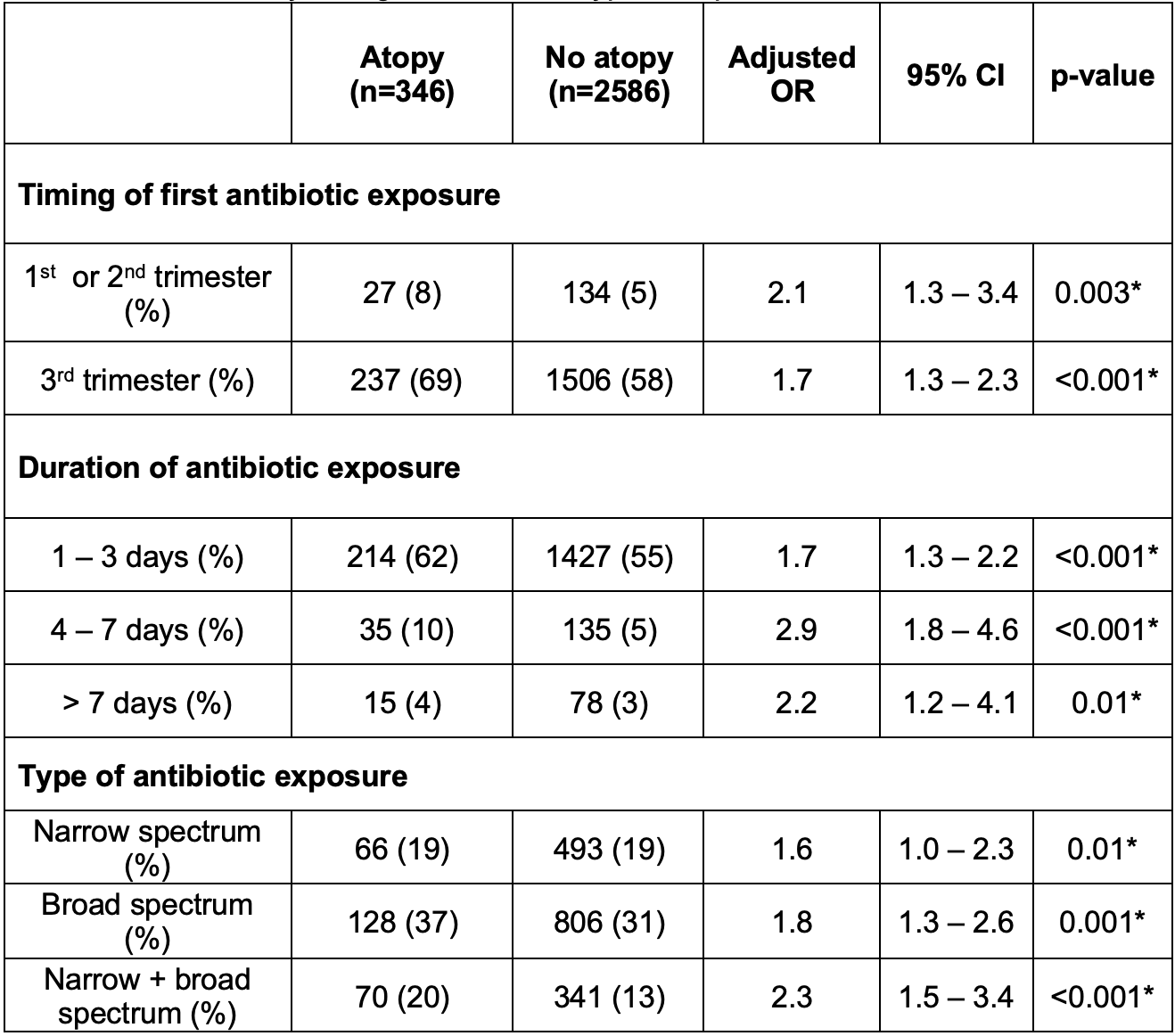
Background: Disruption of early gut microbial colonisation has been linked with disease development, with antibiotic exposure being a major contributing factor. While antibiotics remain indispensable in antenatal and neonatal care, their long-term effects on immune development and conditions such as atopy are not fully understood. Objective: To determine the association between antenatal and neonatal antibiotic exposure and the development of atopic conditions up to 6 years of age among premature neonates, and to examine the impact of timing, duration and type of antibiotic usage on atopy risk. Design/Methods: Single center retrospective cohort study of premature neonates ( < 37 weeks gestation) admitted between January 2017 to August 2019. Antibiotic exposure was defined as antibiotic use during pregnancy and within 28 days of life. Atopic outcomes (asthma, allergic rhinitis and atopic dermatitis) were identified using International Classification of Diseases, 10th Revision diagnostic codes during any admission and outpatient visits up to 6 years of age. Associations between antibiotic exposure and subsequent development of atopic conditions were examined using logistic regression analyses. Results: A total of 2932 premature infants were included - 977 (33%) without antibiotic exposure, 1646 (56%) with antenatal exposure only, 258 (9%) with antenatal and neonatal exposure and 51 (2%) with neonatal exposure only (Table 1). Exposure to antibiotics during the antenatal and neonatal period was more likely for births complicated by lower gestation, caesarean section and prolonged rupture of membranes. The median length of overall antibiotic exposure was 1 day (range 1-29), with 1 day (range 1-27) during antenatal period and 3 days (range 1-22) during the neonatal period. Adjusting for potential confounders, antenatal antibiotic exposure (AOR 1.7 (95%CI: 1.3-2.3), p= < 0.001) and combined antenatal-neonatal exposure (AOR 2.4 (95%CI: 1.5-3.8), p= < 0.001) were significantly associated with increased risk of atopic conditions (Figure 2, Table 2). Stratified analyses showed that antenatal and combined exposures were associated with elevated risk of developing allergic rhinitis and atopic dermatitis but not asthma.
Conclusion(s): Premature infants with maternal or combined antenatal-neonatal antibiotic exposure had significantly increased odds of developing atopic conditions by 6 years of age. Prolonged maternal antibiotic use during early pregnancy is associated with greater atopy risk in the newborn.
Table 1: Neonatal and maternal clinical characteristics # Excluded 42 neonates due to missing data ^ Excluded 59 neonates due to missing data - Excluded 7 neonates due to missing data + Excluded 3 neonates due to missing data
Figure 1: Multivariate logistic regression of antibiotic exposure and atopic outcomes
Table 2: Multivariate logistic regression of antenatal antibiotic exposure and atopic outcomes, stratified by timing, duration and type of exposure










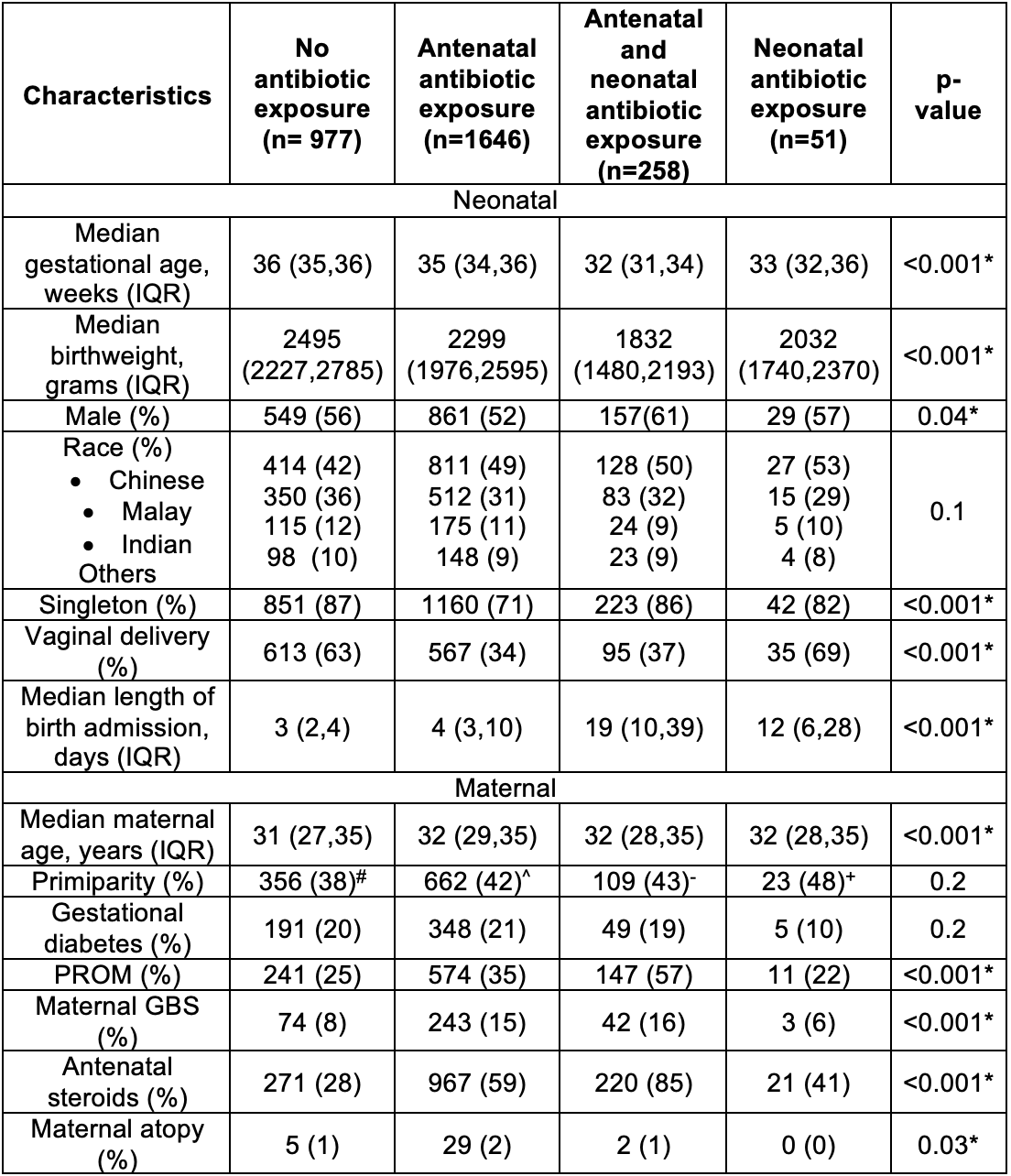 # Excluded 42 neonates due to missing data