Claire Abraham, Boston Children's Hospital, Boston, MA, United States; Christopher B. Forrest, Children's Hospital of Philadelphia, Philadelphia, PA, United States; Levon H. Utidjian, Childrens Hospital of Philadelphia, Wynnewood, PA, United States; Mitchell Maltenfort, Children's Hospital of Philadelphia, Philadelphia, PA, United States; Ellen McQuaid, Children's Hospital of Phildelphia, Philadelphia, PA, United States; Kathleen E. Walsh, Boston Children's Hospital, boston, MA, United States
Clinician Researcher Boston Children's Hospital Boston, Massachusetts, United States
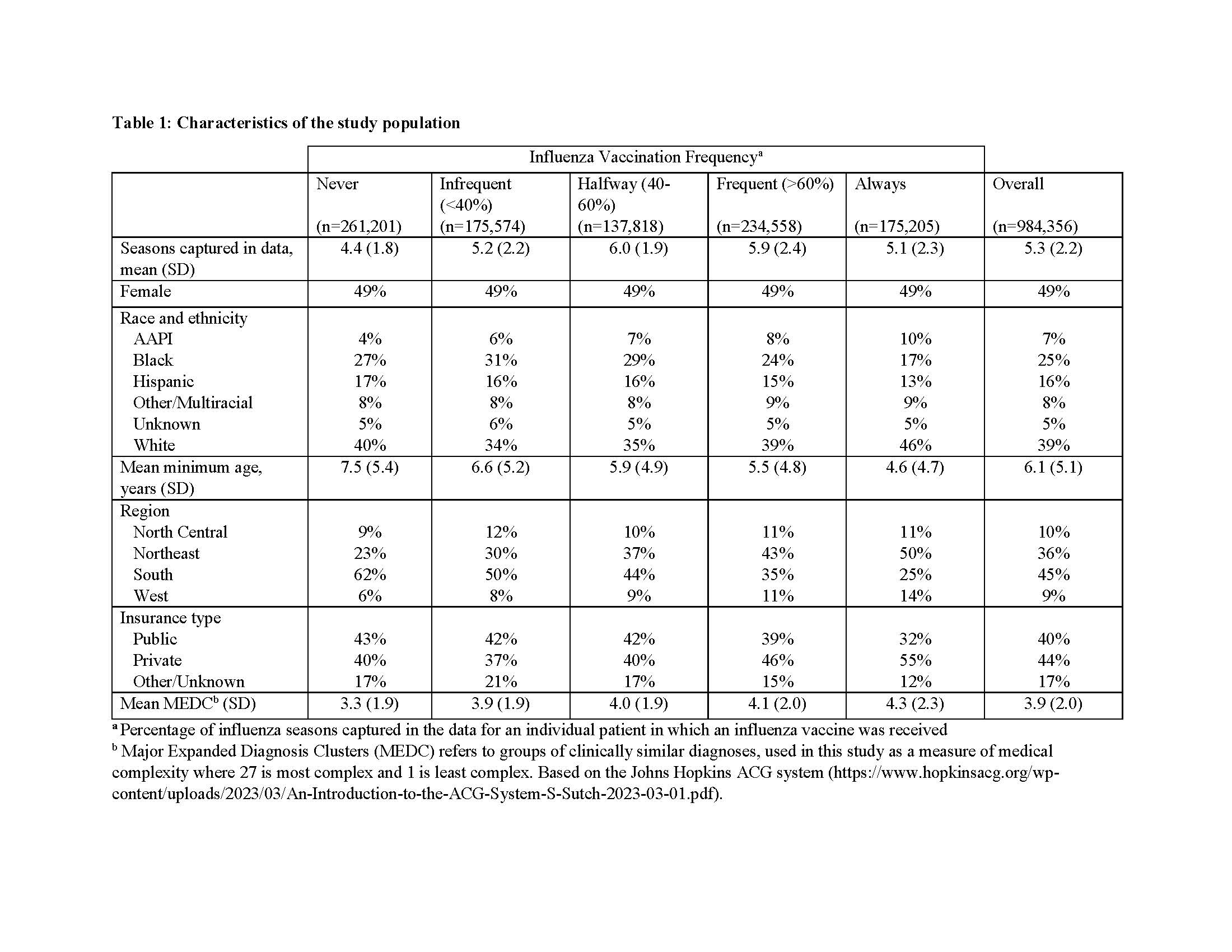
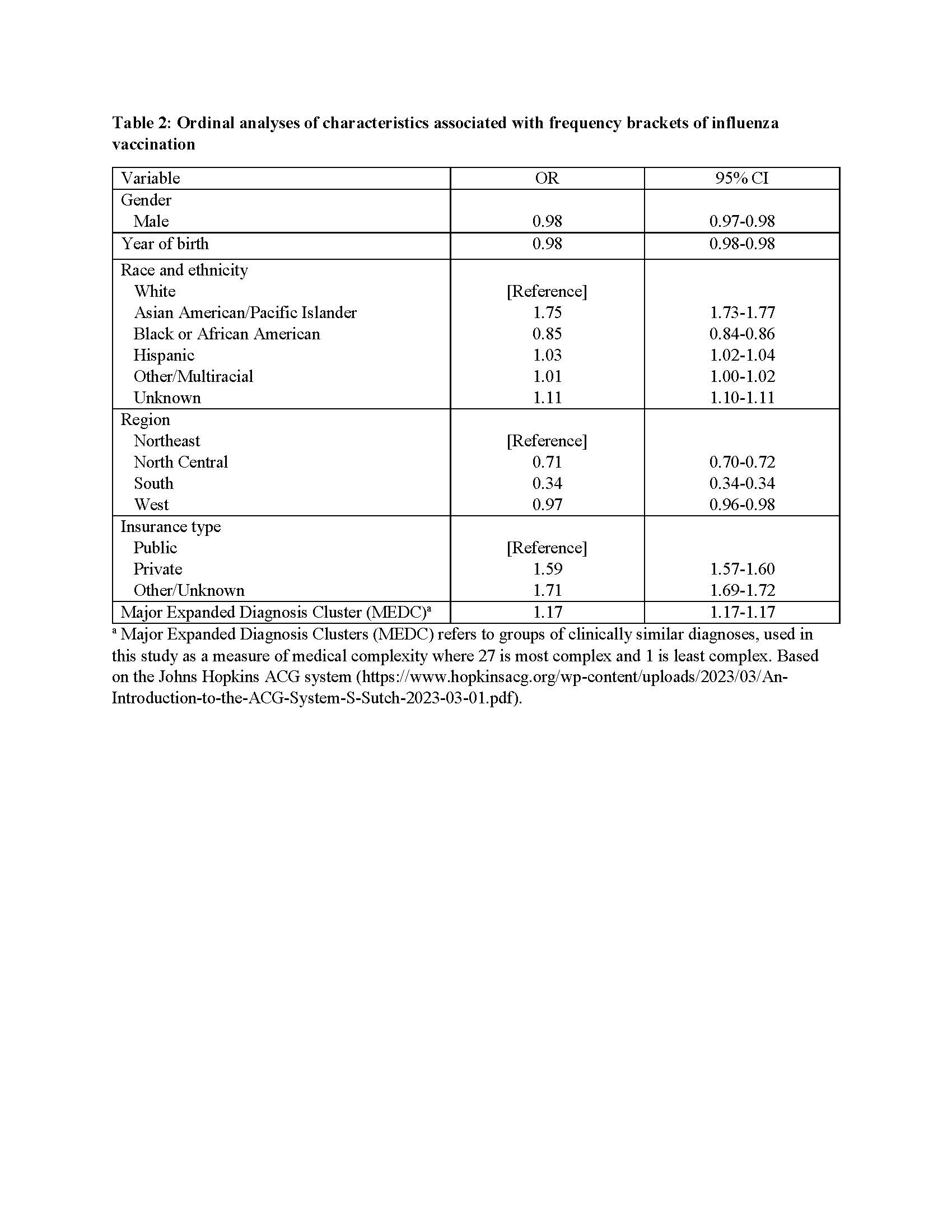
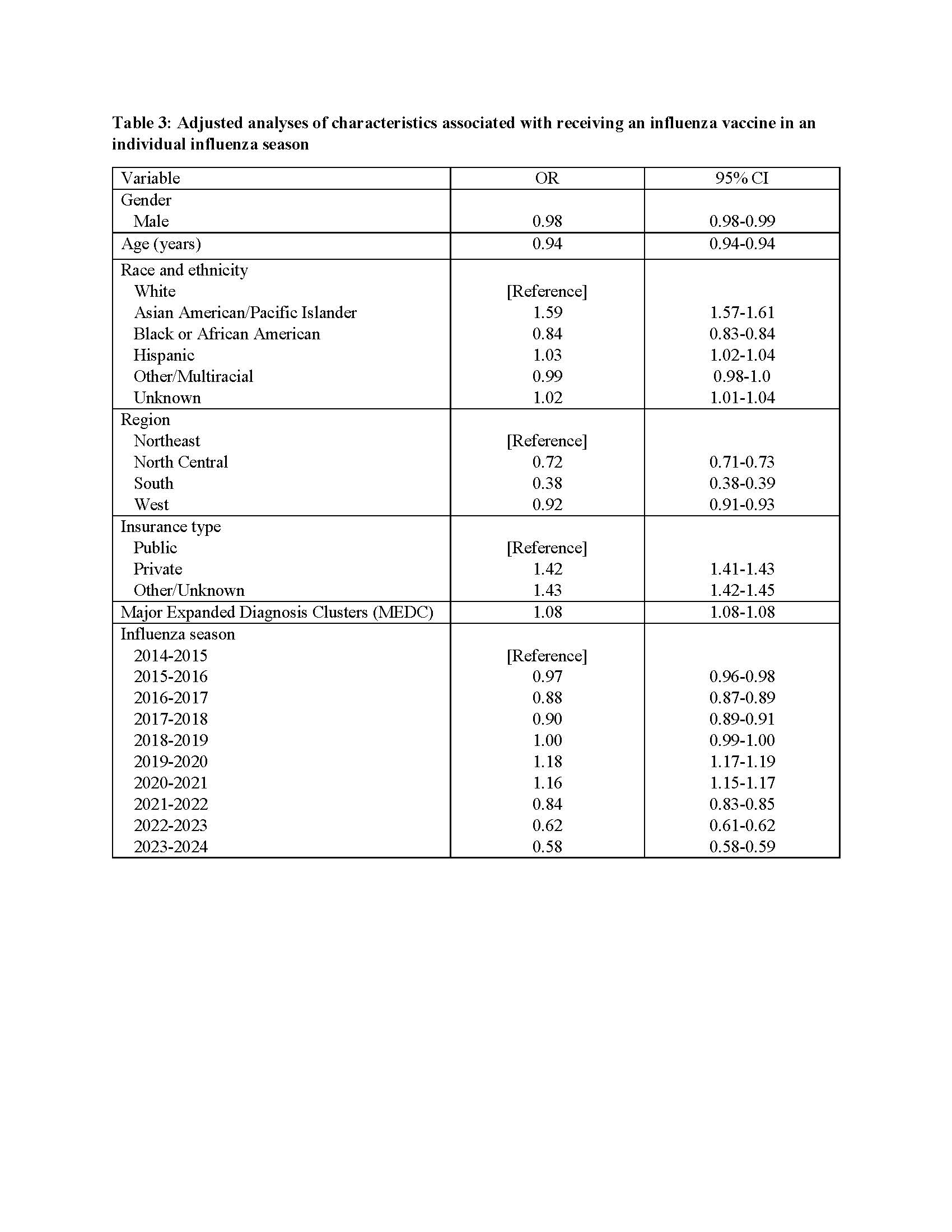
Background: Vaccine interventions often target non-vaccinators. However, many children are inconsistently vaccinated against influenza, receiving the vaccine in some seasons but not others. These children represent a "movable middle," with parents who may be amenable to seasonal vaccination. Characterizing this subgroup is crucial to understanding nuanced vaccination behaviors over time and informing more effective interventions. Objective: To assess differences in demographics, medical complexity, and insurance type between pediatric inconsistent influenza vaccinators, consistent influenza vaccinators, and consistent non-vaccinators. Design/Methods: A retrospective cohort study using 2014-2024 EHR data from PEDSnet, a consortium of ten US children's hospitals. Individuals ≥6 months at the beginning of the first influenza season (September 2014 - April 2015) and those < 21 years old at the beginning of the final influenza season (September 2023 - April 2024) were eligible for this study. In order to increase the likelihood of vaccine capture, patients were required to have 1) a primary care visit (well child visit) at a PEDSnet site or affiliate at least every 3 years, and 2) at least 1 clinical encounter (ex. follow-up, urgent care, subspecialist, ED) recorded for each 18-month period starting from their first appearance in the data and encompassing at least three separate flu seasons. Descriptive statistics were used to summarize patient characteristics and longitudinal vaccination practices. Ordinal logistic regression was performed to evaluate the association between demographics and frequency of influenza vaccination. Results: Of the 984,356 eligible patients, 27% never vaccinated against influenza, 18% were infrequent vaccinators ( < 40% of seasons), 14% vaccinated in approximately half of the seasons (40-60% of seasons), 24% were frequent vaccinators (>60% of seasons), and 18% always vaccinated. Frequency of influenza vaccination decreased with age and increased with medical complexity (Table 1). There was an increased likelihood of more frequent influenza vaccination if an individual was younger, medically complex, located in the Northeast, and privately insured (Table 2). These findings were consistent with predictors of vaccination in individual influenza seasons (Table 3).
Conclusion(s): Inconsistent vaccinators represent 56% of the population. Vaccination frequency is influenced by age, medical complexity, and insurance. To develop effective interventions, further research is needed to determine the barriers and facilitators to vaccination among inconsistent vaccinators.
Table 1: Characteristics of the study population
Table 2: Ordinal analyses of characteristics associated with frequency brackets of influenza vaccination
Table 3: Adjusted analyses of characteristics associated with receiving an influenza vaccine in an individual influenza season