184 - Outdoor Time Patterns among U.S. Youth: Findings from NHANES 2011-2014
Saturday, April 25, 2026
3:30pm - 5:45pm ET
Publication Number: 2177.184
Keying Chen, Duke University School of Medicine, Durham, NC, United States; Erik A. Willis, University of North Carolina-Chapel Hill, Chapel Hill, NC, United States; Derek Hales, UNC Center For Health Promotion and Disease Prevention, Chapel Hill, NC, United States; Cody Neshteruk, Duke University School of Medicine, Durham, NC, United States
Graduate Student Duke University School of Medicine Durham, North Carolina, United States
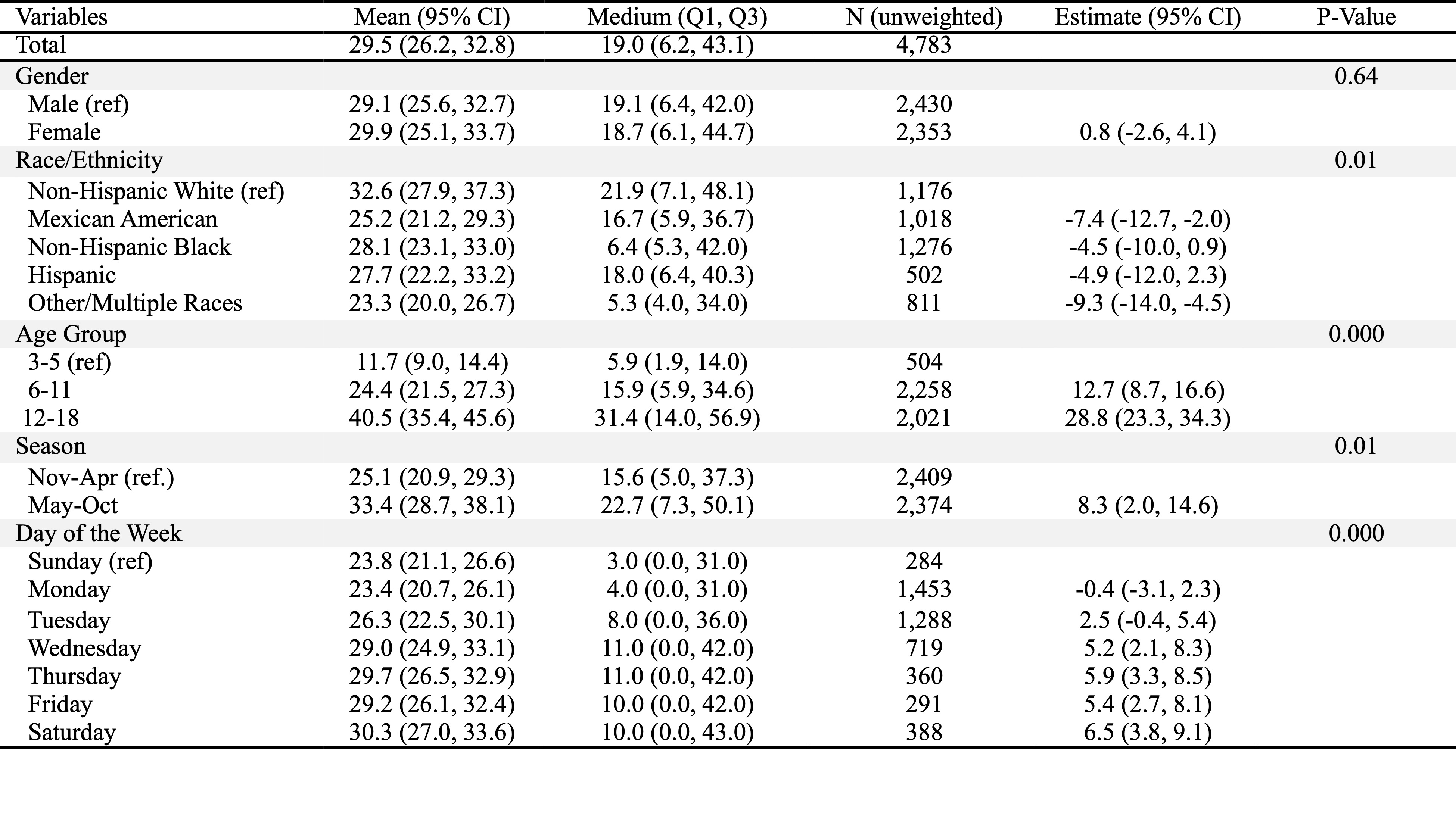
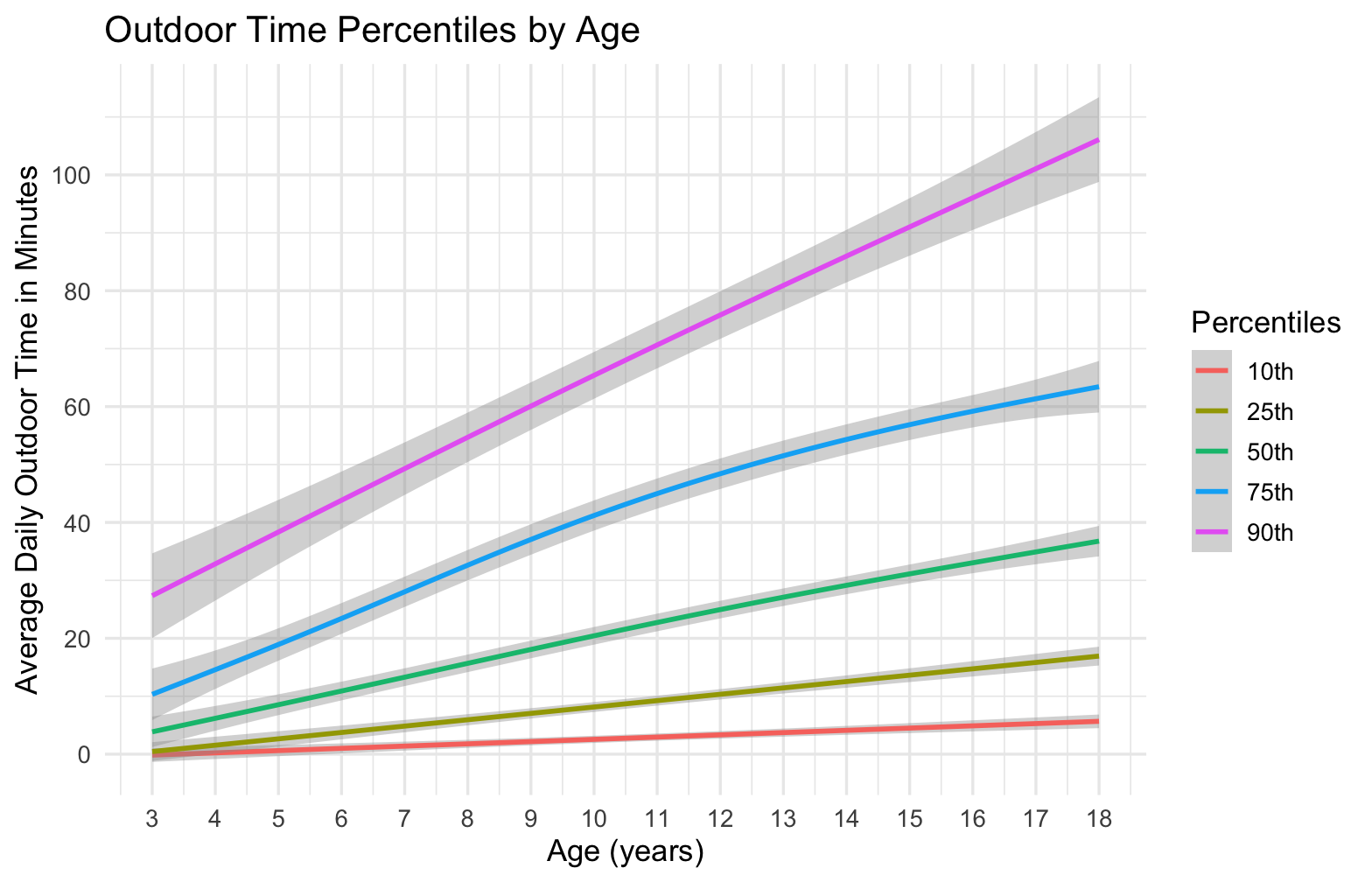
Background: Outdoor time is associated with a wide range of health outcomes in youth. Surveillance of outdoor exposure patterns provides important context for population-level health promotion. However, most existing evidence relies on parent- or self-reported measures. Nationally representative estimates derived from device-based, population-level data are needed to better understand outdoor time among U.S. youth and inform strategies to support healthy development. Objective: This study aims to establish nationally representative estimates of youth's outdoor time using accelerometer data from the National Health and Nutrition Examination Survey (NHANES). Design/Methods: In NHANES 2011-2014, participants ≥ 3 years wore an ActiGraph GT3x accelerometer. Devices were worn on the non-dominant wrist, with the ambient light sensor feature enabled. Minute-level data with light intensity were extracted for participants 3-18 years old. Participants were included if they had daily wear time ≥10 hours for ≥ 4 days. Data flagged for poor quality or identified as outliers (4 SD from the mean) were excluded. Outdoor time was defined as minutes with light intensity ≥ 240 lux. Survey-weighted estimates of mean daily outdoor time in minutes and percentile distributions were calculated overall and by sex, age, race/ethnicity, seasons, and weekdays. Results: A total of 4,783 youth met inclusion criteria (Table 1). The mean outdoor time was 29.5 min/day (SE: 1.7). Mean outdoor time did not differ significantly by sex (0.8 min/day, 95% CI: -2.6, 4.1). Non-Hispanic White youth had the highest mean outdoor time (32.6 min/day, SE: 2.4), followed by Non-Hispanic Black (28.1 min/day, SE: 2.5) and Hispanic youth (27.7 min/day, SE: 2.8). Mexican American youth had significantly lower mean outdoor time compared to Non-Hispanic White youth (-7.4 min/day, 95% CI: -12.7, -2.0). Compared to youths aged 3-5 years (11.7 min/day, SE: 1.4), youths aged 6-11 (24.4 min/day, SE: 1.5) and 12-18 (40.5 min/day, SE: 2.6) years had significantly higher mean outdoor time (P < 0.001). This pattern is consistent across percentiles distributions (Figure 1). Youth had higher mean outdoor time during May-October compared to during November-December (8.3 min/day, 95% CI: 2.0, 14.6). Youth had more outdoor time Wednesdays-Saturdays compared to Sundays (P < 0.001).
Conclusion(s): This study developed a national reference for daily outdoor time among U.S youth aged 3-18 years. Mean daily outdoor time differed by age, race/ethnicity, season, and weekdays. Results of this study provide essential data for guiding public health efforts to promote outdoor activity in youth.
Table 1. Weighted Estimates of Daily Average Outdoor Time in Minutes by Population Characteristics
Figure 1. Percentiles of Daily Average Outdoor Time in Minutes for Youth aged 3-18 years: 2011-2014 National Health and Nutrition Examination Survey.