674 - Measurements of BDNF, NT-3 and CRP levels in infant with Neonatal Opioid Withdrawal Syndrome (NOWS) to correlate with the Length of Stay and Neurobehavioral Outcomes
Saturday, April 25, 2026
3:30pm - 5:45pm ET
Publication Number: 2657.674
Thitinart S. Sithisarn, University of Kentucky College of Medicine, LEXINGTON, KY, United States; Hong Huang, University of Kentucky, Lexington, KY, United States; Philip Westgate, University of Kentucky, Lexington, KY, United States; Henrietta Bada, University of Kentucky College of Medicine, Lexington, KY, United States
Associate Professor of Pediatric University of Kentucky College of Medicine LEXINGTON, Kentucky, United States
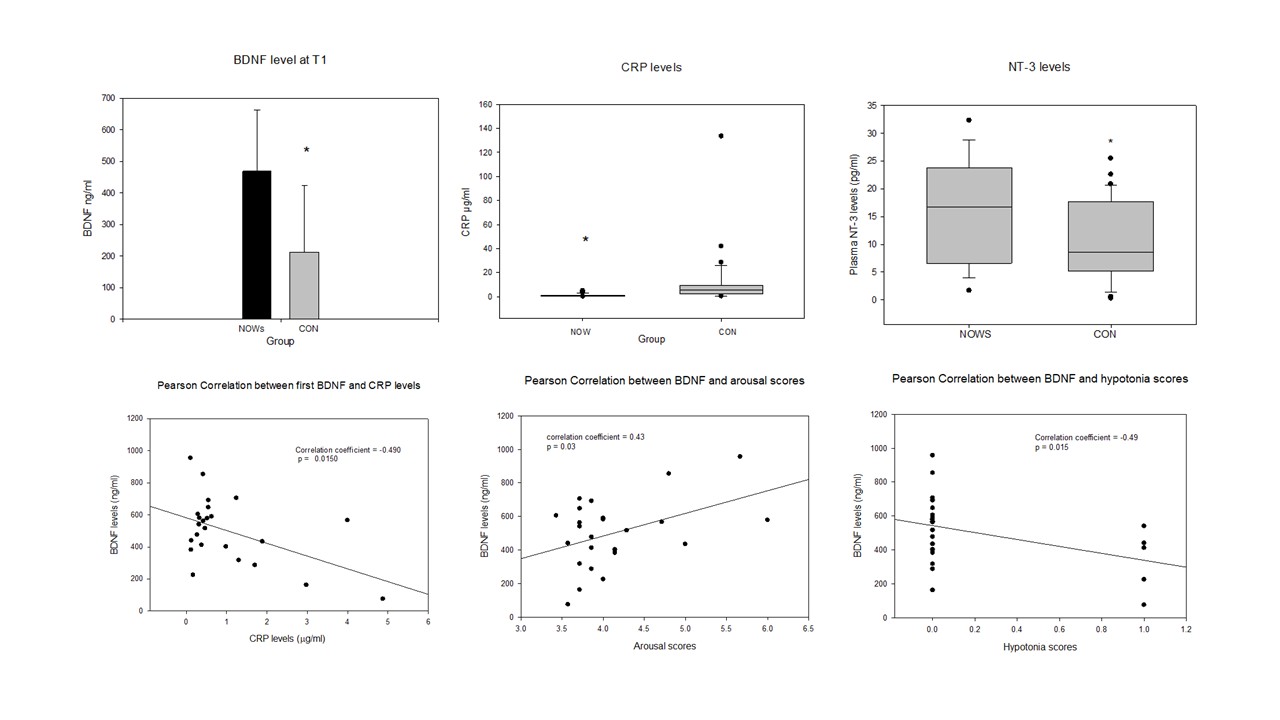
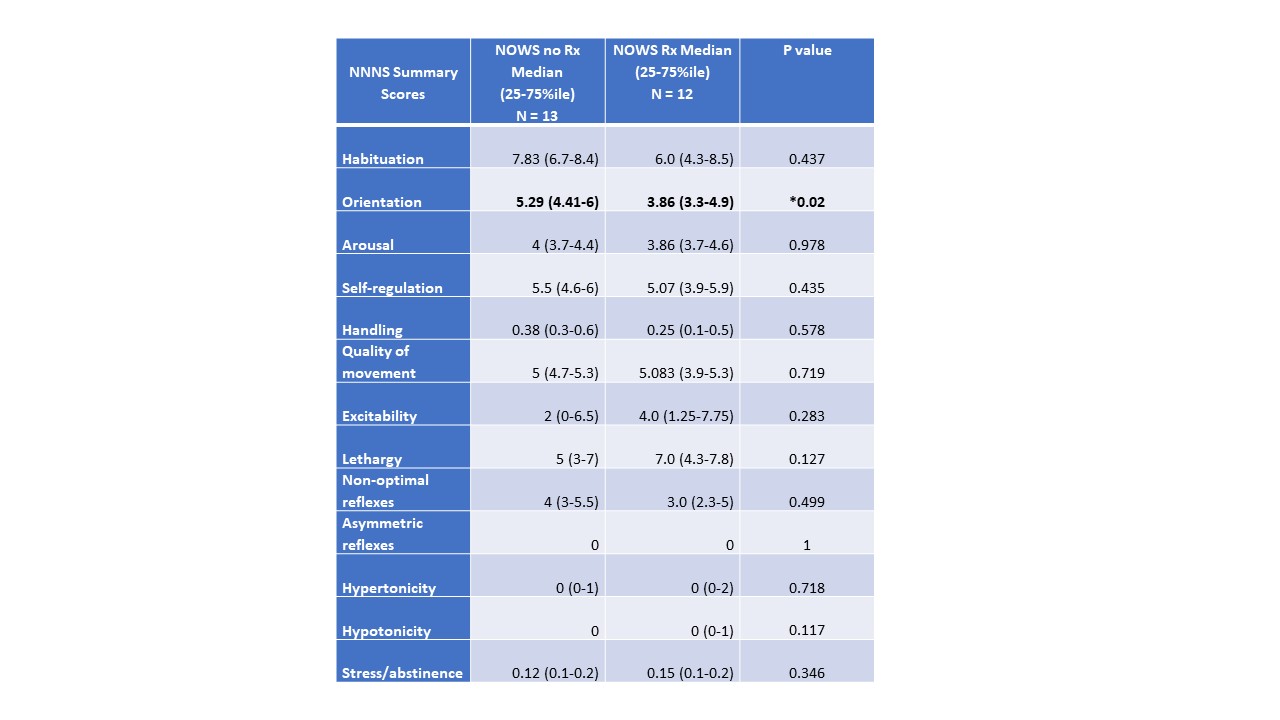
Background: Opioid exposure has been reported to be associated with changes in BDNF, NT-3 and CRP levels which may have implications in NOWS severity and neurodevelopmental outcomes. Objective: To determine plasma BDNF, CRP and NT-3 levels in NOWS and compare with levels in normal newborns and correlate the levels with LOS and need for pharmacologic treatment for NOWS and to correlate levels of plasma BDNF, CRP and NT-3 and NICU Network Neurobahavioral Scale (NNNS) scores in infants pharmacologically treated for NOWS. Design/Methods: Control (CON, n=33) and NOWS infants (total 38; need treatment (NOWS Rx) n=21, no need for treatment (NOWS no Rx) n= 17) were enrolled. Blood samples were obtained with the state screen for CON; at 3 time points for NOWS (T1 on admission, T2 when NOWS under control, T3 prior to discharge). NNNS were performed in infants with NOWS at the beginning of hospitalization and before discharge if pharmacologically treated. Results: BDNF levels in NOWS were higher than in CON groups (467.5 ± 194.3 vs 211.3 ±66.3, p< 0.001). No differences in BDNF levels between NOWS Rx and NOWS no Rx. BDNF levels stayed elevated in NOWS that required treatment with no differences in the levels between 3 time points. NT-3 levels in NOWS were also higher than in CON (16.3 ± 9.1 vs 10.3 ± 7.1, p=0.014). The mean LOS in NOWS group that required Rx and no Rx were 17.7 ± 8.4 and 4 ±1.8 days. BDNF levels did not correlate with LOT or LOS in NOWS Rx group. CRP levels in CON were higher than in NOWS (median 5.21 (2.27-9.34) vs 0.478 (0.24-1.26), p< 0.001). In NOWS Rx, CRP levels declined over time. BDNF levels negatively correlated with CRP levels (correlation coefficient (cc) = -0.49, p =0.015). NNNS summary scores in orientation were significantly higher in NOW no Rx (5.2 ± 1.1 vs 3.9 ± 0.75, p = 0.02). NNNS scores did not correlate with LOT or LOS. BDNF levels positively correlated with arousal, negatively correlated with hypotonia scores (cc = = 0.43, p =0.03 and -0.41, p =0.04 respectively).
Conclusion(s): BDNF levels were higher in NOWS compared to CON groups and continued to be elevated when NOWS symptoms were under control and reaching discharge. CRP levels were surprising lower in NOWS group and decreased over time. In NOWS, there were no significant correlations between BDNF or CRP levels and requirement for pharmacologic Rx, LOT or LOS at any time points. BDNF levels negatively correlated with CRP levels. There were also correlations between BDNF levels and NNNS arousal and hypotonia scores. Together, these findings suggested neuromodulatory, protective/ anti-inflammatory effects of BDNF in NOWS.
Figures showing BDNF, CRP and NT-3 levels; correlations between BDNF and CRP levels and between BDNF and NNNS scores
Table showing NNNS summary scores in NOWS Rx and no Rx groups