30 - Utility of Umbilical Cord Tissue as a Confirmatory Matrix for Maternal Substance Abuse
Saturday, April 25, 2026
3:30pm - 5:45pm ET
Publication Number: 2027.30
Petal Samrow, Touro College of Osteopathic Medicine, Middletown, NY, United States; PRABHAKAR KOCHERLAKOTA, Maria Fareri Children's Hospital at Westchester Medical Center, Newburgh, NY, United States; RAKESH K. ABBI, Montefiore St. Luke's Cornwall Hospital, Newburgh, NY, United States
Associate Professor of Pediatrics Maria Fareri Children's Hospital at Westchester Medical Center NEWBURGH, NY 12550, New York, United States
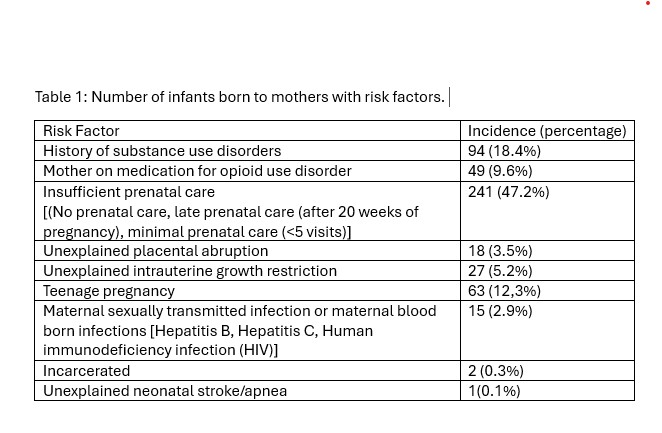
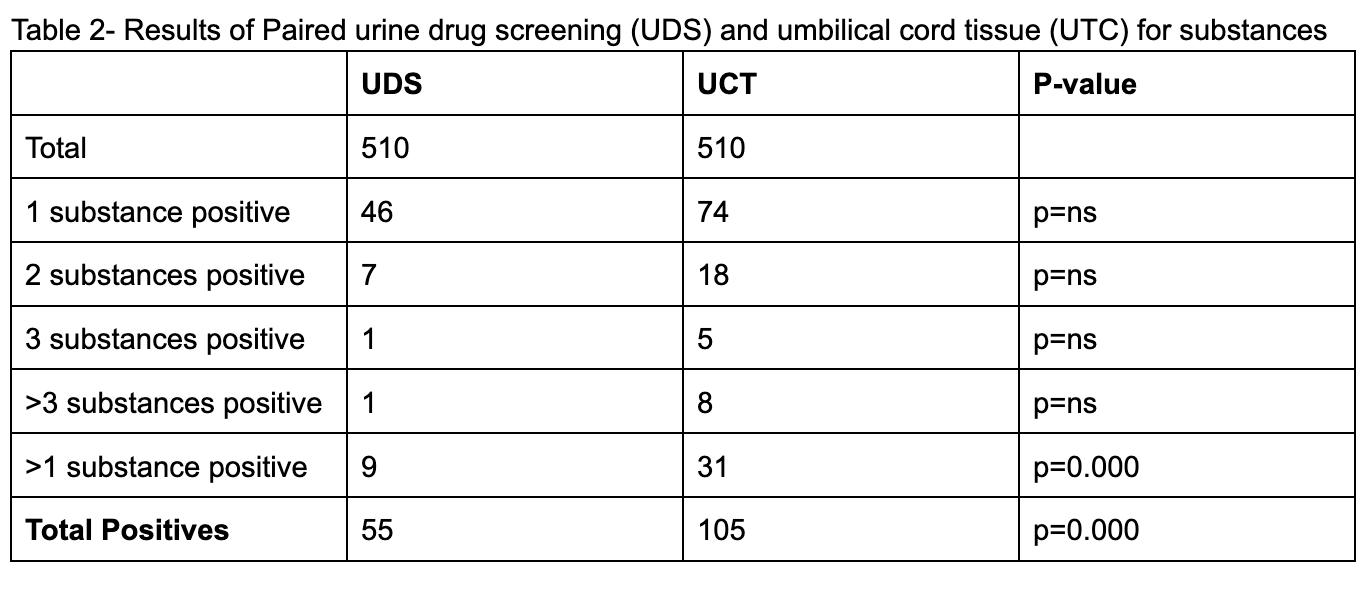
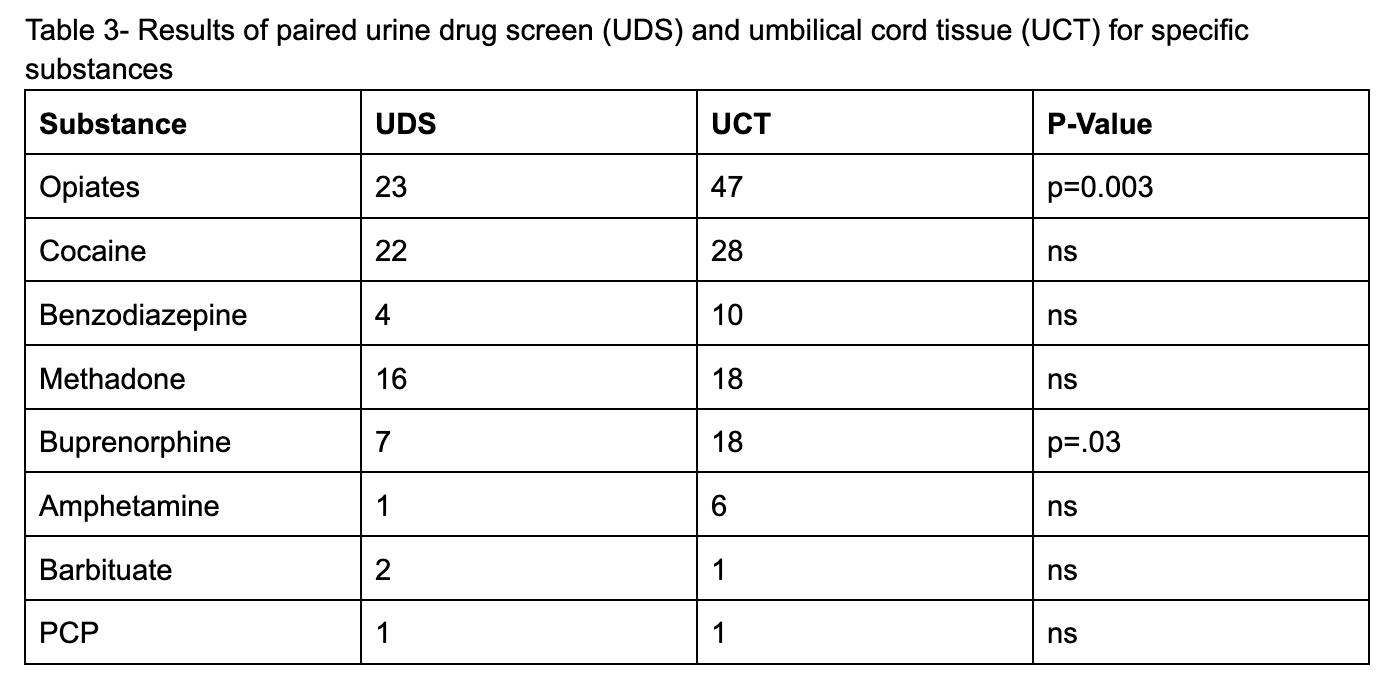
Background: Substance use disorder (SUD) during pregnancy remains a critical public health issue with significant consequences for both maternal and neonatal outcomes. Urine drug screening (UDS) is routinely used for initial detection of substance exposure; however, its results are presumptive and limited by variable specificity and sensitivity, necessitating confirmatory testing. Meconium and umbilical cord tissue (UCT) are used for confirmatory analysis, though the clinical relevance of UCT remains debated. Objective: We aimed to assess the concordance between UDS and UCT toxicology results in neonates born to mothers with SUD. Design/Methods: This retrospective chart review included neonatal admissions between 2018 and 2025 at a community hospital in New York State. The study population comprised more than 500 neonates born to mothers with identified risk factors for SUD (Pee et al. Am J Perinatol. 2025 Oct;42(13):1763-1770). Following informed consent, UDS was performed in the hospital laboratory using a standard immunoassay panel detecting nine commonly abused substances (excluding marijuana). UCT samples underwent confirmatory qualitative LC-MS testing for more than 24 analytes at a reference lab. Cord specimens were handled following standard laboratory procedures. Paired UDS and UCT results were compared to assess UCT's reliability in detecting in-utero substance exposure. Approval for the study was obtained from the Institutional Review Board Results: A total of 510 paired UDS and UCT samples were examined. The most common maternal risk factors prompting toxicology screening included inadequate prenatal care, history of drug use, participation in medication-assisted treatment, and teenage pregnancy (Table 1). Positive detection rates were 10.7% for UDS and 20.6% for UCT (Table 2). Substance-specific analysis demonstrated higher positivity for opiates and buprenorphine on UCT compared with UDS (Table 3).
Conclusion(s): UCT toxicology demonstrates higher sensitivity than UDS and serves as a reliable confirmatory matrix for detecting in-utero substance exposure, particularly in cases involving polysubstance use. Increased detection of opiates and buprenorphine in UCT underscores its diagnostic utility as a complementary tool in neonatal toxicology screening and in guiding early postnatal management.
Table 1: Infants born to mothers with risk factors
Table 2:Results of paired Urine drug screening and Umbilical Cord tissue for Substances
Table 3: The results of Paired urine drug screen (UDS) and umbilical cord tissue (UCT) for specific substances.