710 - Don’t Call It a Comeback: Remixing Cardiac Medical Education Through Music, Rhythm, and Simulation
Saturday, April 25, 2026
3:30pm - 5:45pm ET
Publication Number: 2693.710
Benjamin Dadagian-Goldman, UMass Chan Medical School, Arlington, MA, United States; Michaela Olah, UMass Chan Medical School, Worcester, MA, United States; Gary Blanchard, University of Massachusetts Medical School, Worcester, MA, United States
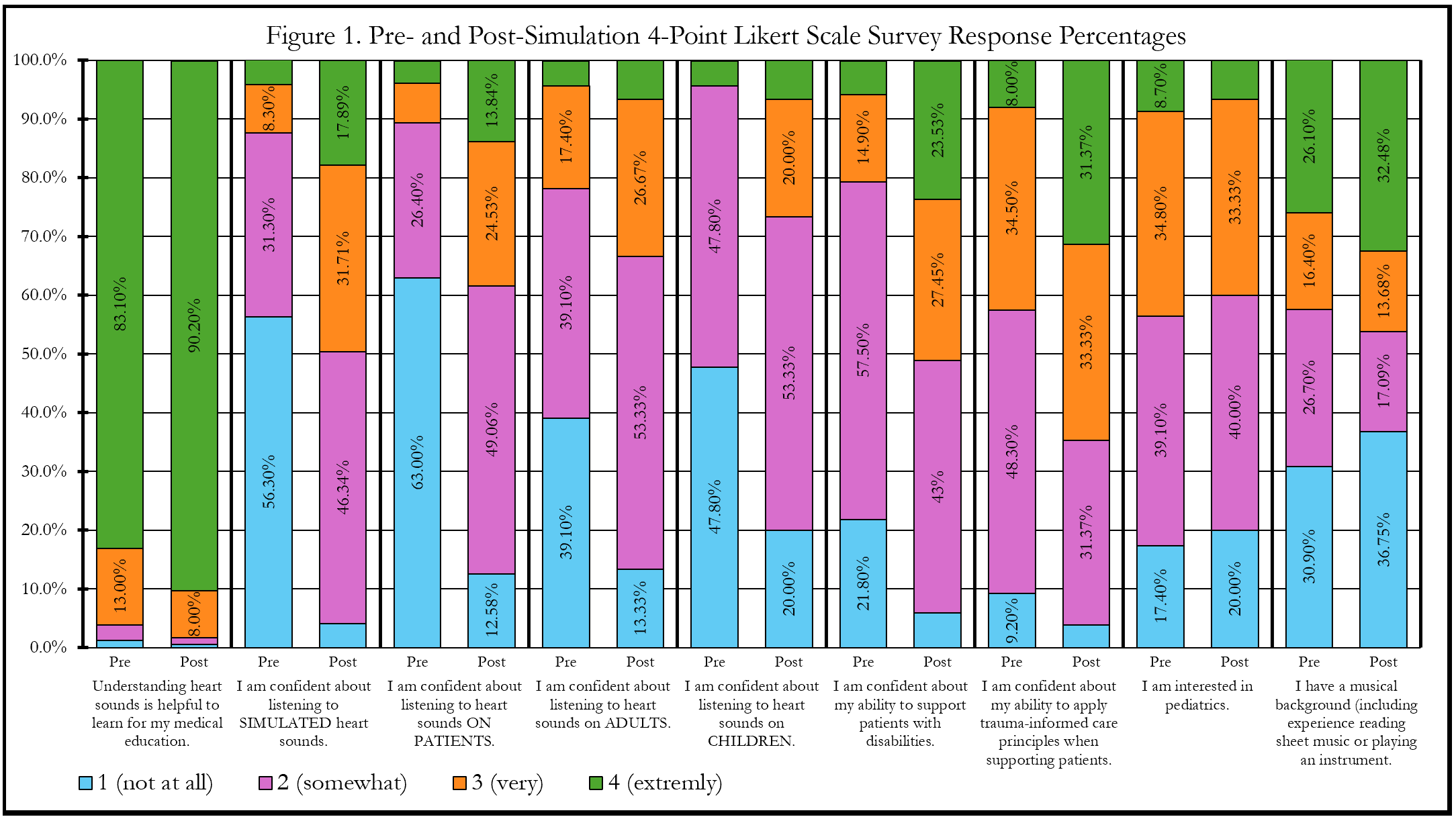
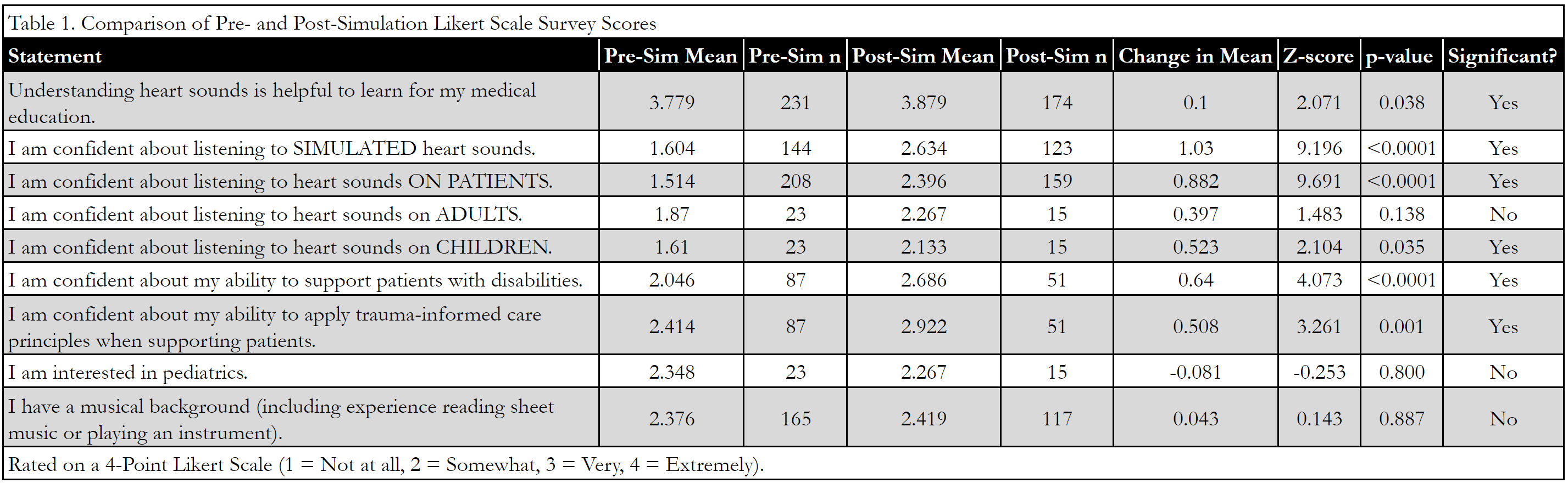
Background: Up to 80% of children have a heart murmur at some point during childhood, most of which are innocent, but some are pathologic. Despite clinical importance, proficiency in cardiac auscultation is declining among medical learners. Simulation-based learning improves these skills, but further innovation in teaching and assessment is needed. Objective: To investigate preclinical medical learners' confidence and perspectives on cardiac auscultation when presented in a novel fashion, combining peer-to-peer teaching, popular songs, audio technology, and hands-on experience during an equity-driven simulation. Design/Methods: Eight iterations of a multimodal simulation for 1st and 2nd year medical students were conducted from 1/24-4/25. Each session included groups of 3-8 students. The simulation, led by a medical student, included the Harvey Cardiopulmonary Patient Simulator, Soundslice, and popular songs to illustrate the character of the sound or murmur. The presentation featured cardiac physiology, trauma-informed care, and disability information focused on Down syndrome and Williams syndrome. Pre- and post-surveys using 4-point Likert scale and open-response questions measured learners' level of agreement with statements including confidence and interest. Results were analyzed via descriptive statistics and Mann-Whitney U tests for Likert scale questions. Open-response questions were reviewed to clarify takeaways. Results: Data was collected from 64 simulation sessions. Post-survey responses (n=174) showed a statistically significant increase in multiple parameters compared to pre-survey data (n=231). These parameters include agreement with understanding heart sounds being helpful for their education, as well as confidence in listening to heart sounds (simulated and on patients), listening to heart sounds on children, supporting patients with disabilities, and applying trauma-informed care principles (p < 0.05) (Table 1). The Likert scale pre- and post-survey responses are summarized in Figure 1. Post-simulation open-response themes included appreciation of the simulation's inclusion of popular songs, peer-to-peer teaching, interclass interaction, and the simulation's addition to the curriculum (Table 2).
Conclusion(s): The findings highlight the potential benefits of multimodal simulations utilizing diverse technologies and teaching methods to promote learner self-efficacy. Integrating trauma-informed care and disability education with a pediatric-focused cardiac auscultation learning experience fosters an immersive opportunity to apply concepts of equity and inclusion during guided exploration.









.png)
