7 - Tracing the Surgical Journey: The Historical Evolution of Congenital Diaphragmatic Hernia Management
Saturday, April 25, 2026
3:30pm - 5:45pm ET
Publication Number: 2006.7
Precious O. Orusa, Westcliff University, Round Rock, TX, United States; Jessie Echeazu, Carroll Senior High School, Southlake, TX, United States; Dhwani Oza, University of Texas at Austin Dell Medical School, Austin, TX, United States; Christiana N. Oji-Mmuo, University of Texas at Austin Dell Medical School, Cedar Park, TX, United States
Associate Professor University of Texas at Austin Dell Medical School Cedar Park, Texas, United States
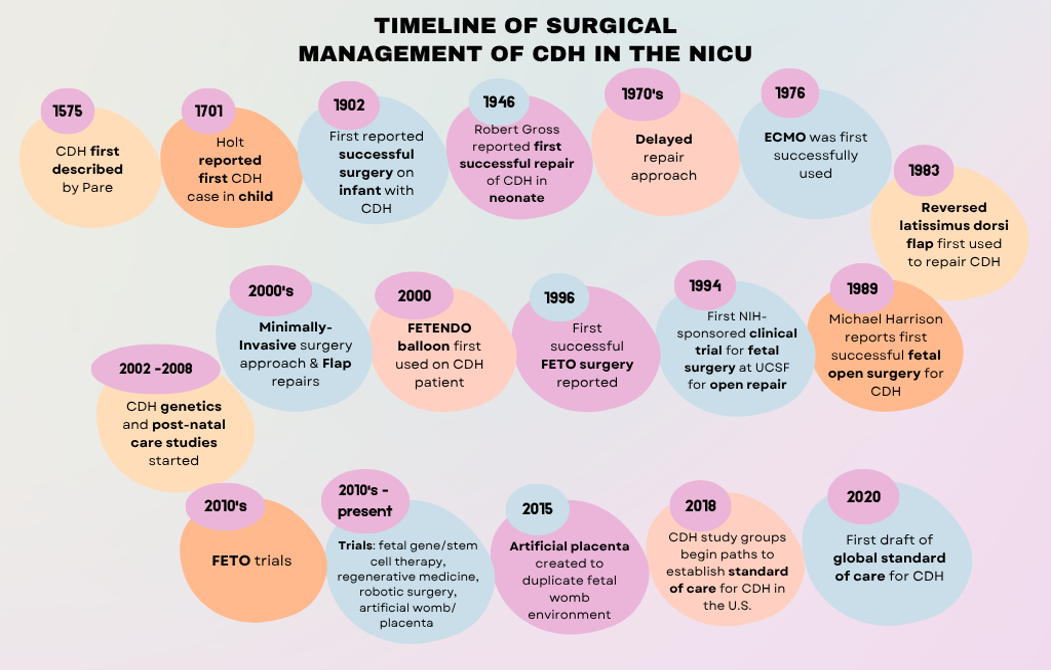
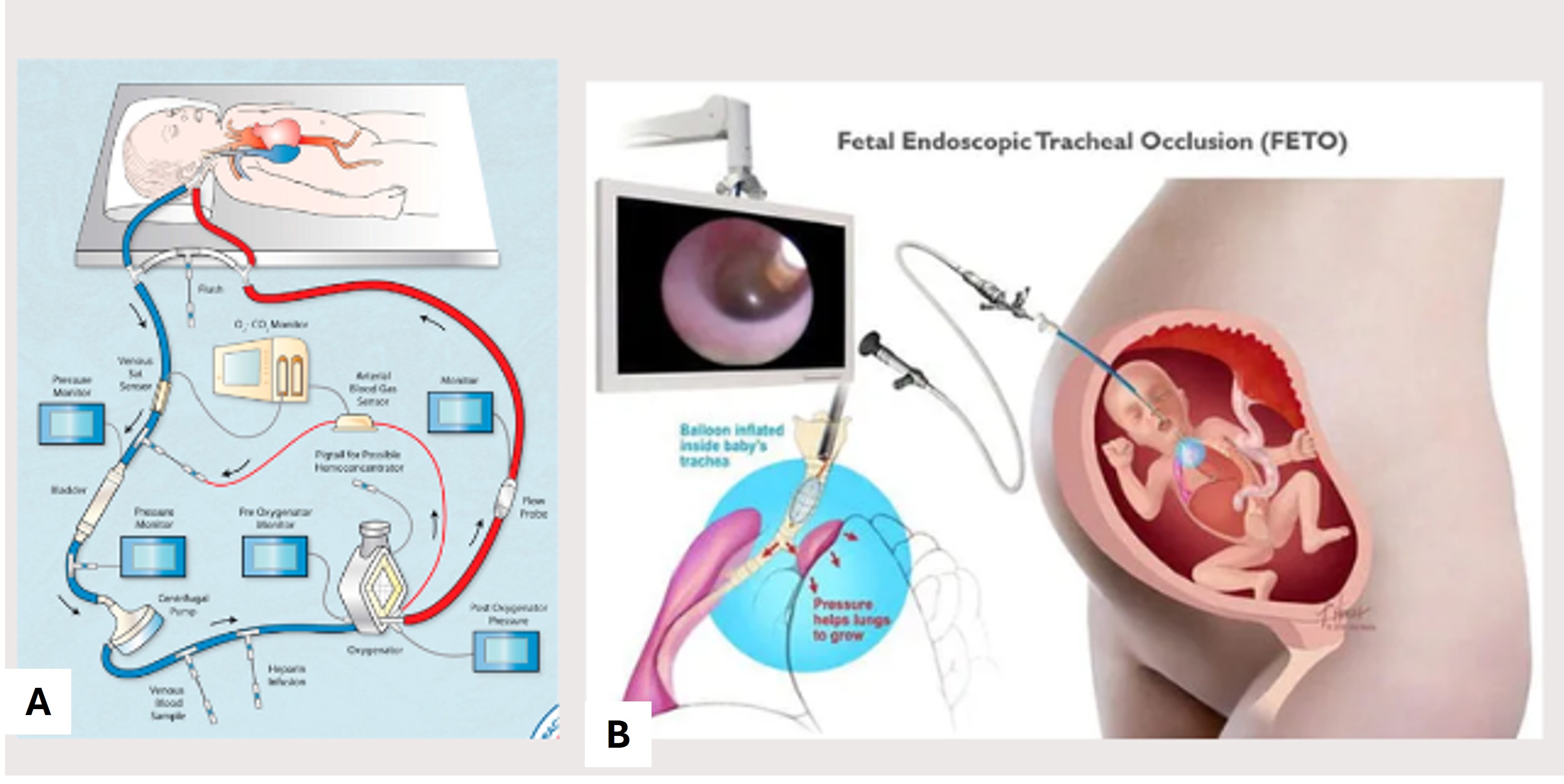
Background: Congenital diaphragmatic hernia (CDH) is a developmental discontinuity of the diaphragm which causes the abdominal viscera to herniate into the thoracic cavity impairing lung growth and resulting in pulmonary hypoplasia. Surgical intervention is essential for CDH because it is the only definitive treatment to correct the defect and prevent ongoing herniation of abdominal organs into the thoracic cavity. Objective: To understand the historical context and advancements in the surgical management of congenital diaphragmatic hernia in newborns. Design/Methods: We examined the evolution of CDH repair from the first reported case of 1701 in a child, the initial surgical repair of 1946 to the present. The review focused on advances in diagnosis, surgical management, including the development of extracorporeal membrane oxygenation (ECMO), fetoscopic endoluminal tracheal occlusion (FETO), improvement in surgical techniques and timing of intervention. Results: The first description of a diaphragmatic defect was by Ambroise Paré in 1575. The first reported case of CDH in a child was by Dr. Holt in 1701, and the first successful surgical repair in an infant occurred in 1902. In 1946, Robert Gross performed the first neonatal repair within the first 24 hours of life, although mortality rates remained >50%. Over time, management evolved from emergency surgery to a delayed-repair that emphasized preoperative stabilization and control of pulmonary hypertension. ECMO, introduced in 1976, provided critical support for refractory pulmonary hypertension. Primary repair remains preferred for small defects, while larger defects often require patch repair due to higher morbidity and recurrence risk. The use of muscle flaps for reconstruction began with the reversed latissimus dorsi flap in 1983, with abdominal muscle flaps now more commonly employed. The first fetal open CDH repair was performed in 1984, later evolving into FETO technique, which has improved lung growth and outcomes. These advancements have increased survival rates to about 80%, though challenges persist in managing severe pulmonary hypoplasia and reducing recurrence.
Conclusion(s): In summary, breakthroughs in perioperative care, surgical techniques, and fetal interventions have improved survival and outcomes in CDH. The management has shifted from emergent repair to stabilization-focused, individualized approaches and innovative techniques. Despite progress with ECMO, minimally invasive surgery, and FETO, challenges remain in enhancing prenatal diagnostics, optimizing pulmonary outcomes, decreasing recurrence, and rigorously evaluating long-term outcomes.
Figure 1. Timeline of major advances in management of CDH in newborns
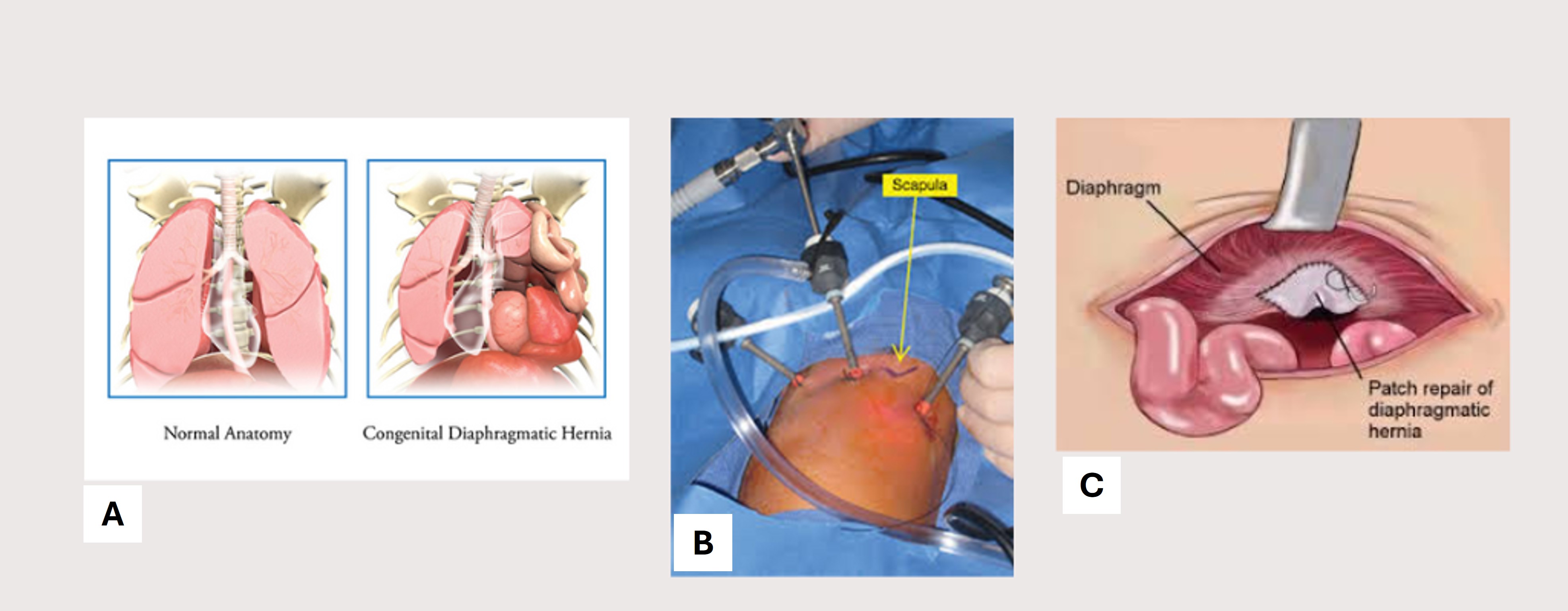
Figure 2. (A) Normal versus congenital diaphragmatic hernia anatomy (B)Thoracoscopic repair of diaphragmatic defect in CDH (C) Patch repair of diaphragmatic defect in CDH