72 - Advancing Adolescent Mental Health and Substance Use Screening in Primary Care
Saturday, April 25, 2026
3:30pm - 5:45pm ET
Publication Number: 2069.72
Namritha Nayak, Rutgers Health/Monmouth Medical Center, Long Branch, NJ, United States; Zarish Malik, The Children's Hospital at Monmouth Medical Center, Long Branch, NJ, United States; Jacqueline G. Brunetto, Rutgers, Robert Wood Johnson Medical School, Ocean, NJ, United States; Narihan Osman, Monmouth medical center, Scotch plains, NJ, United States
Chief Resident Rutgers Health/Monmouth Medical Center Long Branch, New Jersey, United States
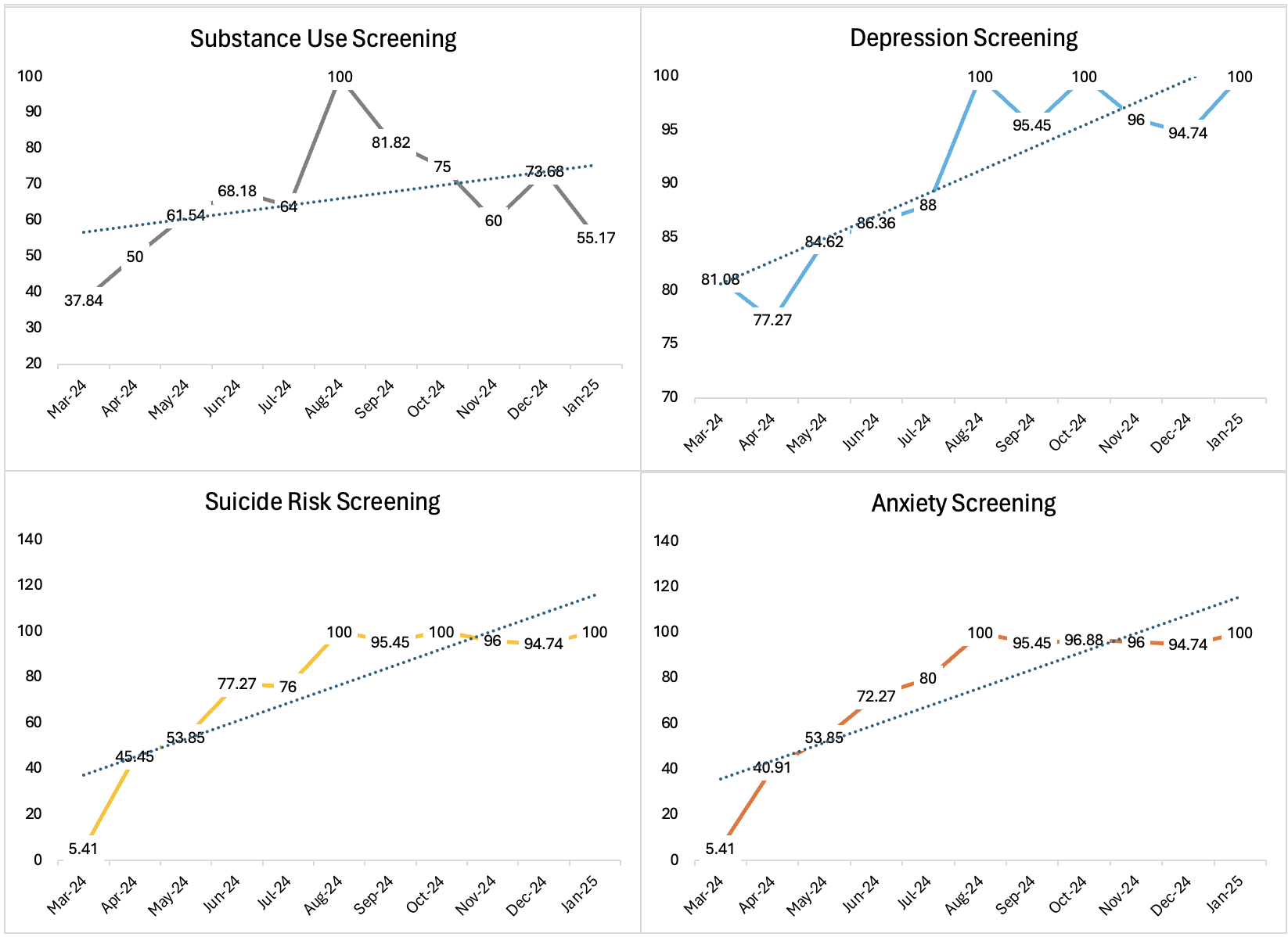
Background: The American Academy of Pediatrics (AAP) recommends universal screening with standardized tools to identify mental health concerns early and help pediatricians identify, evaluate, and address substance use. This quality improvement (QI) initiative was conducted as a part of Transformative & Evidence-based Approaches to Mental health & Substance use Screening (TEAMSS) project sponsored by AAP which aims to enhance mental health and substance use screening rates in primary care settings, ensuring early detection and appropriate interventions for at-risk adolescents. Objective: To improve the rates of mental health and substance use screening among adolescents aged 12-18 years in a primary care setting to above 90% by implementing standardized screening tools and evaluating follow-up interventions provided for positive screens. Design/Methods: The study was determined to be exempt by AAP IRB. Retrospective chart review was conducted monthly from March 2024 to January 2025 to assess screening rates and document the response to positive screening. Screening tools used in our clinic included the Patient Health Questionnaire 9 modified for Adolescents (PHQ- A), Ask Suicide-Screening Questions (ASQ), Generalized Anxiety Disorder 7 (GAD7) scale, CRAFFT and Screening to Brief Intervention (S2BI), all of which help detect at-risk youth and ensure timely interventions. Several Plan-Do-Study-Act cycles were implemented, using run charts to monitor trends in screening rates and interventions. Major interventions included structured screening tools, standardized workflows, EMR modifications, and resident training. Results: Data analysis demonstrated improved screening rates for substance use, depression, suicide risk, and anxiety, with the most significant increases in suicide risk and anxiety screening. Follow-up for positive screens also improved substantially, with a 100% follow-up rate for patients identified as at risk for suicide. Substance use screening was switched from CRAFFT to S2BI in November, with no significant change in positive screens.
Conclusion(s): The use of standardized screening tools led to significant improvements in identifying at-risk youth, particularly for suicide and anxiety. Through our study we were able to highlight the importance of early detection and consistent follow-up in addressing adolescent mental health and substance use concerns. Future efforts should continue to refine screening practices and ensure timely interventions for all at-risk adolescents. The project also has scope to be expanded to the inpatient setting, to help identify at-risk adolescents during hospitalization.
Screening rates for depression, suicide risk, anxiety and substance use