244 - Bridging the Gap Between Toxicologic Evidence and Legal Standards in Child Substance Exposure
Saturday, April 25, 2026
3:30pm - 5:45pm ET
Publication Number: 2235.244
Szu-Han Chen, National Taiwan University Hospital, Taipei, Taipei, Taiwan (Republic of China); Jhong-Lin Wu, NTUH, Taipei, Taipei, Taiwan (Republic of China); Te-I Weng, National Taiwan University Hospital, Taipei, Taipei, Taiwan (Republic of China)
Attending Physician National Taiwan University Hospital Taipei, Taipei, Taiwan (Republic of China)
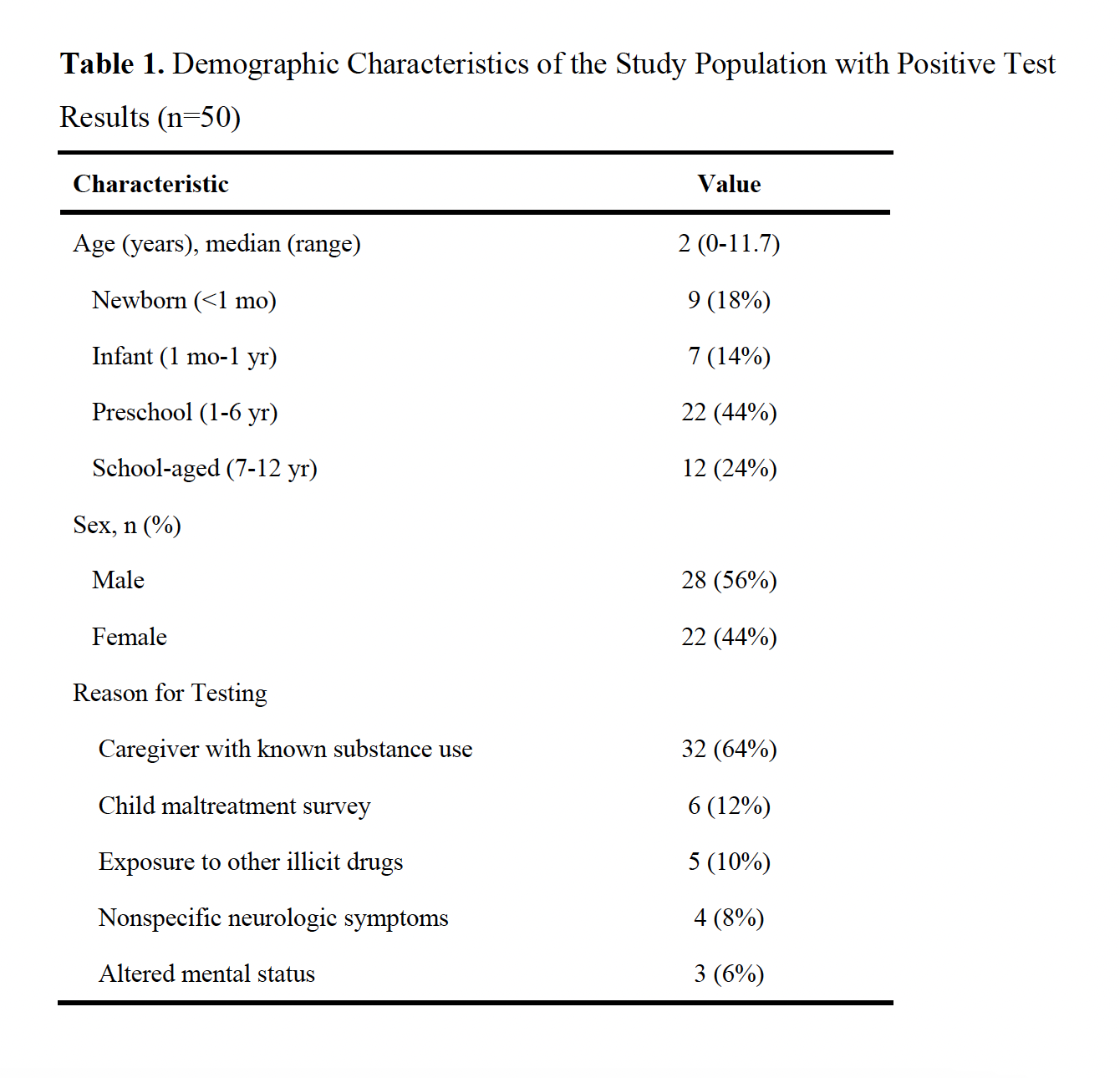
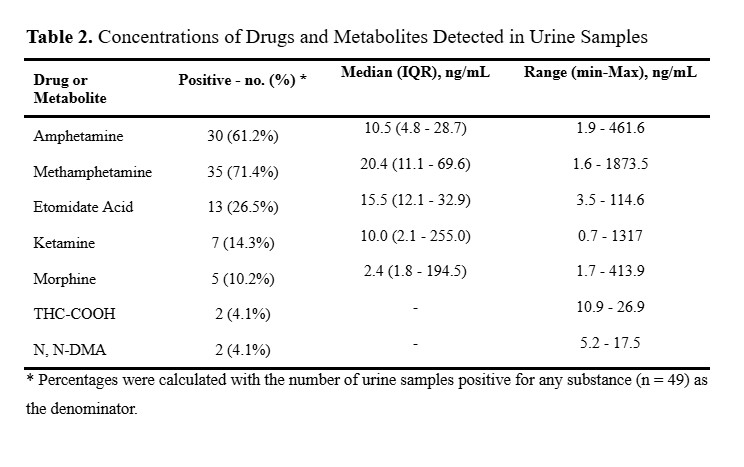
Background: Children may be exposed to illicit drugs through passive exposure, accidental ingestion, or caregiver use. Toxicology testing is a key component of child protection. However, the gap between toxicologic evidence and legal standards remains poorly characterized. Objective: This study aimed to evaluate cases of positive toxicology findings in children with suspected exposure to illicit drugs, to better characterize the current situation in Taiwan and to highlight the discrepancy between clinical concerns and the existing forensic and legal thresholds, thereby informing future approaches to child protection practice. Design/Methods: We reviewed toxicology cases of children younger than 12 years referred to the NTUH Toxicology Center from January 2023 through Sep 2025. Urine and hair samples were analyzed with validated gas chromatography-mass spectrometry. Demographic and clinical information, including the reason for testing, were abstracted. A positive case was defined as detection of one or more illicit drugs, excluding likely iatrogenic exposures. Results: Fifty children had positive toxicology findings. The median age was 2.0 years, and 28 children (56%) were boys. The most common indication for testing was known caregiver substance use (64%). Methamphetamine was the most frequently detected substance (71.4%), with a median concentration of 20.4 ng per milliliter (IQR, 11.1 to 69.6). Amphetamine was detected in 61.2% of cases, and etomidate acid in 26.5%. Under the current Taiwanese legal thresholds, most of these exposures would have remained undetected; such standards may be too permissive when viewed from the perspective of child maltreatment. Hair testing provided additional information in cases in which urine concentrations were undetectable; however, for very recent exposures, its sensitivity may be lower than that of urine.
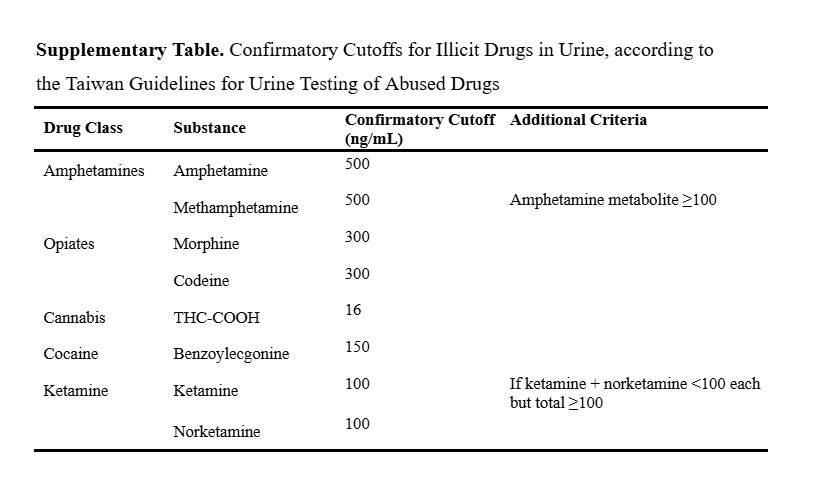
Conclusion(s): Methamphetamine was the predominant illicit drug detected in young children. Most concentrations were well below the current forensic cutoff of 500 ng/mL, indicating that reliance on existing thresholds may fail to identify clinically relevant exposures in the context of child protection. Lower detection thresholds and standardized protocols may be warranted to improve child protection in Taiwan.
Concentrations of Drugs and Metabolites Detected in Urine Samples
Confirmatory Cutoffs for Illicit Drugs in Urine, according to the Taiwan Guidelines for Urine Testing of Abused Drugs