218 - Understanding Parent Preferences for Influenza–COVID Combination Vaccines in the US: Evidence from a Discrete Choice Experiment
Saturday, April 25, 2026
3:30pm - 5:45pm ET
Publication Number: 2210.218
Abram L. Wagner, University of Michigan, Ann Arbor, MI, United States; Angela Rose, University of Michigan Medical School, Ann Arbor, MI, United States; Mengdi Ji, University of Michigan Medical School, Ann Arbor, MI, United States; Devyani Bhatnagar, University of Michigan Medical School, Cambridge, MA, United States; Lisa Prosser, University of Michigan Medical School, Ann Arbor, MI, United States
Project Manager University of Michigan Medical School Ann Arbor, Michigan, United States
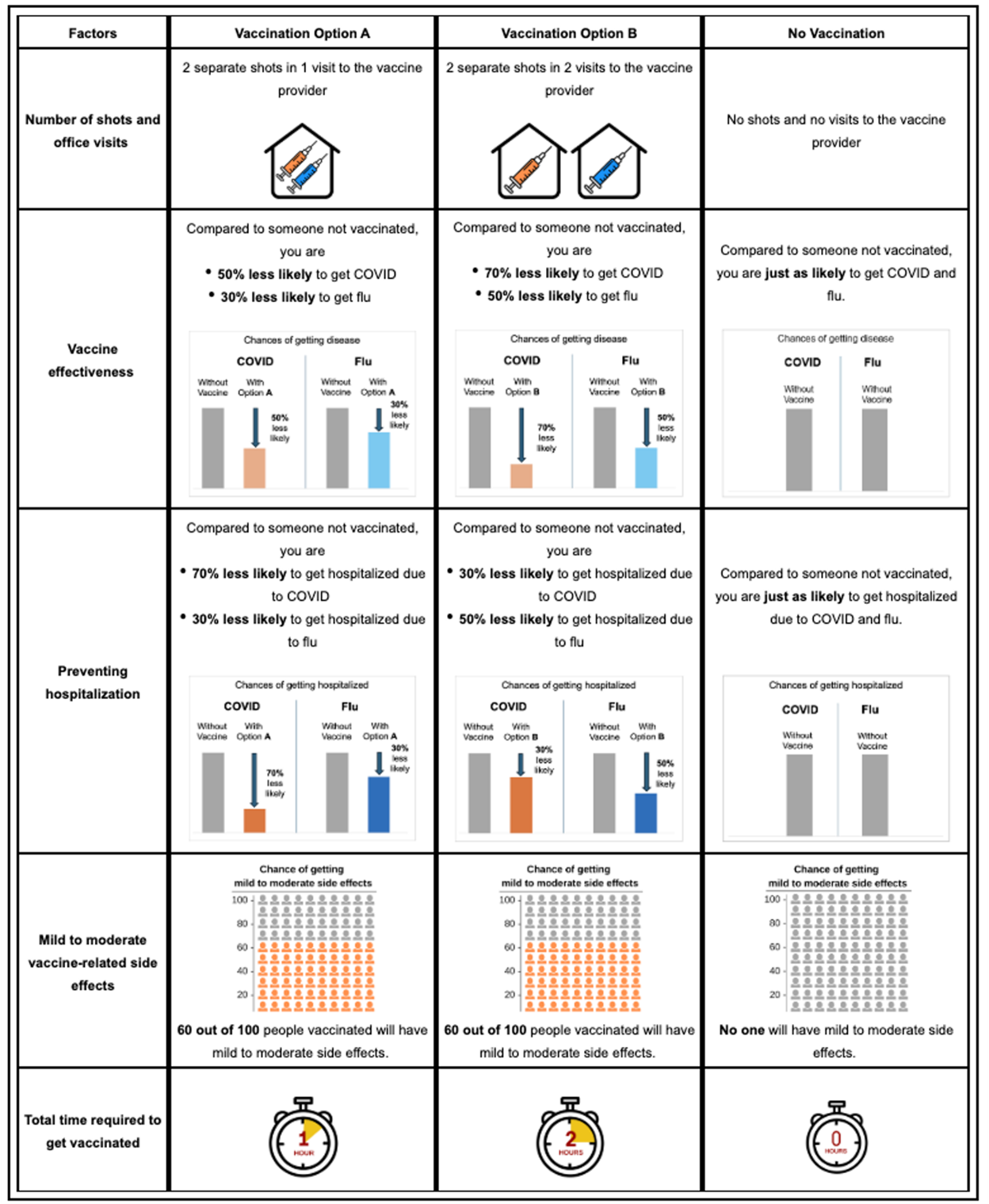
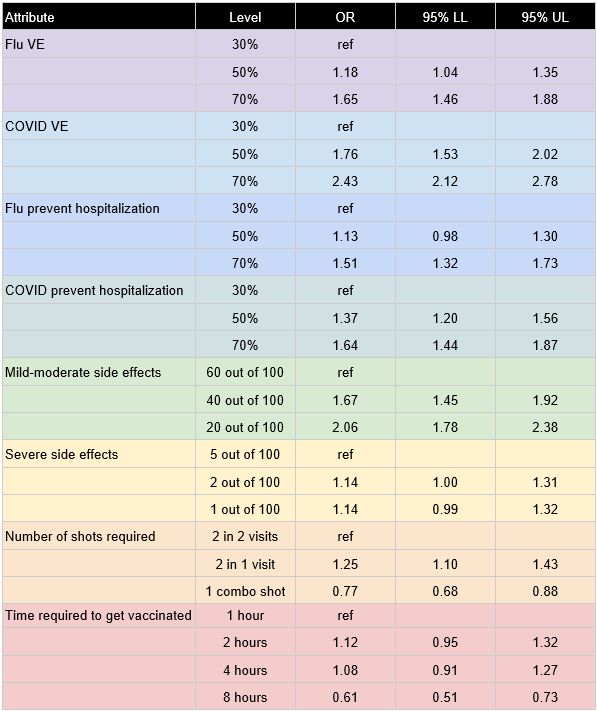
Background: Vaccination coverage in the United States has fallen in the post-pandemic era. By April 2025, only 13% of children had received the COVID-19 vaccine for the 2024-2025 season, while flu vaccination rates are higher (49%) they remain below pre-pandemic levels. Combination vaccines hold promise for improving adherence to vaccine recommendations by reducing vaccination fatigue and minimizing the number of injections and clinic visits. Objective: To evaluate preferences for influenza and COVID-19 combination vaccines among US parents. Design/Methods: Parents were recruited through a national online panel to complete a discrete choice survey (n=497). Respondents were asked to choose between 2 hypothetical vaccination options described by 6 attributes: vaccine effectiveness against flu and COVID-19 illness, vaccine effectiveness against hospitalization, risk of mild-moderate vaccination side effects, risk of severe vaccination side effects, number of shots and visits required, and total time required to get vaccinated (Figure 1). Respondents could also opt out of choosing either vaccine. The primary analysis used a conditional logit model to generate odds ratios (OR) for preferring a vaccine option with a given attribute. Latent class analysis was used to identify unobserved subgroups with similar preference structures. Results: Among parents, higher vaccine effectiveness and lower rates of mild-to-moderate side effects were the strongest drivers of vaccination choice. Increasing COVID-19 vaccine effectiveness from 30% to 70% more than doubled the odds of vaccine selection (OR: 2.43, 95% CI: 2.12-2.78), and reducing side effects from 60 to 20 out of 100 similarly increased uptake odds (OR: 2.06, 95% CI: 1.78-2.38). Parents preferred one-visit administration with two shots (OR: 1.25, 95% CI: 1.10-1.43), but were less likely to choose a single combination shot (OR: 0.77, 95% CI: 0.68-0.88). Based on the LCA results, we grouped parents into 5 categories: vaccine refusers (20.5% of the population), high-efficacy and convenience seekers (35.8%), conventional vaccinators open to combination vaccines (27.9%), hospitalization-focused realists (8.2%), and one-visit completers (7.7%).
Conclusion(s): Most parents preferred 2 separate shots of highly effective flu and COVID vaccines with low rates of side effects. Understanding how parents weigh attributes of vaccination is essential to anticipate uptake, inform communication strategies, and guide manufacturer and policymaker decisions.
Example discrete choice experiment of pediatric flu and COVID-19 vaccination
Results from a discrete choice experiment of pediatric flu and COVID-19 vaccination.