243 - Association of State Paid Parental Leave Programs with Rates of Child Physical Abuse and Neglect Reports to CPS.
Saturday, April 25, 2026
3:30pm - 5:45pm ET
Publication Number: 2234.243
Emily Georges, Seattle Children's, Seattle, WA, United States; Ting Ye, University of Washington, Seattle, WA, United States; Congyu Hang, University of Washington School of Medicine, Seattle, WA, United States
Physician Seattle Children's Seattle, Washington, United States
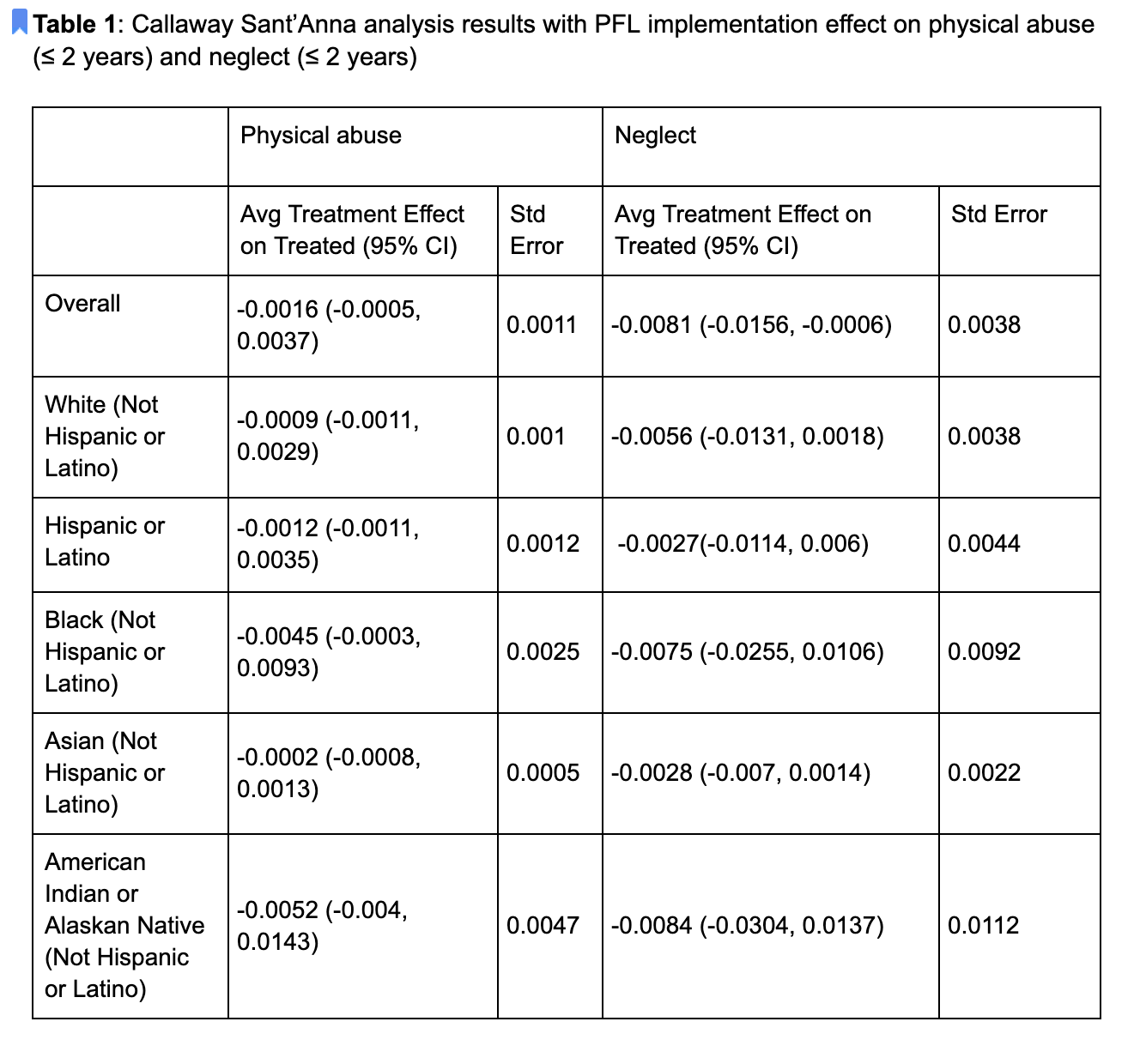
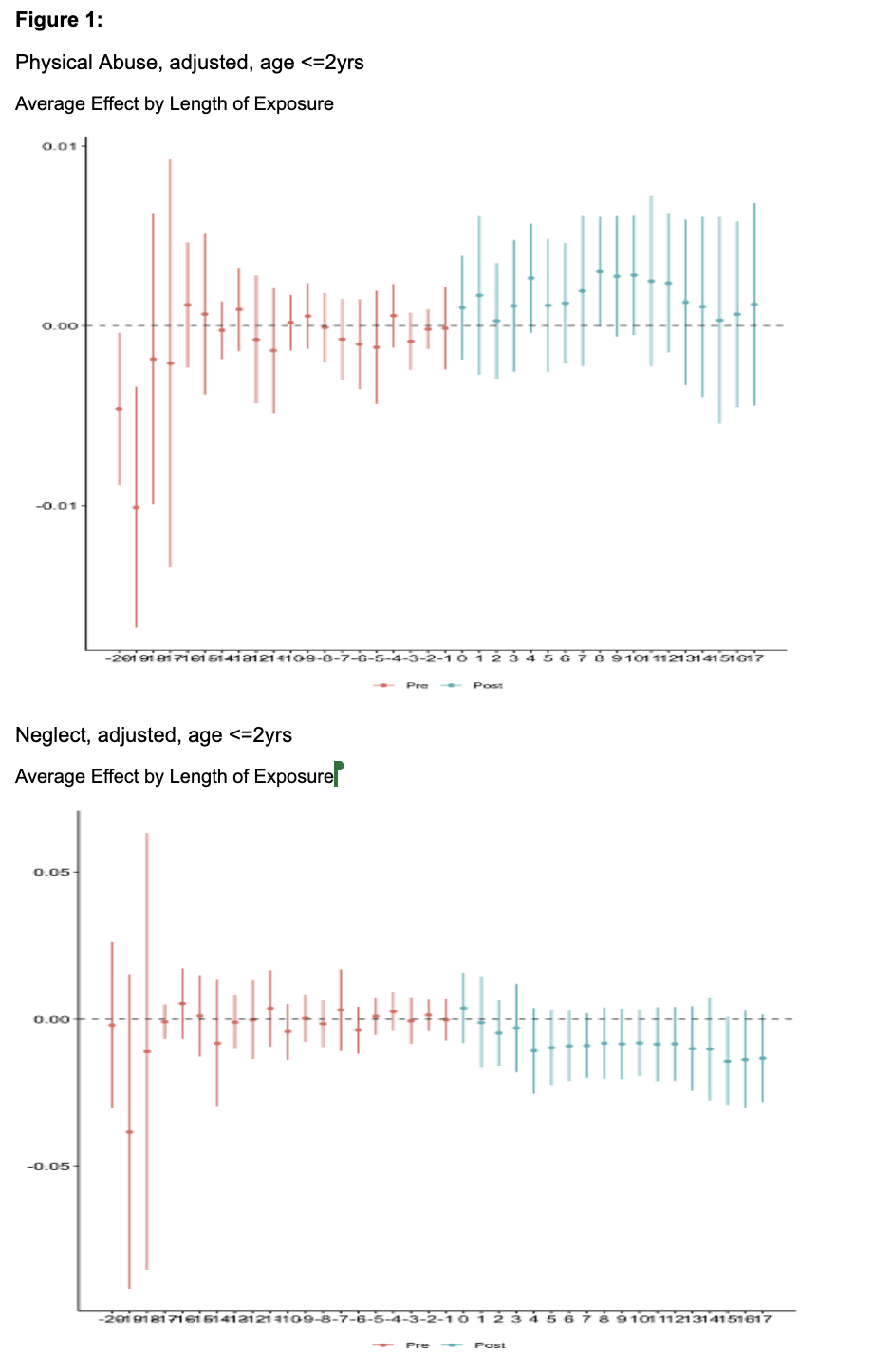
Background: From a health equity perspective, parents have the right to care for their children, and children have the right to be cared for by their parents. Yet the United States remains among the few industrialized nations without a national paid family leave (PFL) policy. Decades of research link PFL to improved parent and child health, including stronger bonding, better maternal mental health, and greater financial stability. Poverty and parental mental illness are well-established risk factors for child abuse and neglect, and emerging evidence suggests social policies addressing these risks may reduce maltreatment. However, limited research has examined how differences in state PFL programs-such as duration, wage replacement, and uptake-affect rates of child abuse and neglect. Objective: To determine if (1) PFL policy implementation is associated with a decreased rate of child physical abuse and neglect and (2) There is an association between the generosity of PFL policies (number of weeks offered and percent wages compensated) and rates of physical abuse, and neglect. Design/Methods: We use a multiple time period difference-in-differences approach to control for staggered adoption and determine the effect paid family leave on each outcome (reports of neglect and physical abuse). We also used event study models to evaluate PFL implementation effects pre- and post- policy adoption. Finally, we conducted several sensitivity analyses looking at: (1) children ≤ 1 year old, (2) only substantiated cases, (3) unadjusted analyses, (4) using two-way fixed effect. Results: The impact of PFL implementation on neglect for this age group is statistically significant, regardless of substantiation and adjustment. We found no statistically significant impact of PFL implementation on physical abuse for ages children under 2 years old was observed.
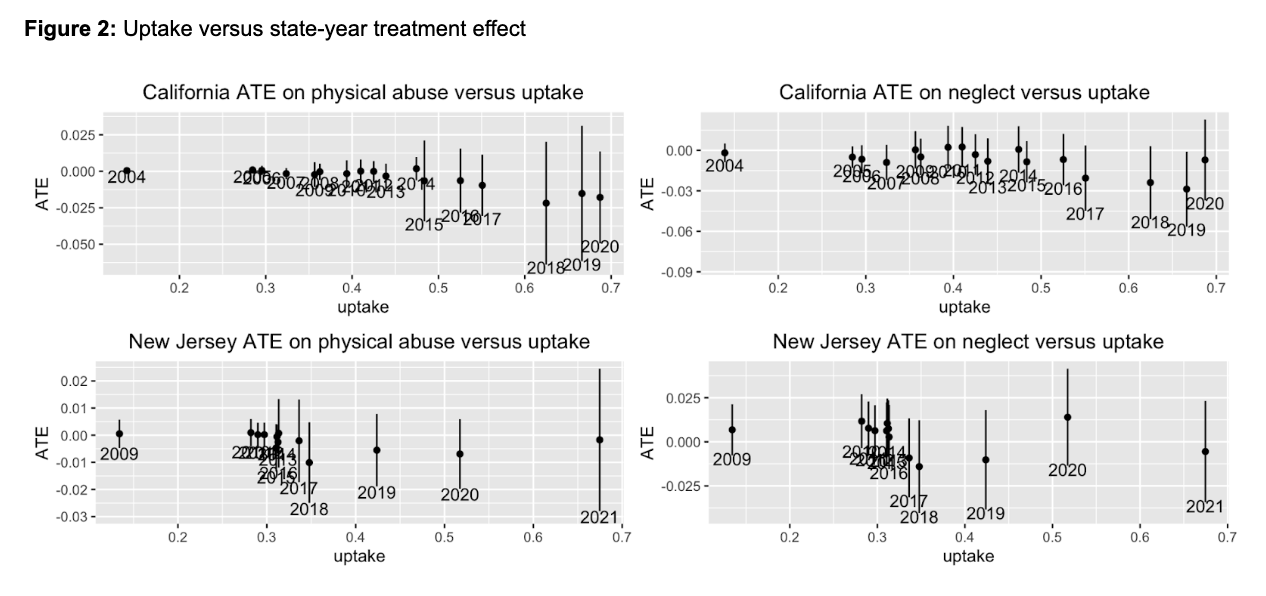
Conclusion(s): The findings of PFL implementation being associated with a reduction in neglect that becomes more prominent with time is consistent with existing literature that shows the overall positive impact these policies have on the economic and interpersonal health of parents. While this study found no statistically significant association between implementation of PFL and reports for physical abuse there was a negative trend in reports for child physical abuse in states after implementation of PFL. It is possible the lack of a statistical significance speaks to the overall insufficiencies of PFL policies in the United States. Finally, while data capturing uptake of these policies is limited, we found a trend that the association was stronger as uptake increased.
Table 1 PFL implementation effect on physical abuse (≤ 2 years) and neglect (≤ 2 years)