134 - Identifying Barriers to Discharge Readiness for At-Risk Children with Cancer: A Mixed-methods Study
Saturday, April 25, 2026
3:30pm - 5:45pm ET
Publication Number: 2129.134
Shoshana Fiorino, The Children's Hospital at Montefiore, Bronx, NY, United States; Daniel A.. Weiser, The Children's Hospital at Montefiore, Bronx, NY, United States; Rachel Offenbacher, Albert Einstein College of Medicine, New York, NY, United States
Senior Study Coordinator The Children's Hospital at Montefiore/Albert Einstein College of Medicine Bronx, New York, United States
Background: Children with newly diagnosed cancer are particularly vulnerable to medical errors during the transition from hospital to home due to their immunocompromised state. Pediatric oncology providers educate patients and caregivers on safely transitioning home, such as infection precautions and central line care. Receiving comprehensive, consistent discharge instructions in their first discharge is imperative to limit adverse events. Identifying provider barriers can inform targeted interventions. Objective: To identify barriers to efficient, consistent, and safe discharge from a provider perspective. Design/Methods: This is a mixed-methods exploratory sequential study of pediatric providers who provide education to patients with newly diagnosed cancer. Using purposive sampling, we conducted semi-structured interviews with providers at an academic, quaternary care children's hospital in an urban setting. Interviews were coded by two independent coders using thematic analysis, and resulting themes informed an anonymous survey of all current pediatric oncology providers at the same institution. Results: One hundred survey responses were received, and 22 providers were interviewed. Key interview themes included 1) Unclear discharge roles and responsibilities; 2) Variability in timing, content, and approach of teaching; 3) Challenges such as inadequate provider education and absence of standardized guidelines for oncology-specific discharges; 4) Limited patient/caregiver understanding of essential care instructions after initial hospitalization; 5) Potential for educational tools for providers and patients to improve discharge teaching. Survey results support these themes: only 22% of survey respondents received formal education in oncology-specific discharges; 61% felt not or somewhat comfortable providing discharge education; 64% reported unclear division of discharge responsibilities and 47% cited difficulty with time constraints. Majority of providers reported patients struggle with expectations for clinic visit schedule and when to call the clinic for medical concerns.
Conclusion(s): Providers report barriers to delivering effective discharge education for newly diagnosed pediatric cancer patients, leading to knowledge gaps that hinder safe transitions home. Addressing these barriers through interventions, such as evidence-based institutional guidelines, may enhance discharge education and reduce adverse outcomes. Future studies will investigate how a standardized, multidisciplinary discharge process minimizes provider barriers to discharge education and improves patient understanding of anticipatory guidance.
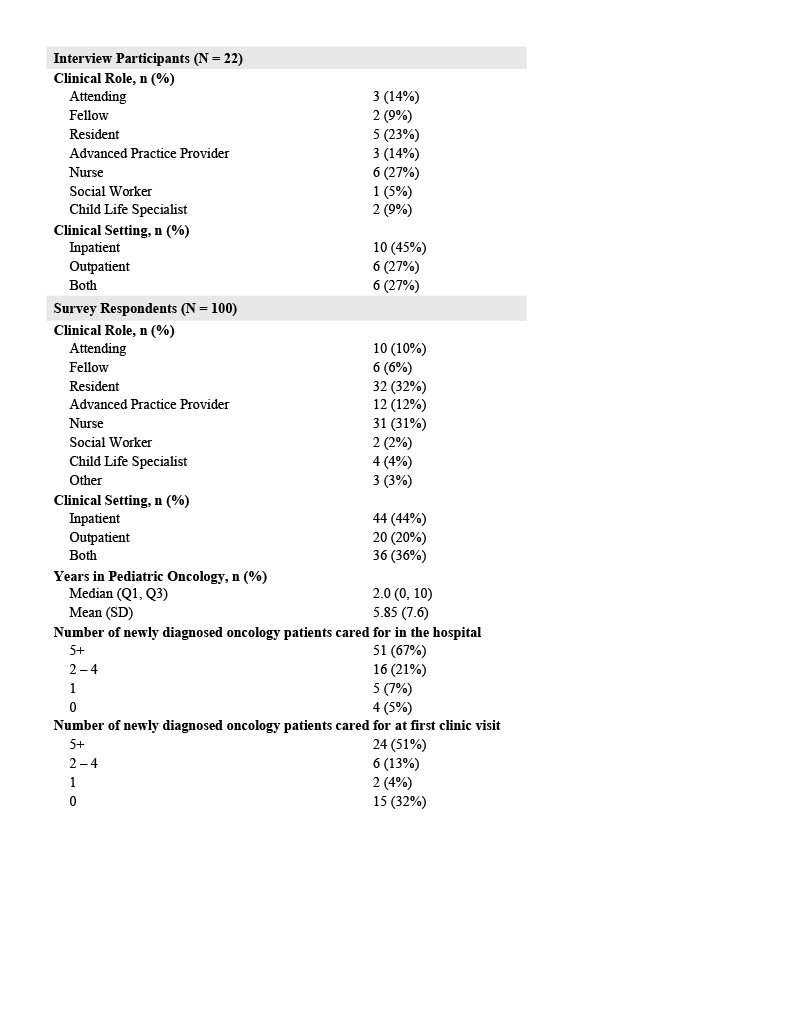
Table 1: Characteristics of interview and survey participants
Table 2: Themes and subthemes from qualitative interviews.










.jpg)
.jpg)
