








Mental Health
Session: Mental Health 4: Innovations

Sashmitaa Bagavathiraj, MSN (she/her/hers)
RN
University of Minnesota
Eden Prairie, Minnesota, United States
.png) This table summarizes the most frequently reported adverse effects of psychotropic medications, their associated drug classes, and their potential impact on adolescent health. While these medications can be effective for managing symptoms, side effects such as sleep problems, appetite changes, gastrointestinal issues, and motor impairments raise concerns about long-term safety.
This table summarizes the most frequently reported adverse effects of psychotropic medications, their associated drug classes, and their potential impact on adolescent health. While these medications can be effective for managing symptoms, side effects such as sleep problems, appetite changes, gastrointestinal issues, and motor impairments raise concerns about long-term safety.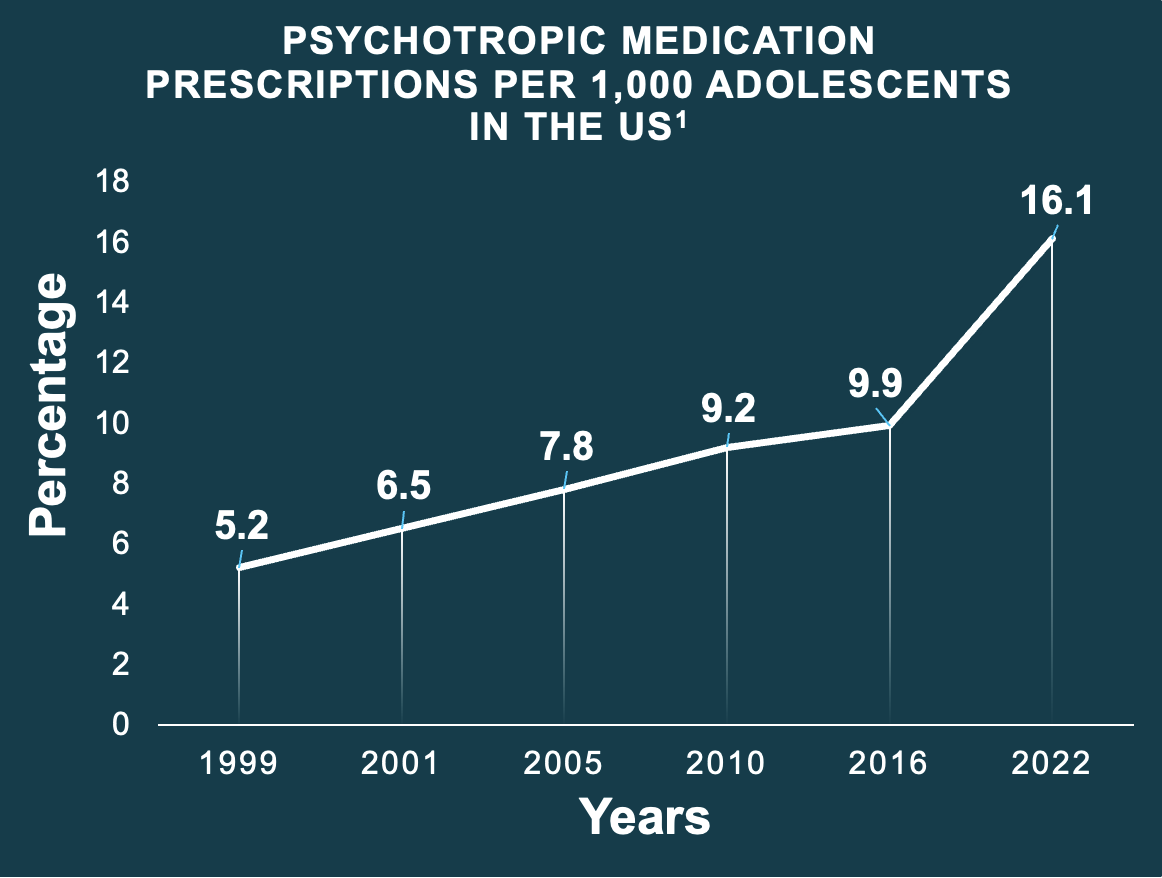 This graph shows the steady increase in psychotropic medication prescriptions per 1,000 adolescents in the U.S. over the past two decades, with rates rising from 5.2% in 1999 to 16.1% in 2022.
 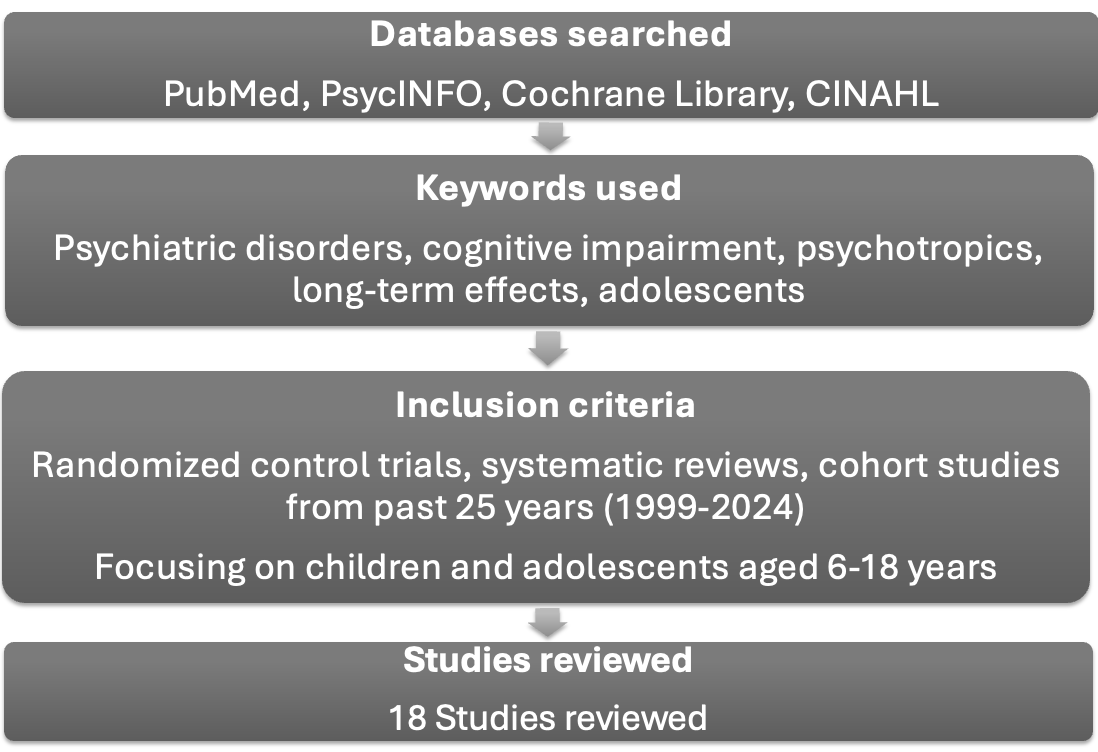 The flowchart outlines the methodology for this review, including databases searched, keywords used, and inclusion criteria. From studies published between 1999 and 2024, a total of 18 eligible studies were reviewed to assess the long-term effects of psychotropic medication use in children and adolescents.