700 - Navigating Parenthood During Fellowship: A National Survey of Pregnancy and Parental Leave Policies in Pediatric Emergency Medicine Fellowship Programs
Sunday, April 26, 2026
9:30am - 11:30am ET
Publication Number: 3677.700
Julie Leviter, Yale School of Medicine, Woodbridge, CT, United States; Kimberly A. Randell, Children's Mercy Kansas City, Kansas City, MO, United States; Rasika Bhamre, Children's Mercy Hospitals and Clinics, Kansas City, MO, United States; Seema Bhatt, University of Cincinnati College of Medicine, cincinnati, OH, United States; Rebekah Burns, University of Washington, Seattle, WA, United States; Corrie E. Chumpitazi, Duke University School of Medicine, Durham, NC, United States; Zoe Grabinski, New York University Grossman School of Medicine, New York, NY, United States; Selena Hariharan, University of Cincinnati College of Medicine, Cincinnati Children’s Hospital Medical Center, Cincinnati, OH, United States; Roni D. Lane, Primary Children's Hospital, Salt Lake City, UT, United States; Tamar Lubell, Columbia University Vagelos College of Physicians and Surgeons, New York, NY, United States; Annie Rominger, Wake Forest University/Levine Children's Hospital/Advocate Healtj, 1000 Blythe blvd, suite 300, NC, United States; Karen Mangold, Ann & Robert H. Lurie Children's Hospital of Chicago, Chicago, IL, United States
Assistant Professor of Clinical Pediatrics (Emergency Medicine) Yale School of Medicine Woodbridge, Connecticut, United States
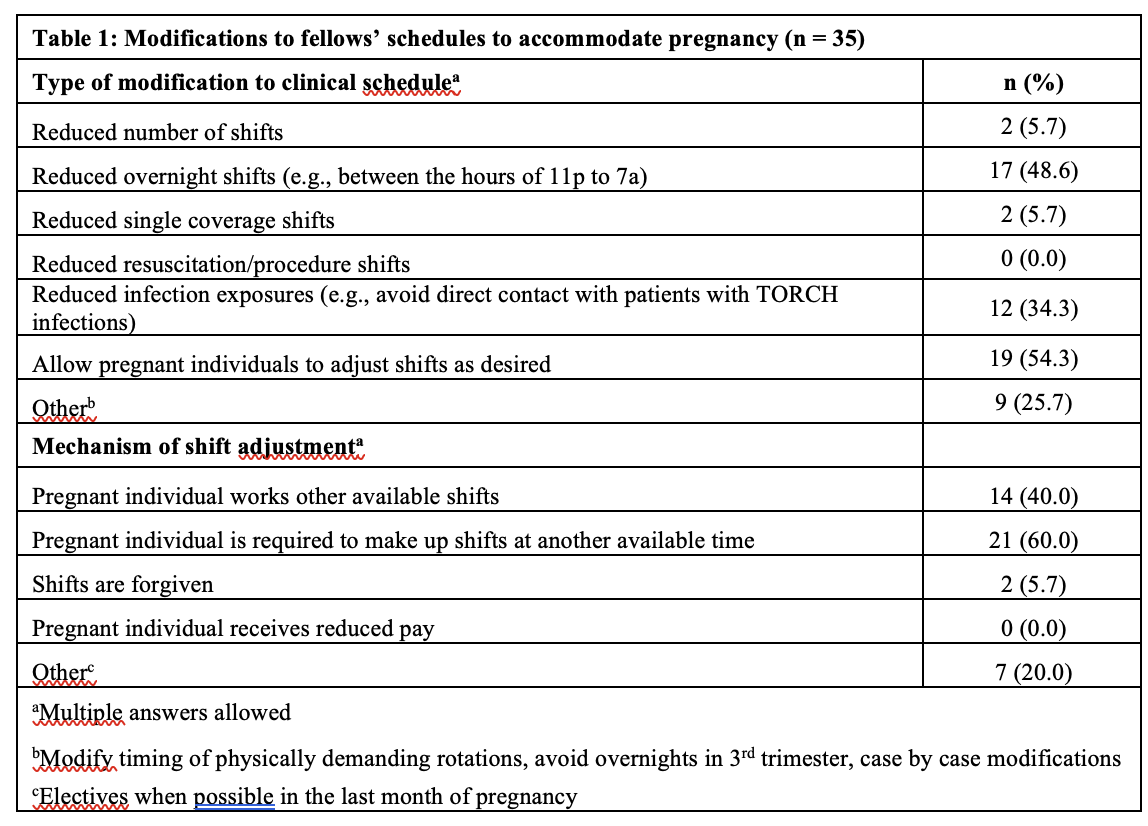
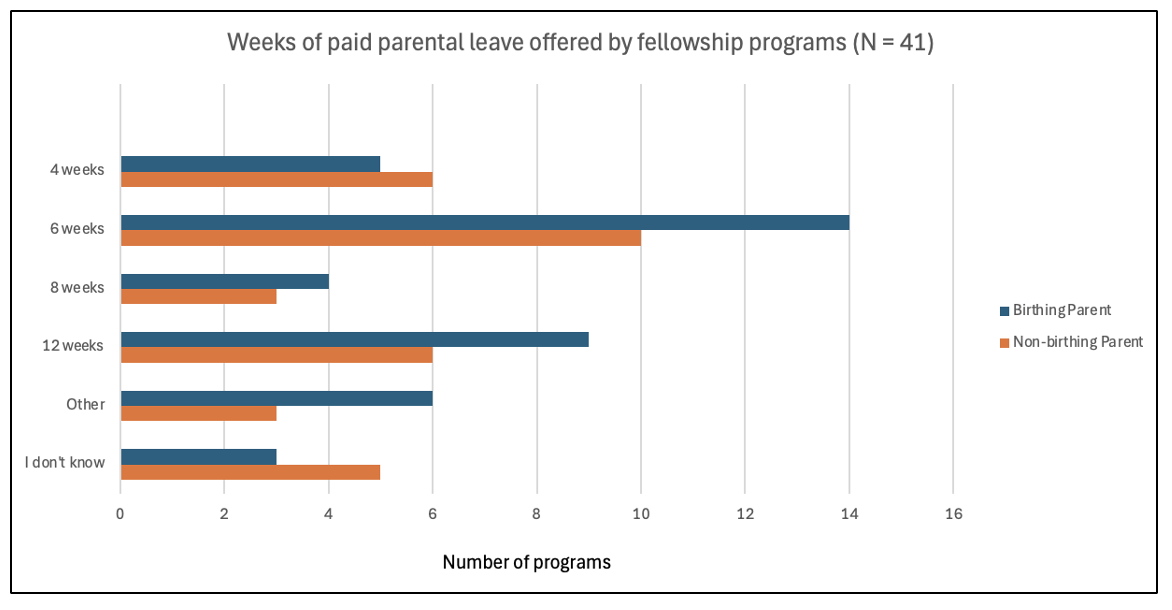
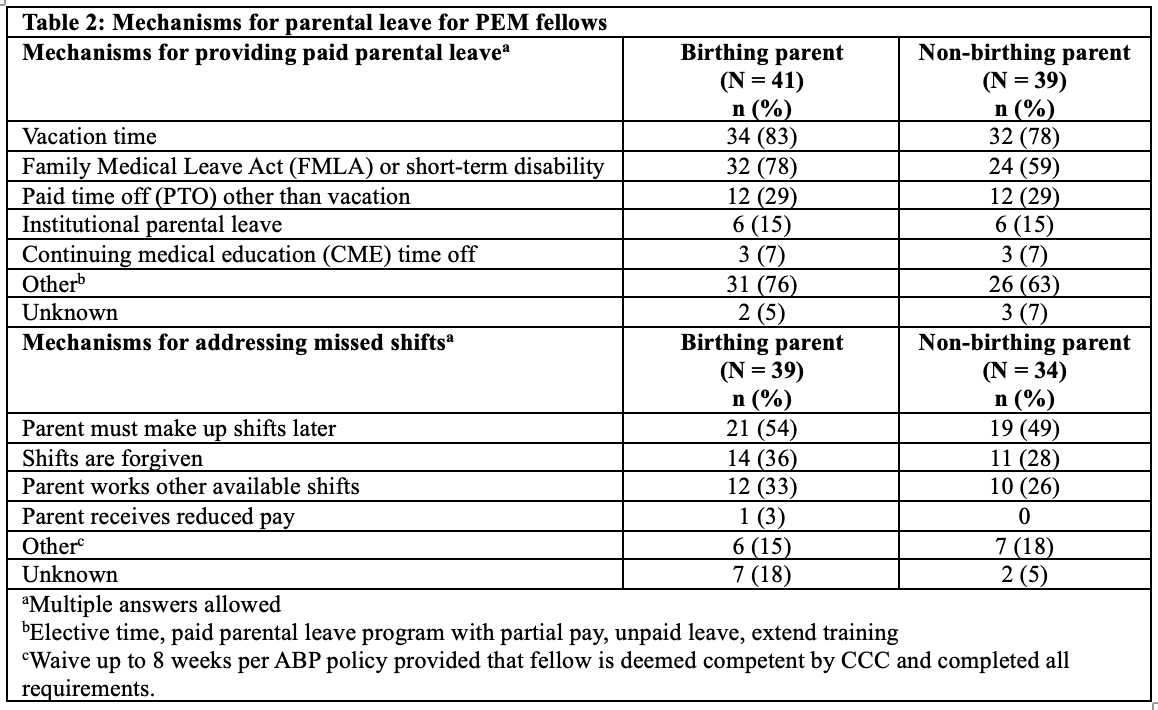
Background: Pregnant individuals and new parents have unique needs, which must be accommodated for by their employers. The distinctive schedule and stress of shifts in emergency medicine are particularly difficult for these individuals and may require adjustments for the health of the physician. Professional organizations like ACEP, AWAEM, and AAWEP have proposed guidelines to support these individuals. Occupational exposures in Emergency Medicine (EM), such as night shifts, are linked to adverse pregnancy outcomes, prompting recommendations for shift adjustments. Breastfeeding benefits from longer maternity leave and paid parental leave for both birthing and non-birthing parents. Objective: This study aims to outline pregnancy and parental leave policies for Pediatric Emergency Medicine (PEM) fellows across U.S. institutions. Design/Methods: We distributed the survey to the PEM Program Director listserv, which includes 94 members representing 85 fellowship programs including both program directors (PDs) and assistant program directors (APDs). Data on policies and experiences of women and birthing parents were collected and analyzed using descriptive statistics. Results: We received 51 responses to the survey, representing 60% of the 85 PEM fellowship programs in existence at the time of the survey. Of those to respond, most programs (75%) modify schedules for pregnant fellows, many reducing overnight shifts in the third trimester. Most allow pregnant individuals to adjust shifts as desired. Of those who make shift adjustments before childbirth, most are required to make up missed shifts at another time or work other available shifts. Most have no standardized stop date prior to delivery. Programs vary widely in their approach to parental leave, with FMLA and Short-Term Disability commonly used to plan paid leave. Most report between 4-8 weeks of parental leave for both birthing and non-birthing parents. Many fellows are required to make up missed shifts, despite the lack of minimum shift requirements in fellowship and the existence of a Training Waiver.
Conclusion(s): Disparities exist in policies across institutions regarding policies for pregnancy and parental leave for PEM fellows. The variability highlights a need for standardized guidelines to support new parents in PEM training.
Table 1: Modifications to fellows' schedules to accommodate pregnancy.
Figure 1: Number of weeks of paid parental leave offered by fellowships for birthing parent (N = 41) and non-birthing parent (N = 33), not inclusive of vacation time.
Table 2: Mechanisms of creating parental leave for PEM fellows and for making up missed shifts.