328 - Measuring Feeding in Preterm Infants: Clinical Assessment Versus Neoneur Feeding System
Sunday, April 26, 2026
9:30am - 11:30am ET
Publication Number: 3317.328
Justine Pirozzi, Thomas Jefferson University Hosital, Philadelphia, PA, United States; Geetika Kennady, Nemours Children's Health, Swedesboro, NJ, United States; Amy J. Sloane, Nemours Children's Health at Thomas Jefferson University, Dresher, PA, United States; Zubair H. Aghai, Nemours Children's Hospital, Philadelphia, PA, United States; Caroline VLS. Hoedemaker, Neoneur LLC, Pennington, NJ, United States; Barbara medoff Cooper, University of Pennsylvania, Philadelphia, PA, United States; Alicia M. Graf, Sidney Kimmel Medical College at Thomas Jefferson University, Monroeville, NJ, United States; Dermis de Jesus, Jefferson Health, Philadelphia, PA, United States
Fellow Physician Thomas Jefferson University Hosital Philadelphia, Pennsylvania, United States
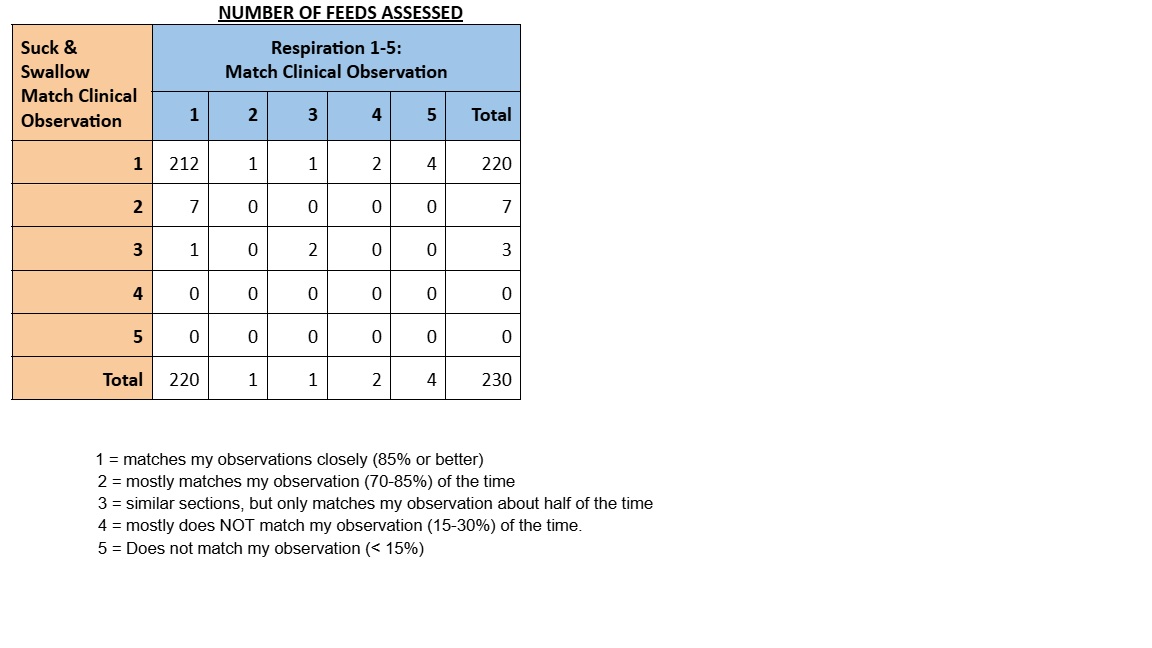
Background: Preterm infants have immature feeding skills, limiting their ability to efficiently consume nutrients while also protecting their airway. The Neoneur Feeding System (NFS) is a handheld 2-inch device designed to fit standard nipples and bottles It measures oral cavity pressures and respirations, recording real-time patterns of suck, swallow, and breathing during feeds. This device is currently pending FDA approval for clinical use. Objective: To evaluate feeding and respiratory skills in preterm infants via the NFS, and correlate findings with clinical assessments by Speech Language Pathologists (SLPs). Design/Methods: This is a prospective, non-randomized longitudinal study of infants born < 34 weeks' gestational from the level III neonatal intensive care unit at Thomas Jefferson University Hospital. Each infant had a minimum of 6 feeds tracked over 3 weeks. During each feeding, the NFS recorded suck, swallow and respirations. These patterns were compared with concurrent feeding assessments by SLPs (reference standard). SLPs assigned a correlation score on a 1-5 scale; 1 indicated a strong match (>85% agreement with clinical observation) and 5 indicated a poor match ( < 15% agreement). Results: This preliminary analysis included 42 patients with a mean gestation of 29.9 weeks (SD: 2.73), mean birth weight of 1377g (SD: 485g), and mean birth weight Z-score of -0.27 (SD: 0.92). Of the total 244 feeds assessed, 14 were eliminated due to low suck pressure. Across feeds, there was a 92% match between the SLP clinical assessments and NFS measurements.
Conclusion(s): The NFS reliably captures real-time suck, swallow and respiratory patterns in preterm infants, demonstrating 92% concordance with SLP assessments.
Figure 1. Clinical correlation of suck, swallow and respiration of Speech Language Pathologist clinical assessment with NFS live tracking data.