Session: Medical Education 7: Resident - Curriculum II
747 - Enhancing Pediatric Outpatient Medicine Education in an Ambulatory Pediatric Residency Clinic
Sunday, April 26, 2026
9:30am - 11:30am ET
Publication Number: 3723.747
Nico Espinal, Henry Ford St. John Hospital, Royal Oak, MI, United States; Michelle M. Truong, Henry Ford St John Childrens Hospital, Detroit, MI, United States; Karen Alton, Henry Ford St. John Hospital, Farmington Hills, MI, United States; Christy A. Petroff, Henry Ford St. John Children's Hospital, Detroit, MI, United States
Resident Physician Henry Ford St. John Hospital Royal Oak, Michigan, United States
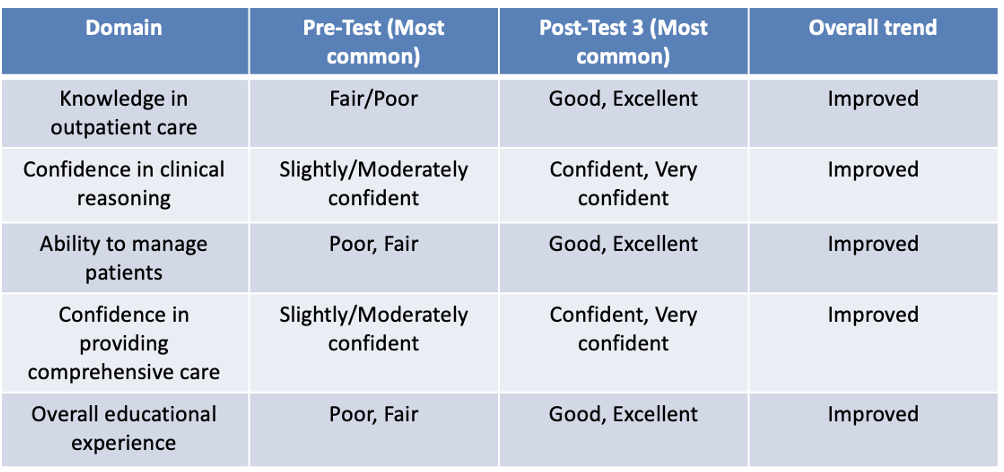
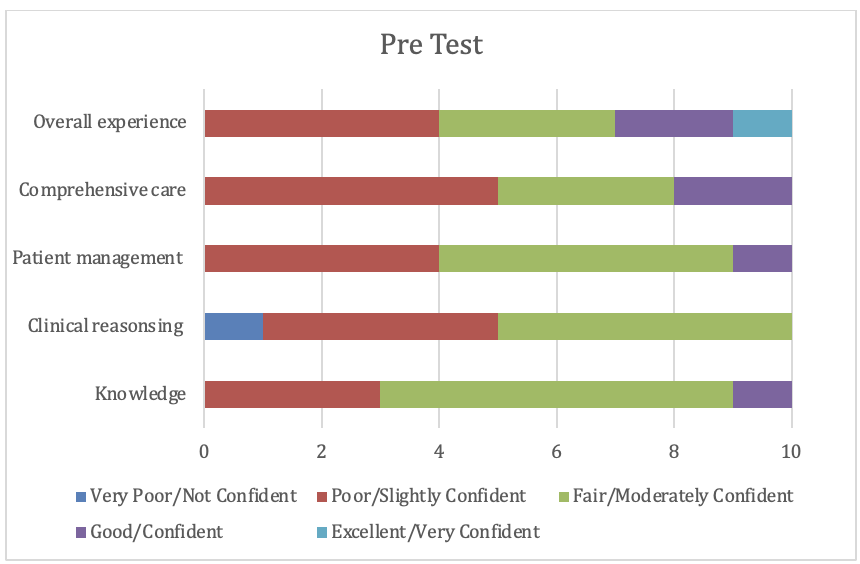
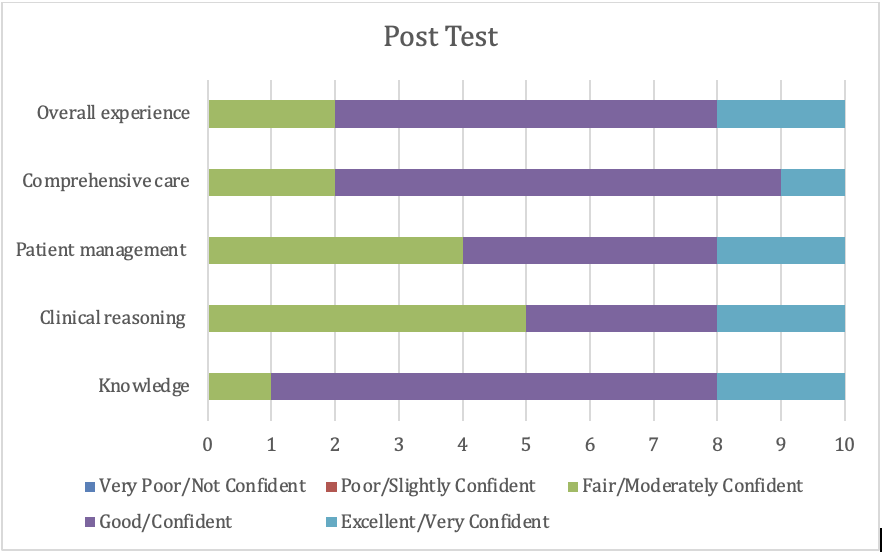
Background: Strengthening outpatient pediatric education is essential to preparing residents for the demands of ambulatory care. Case-based learning (CBL) has been shown to enhance clinical reasoning and engagement by immersing learners in realistic patient scenarios. The Yale Primary Care Pediatrics Curriculum, rooted in CBL, was implemented to support these goals within a resident-led primary care conference. Objective: This study evaluated the impact of a structured, case-based outpatient curriculum on pediatric residents' perceived knowledge, clinical reasoning, patient management skills, professional identity, and satisfaction with ambulatory training. Design/Methods: A pre-post interventional design was conducted with ten PGY-1 residents during the 2024-2025 academic year. Weekly 30-minute CBL sessions were delivered facilitated by senior residents using cases from the Yale Primary Care Pediatrics Curriculum. Participants completed de-identified surveys before curriculum initiation and after each cycle, assessing different domains including knowledge, clinical reasoning, patient management, professional identity, comprehensive care, and overall educational experience. Data were analyzed descriptively to compare pre- and post-intervention trends. Results: Residents demonstrated consistent improvement across all measured domains. Self-reported knowledge progressed from "poor/fair" to predominantly "good/excellent." Confidence in clinical reasoning and patient management similarly increased, with greater proportions reporting "confident/very confident" after the intervention. Perceived contributions to professional identity and responsibility for patient care strengthened across cycles. Satisfaction with the outpatient educational experience increased, with residents overwhelmingly rating the curriculum as relevant and beneficial to clinical practice.
Conclusion(s): Implementation of a case-based outpatient curriculum was associated with improved perceived competence, confidence, and professional growth among pediatric residents. These findings suggest that structured, resident-led CBL may serve as an effective model for enhancing ambulatory pediatric education especially in community hospital residency program settings. Future studies incorporating objective performance measures and multi-institutional data are warranted.