101 - Delayed Cord Clamping in Preterm Infants: A Quality Improvement Initiative
Sunday, April 26, 2026
9:30am - 11:30am ET
Publication Number: 3097.101
Odattil Geetha, SINGHEALTH, Singapore, N/A, Singapore; Kelly Teo Jia Hui, KK Women's and Children's Hospital, Singapore, N/A, Singapore; Karthigha Pon Rajoo, KK Women and Children Hospital, Singapore, Singapore, N/A, Singapore; Banas Lizaso. Janlie, KK womens and childrens hospital, Singapore, N/A, Singapore
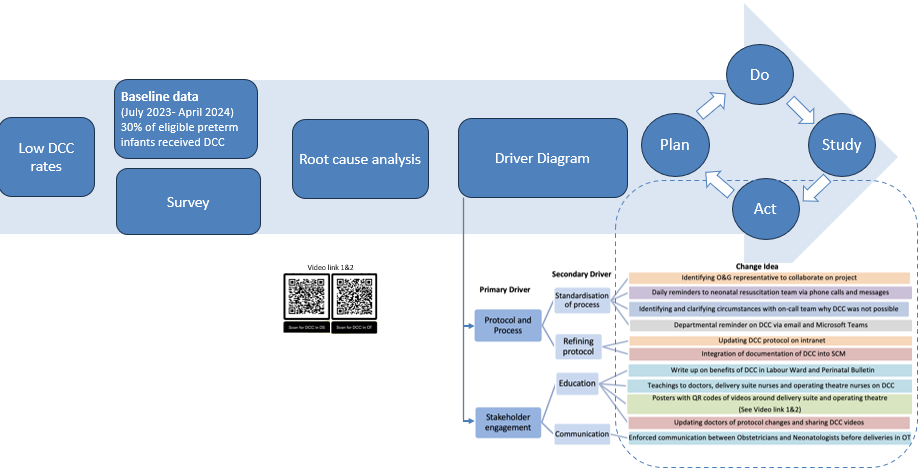
Background: Delayed cord clamping (DCC) is standard practice of care in term infants. But its implementation among preterm infants has remained inconsistent despite well-established benefits. Objective: This Quality Improvement initiative aims to increase DCC rates in infants born at < 33 weeks' gestation by 20% over 13 months. Baseline data from July 2023 to April 2024 showed only 30% of eligible preterm infants received DCC. Design/Methods: A pre-intervention survey and root cause analysis identified key barriers, including logistical challenges during night shifts, patient-related limitations and inconsistent clinician practice arising from varied opinions, fatigue, and lack of confidence. Nurses reported limited awareness and perceived DCC as outside their scope. Education gaps, outdated protocols, poor documentation, and ineffective communication further hindered compliance.
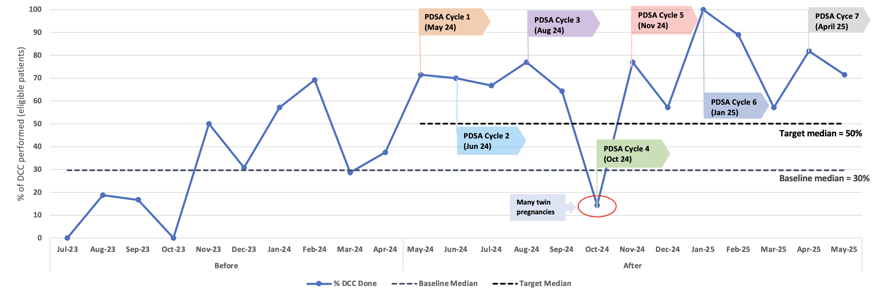
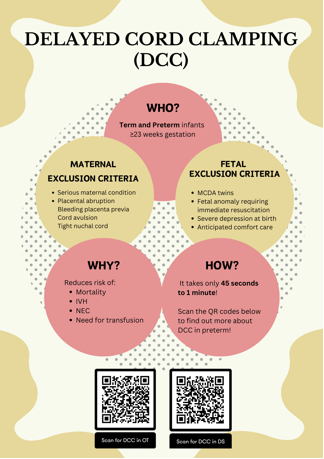
Targeted interventions were implemented using serial Plan-Do-Study-Act cycles. Collaboration was established with the Obstetrics and Gynaecology department. The DCC protocol was updated in alignment with international guidelines and disseminated. Compliance was reinforced through daily reminders, follow-up discussions, and emphasis on clear documentations. Stakeholder engagement was central: doctors and nurses were educated through teaching sessions, instructional videos, printed posters with QR codes linking to video demonstration, and a dedicated section on the Labour Ward and Perinatal Bulletin. Post intervention survey was conducted to assess the project's impact: 91% of respondents reported routinely remembering to perform DCC, up from 46%, and 59% frequently requested DCC, compared to 14% pre-intervention. Results: The median DCC rate improved to 71% from 30% during the intervention period (May 2024-May 2025), exceeding the original target without any significant compromise in care.
Conclusion(s): A structured, multidisciplinary approach, and engaging stakeholders in refining the protocol and processes, improved awareness and confidence in performing DCC, increasing DCC rates among preterm infants. Sustained efforts through education, protocol reinforcement, and audits are ongoing. Future studies will evaluate the impact of improved DCC rates on clinical outcomes, including neonatal mortality and transfusion needs. DCC rates remained high from June-August 2025 post completion of PDSA cycles, keeping the median rate of DCC done for eligible preterm infants at 71% thus ensuring the sustainability.