42 - Opening the conversation: A rapid qualitative analysis of patient-provider text messages from the Yale Mother-Infant Program
Sunday, April 26, 2026
9:30am - 11:30am ET
Publication Number: 3039.42
Victoria Cueto Vilorio, Yale School of Medicine, New Haven, CT, United States; Nicole C. Amodio, Yale School of Medicine, Phoenix, AZ, United States; Leslie E. Sude, yale university, Madison CT, CT, United States; Elizabeth Znamierowski, Yale School of Medicine, Norwalk, CT, United States; Julia Rosenberg, Yale University, New Haven, CT, United States
Clinical Director, Yale Mother Infant Program Yale School of Medicine Norwalk, Connecticut, United States
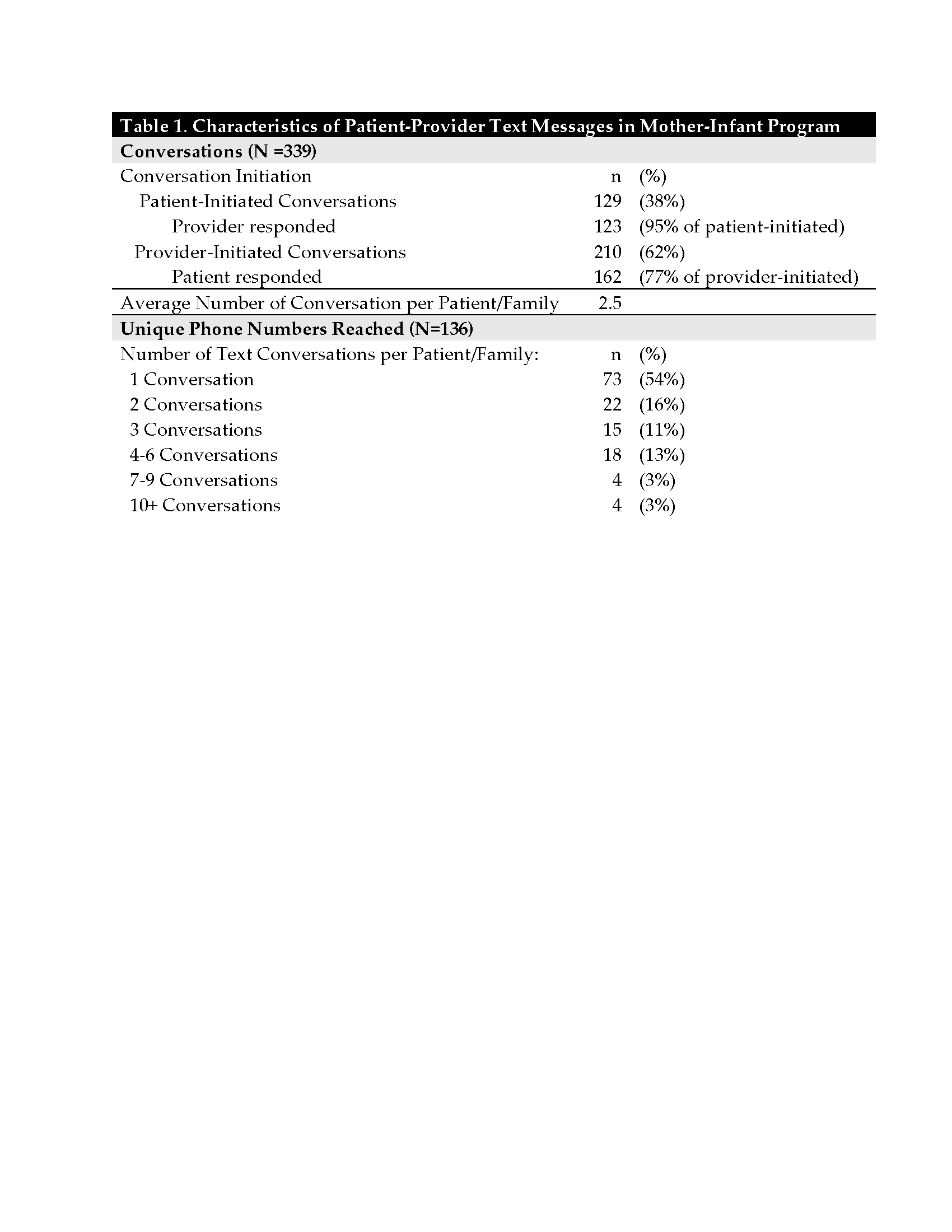
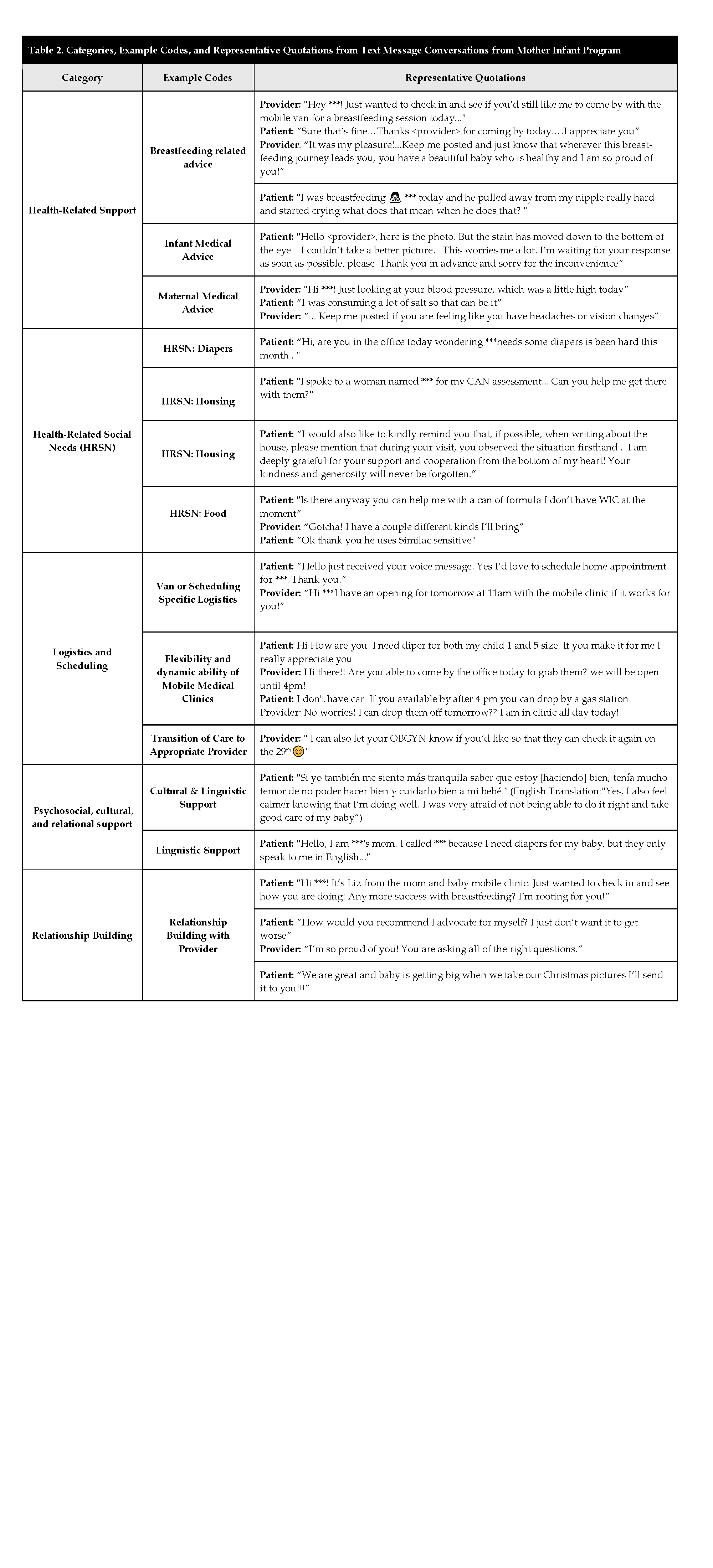
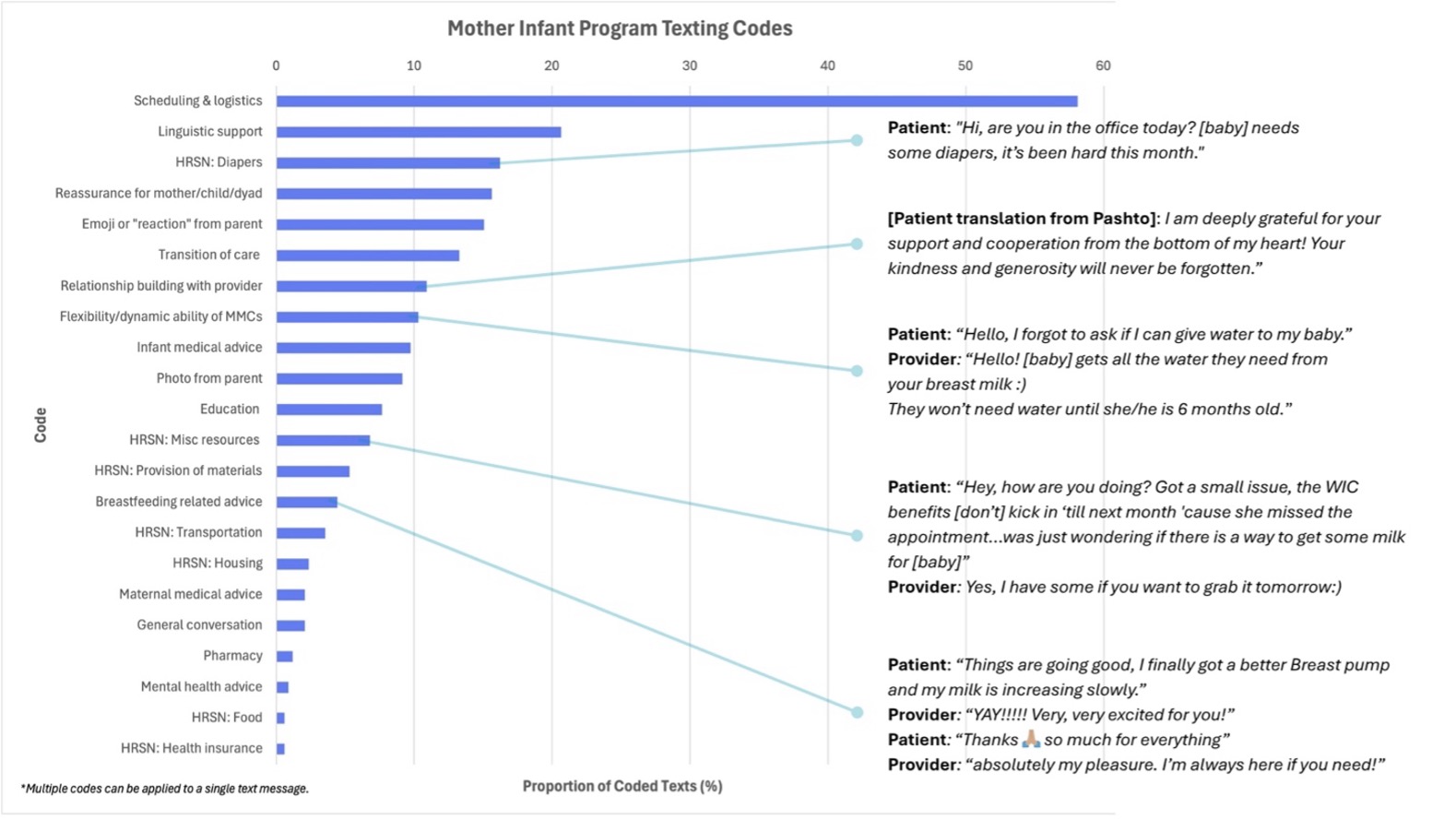
Background: The Yale Mother Infant Program (MIP) is a mobile medical clinic providing person-centered, dyadic postpartum care. Text messages, initially used for visit reminders, offered ongoing opportunities for patients to communicate directly with the MIP provider. Objective: To analyze MIP text messages to identify maternal-infant care needs and opportunities to improve postpartum care and patient-provider communication. Design/Methods: We conducted a rapid qualitative content analysis of deidentified text messages between patients and the MIP pediatric nurse practitioner from December 2023 to January 2025. Using a deductive framework, we applied prespecified codes-informed by current literature and previous analyses of the Yale MIP-to text message conversation content. We transformed qualitative codes into quantitative counts, grouped relevant codes by content type, and compared transformed quantitative and qualitative results via a joint display. Patients consented to text message correspondence during their initial MIP visit, and the evaluation was deemed exempt by the Yale Institutional Review Board (#2000039215). Results: We analyzed 339 text message conversations. There were 137 unique phone numbers/patients reached, with an average of 2.5 conversations per patient (Table 1). Patients initiated 129 (38%) text conversations. Codes with the highest frequency were: scheduling/logistics (58%), non-English texts (21%), material supports ("I don't have diapers") (16%), reassurance ("This actually looks totally normal-I'm so glad you sent it over!") (16%), education ("can [I] give water to my baby?") (11%), infant medical advice ("Usually we will see the cord dry up and fall off at around 2-3 weeks.") (10%), and breastfeeding advice ("when my nipples are hurting does that mean to pump?") (7%) (Figure 1, Table 2).
Conclusion(s): Patient-provider text messaging can promote trust and engagement via communicating health-related and social/material needs, offering psychosocial support, and enabling providers to strengthen patient relationships by sharing reassurance and medical advice.
Characteristics of Patient-Provider Text Messages in Mother-Infant Program
Categories, Example Codes, and Representative Quotations from Text Message Conversations from Mother Infant Program
Mother Infant Program Codes and Frequencies Joint Display