375 - Body Image and Breastfeeding: A Qualitative Evidence Synthesis
Sunday, April 26, 2026
9:30am - 11:30am ET
Publication Number: 3362.375
Janae Kuttamperoor, George Washington University School of Medicine and Health Sciences, New York, NY, United States; Courtney Lesser, George Washington University Milken Institute School of Public Health, Ardsley, NY, United States; Giuliana Grogan, George Washington University School of Medicine and Health Sciences, Washington D.C., DC, United States; Emily R. Smith, George Washington University, Washington, DC, United States; Allison C. Sylvetsky, George Washington University School of Medicine and Health Sciences, Potomac, MD, United States
Research Coordinator NYU Grossman School of Medicine New York, New York, United States
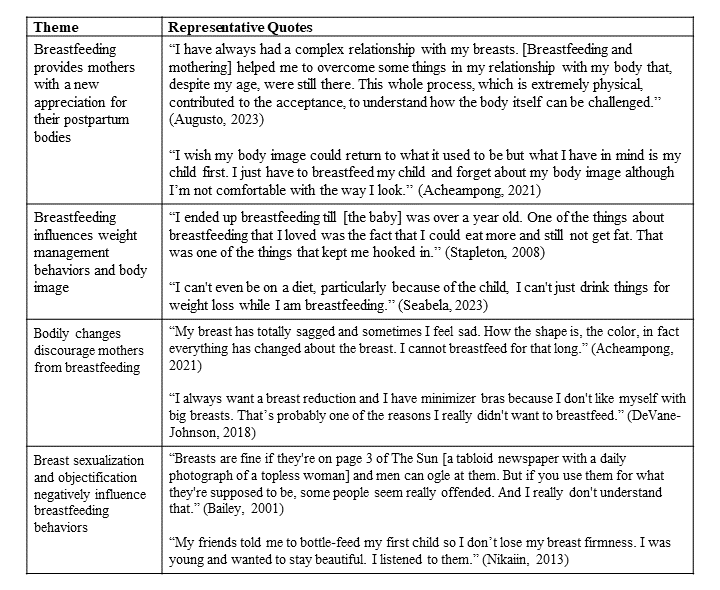
Background: Mothers face physical, emotional, and social challenges during the postpartum period, which can influence mothers' body image and breastfeeding behaviors (i.e., initiation, duration, and exclusivity). Objective: To examine how mothers' perceptions of body image influence their breastfeeding behaviors, and how breastfeeding impacts mothers' perceptions of body image during the postpartum period. Design/Methods: PubMed, PsycINFO, Scopus, and CINAHL were searched to identify qualitative and mixed methods studies when the qualitative findings were reported separately. Additional articles were identified through reference checking, citation searching, and reviewing similar studies. Two reviewers screened title and abstracts for initial eligibility determination: studies written in English that examine postpartum people, perceptions of body image, and breastfeeding behaviors. Potentially eligible articles subsequently underwent full-text review. Data extraction was performed using Covidence, and study quality was assessed using the Critical Appraisal Skills Programme. Two coders independently coded a subset of articles to develop an initial codebook and codes were refined through discussion to develop a final shared codebook. All eligible studies were coded using the final codebook in Dedoose and thematic analysis was used to identify emergent themes and subthemes; after which, representative quotations were selected. Results: Forty-two studies were deemed eligible for inclusion. The following emergent themes (Table 1) were identified: 1) breastfeeding provides mothers with a new appreciation for their postpartum bodies; 2) breastfeeding influences weight management behaviors and body image; 3) bodily changes discourage mothers from breastfeeding; 4) breast sexualization and objectification negatively influence breastfeeding behaviors.
Some mothers reported enjoying and/or continuing breastfeeding because of perceived benefits for weight loss and increased body satisfaction; while others did not initiate breastfeeding or reduced breastfeeding duration due to unwanted alterations in their physical appearance. Additionally, negative comments from family or friends and comparisons to normative beauty standards diminished body confidence and negatively influenced attitudes toward breastfeeding.
Conclusion(s): Intrapersonal and external factors influence mothers' perceptions of body image while breastfeeding as well as their breastfeeding behaviors. Further support for mothers with body dissatisfaction is needed to encourage adherence to breastfeeding recommendations and promote positive breastfeeding experiences.









.jpg "Janae Kuttamperoor, BA (she/her/hers) photo")