17 - Evaluation of Social Emotional Learning Intervention for Refugee Youth Summer Program: EMPOWER (Emotions Program Outside the Clinic with Wellness Education for Recent Arrivals)
Sunday, April 26, 2026
9:30am - 11:30am ET
Publication Number: 3015.17
Shaan Mehta, Yale School of Medicine, Southport, CT, United States; Sofía V. Valentín, Northeastern University, New Haven, CT, United States; Ziaullah Salimi, IRIS ( Integrated Refugees & Immigrants Services), New Haven, CT, United States; Katherine Sabo, Great Oaks Charter School Bridgeport, New Haven, CT, United States; Omar Yacoub, Integrated Refugee & Immigrant Services (IRIS), New Haven, CT, United States; Patricia McDonough Ryan, Gaylord Specialty Hospital, darien, CT, United States; Julia Rosenberg, Yale University, New Haven, CT, United States
Northeastern University New Haven, Connecticut, United States
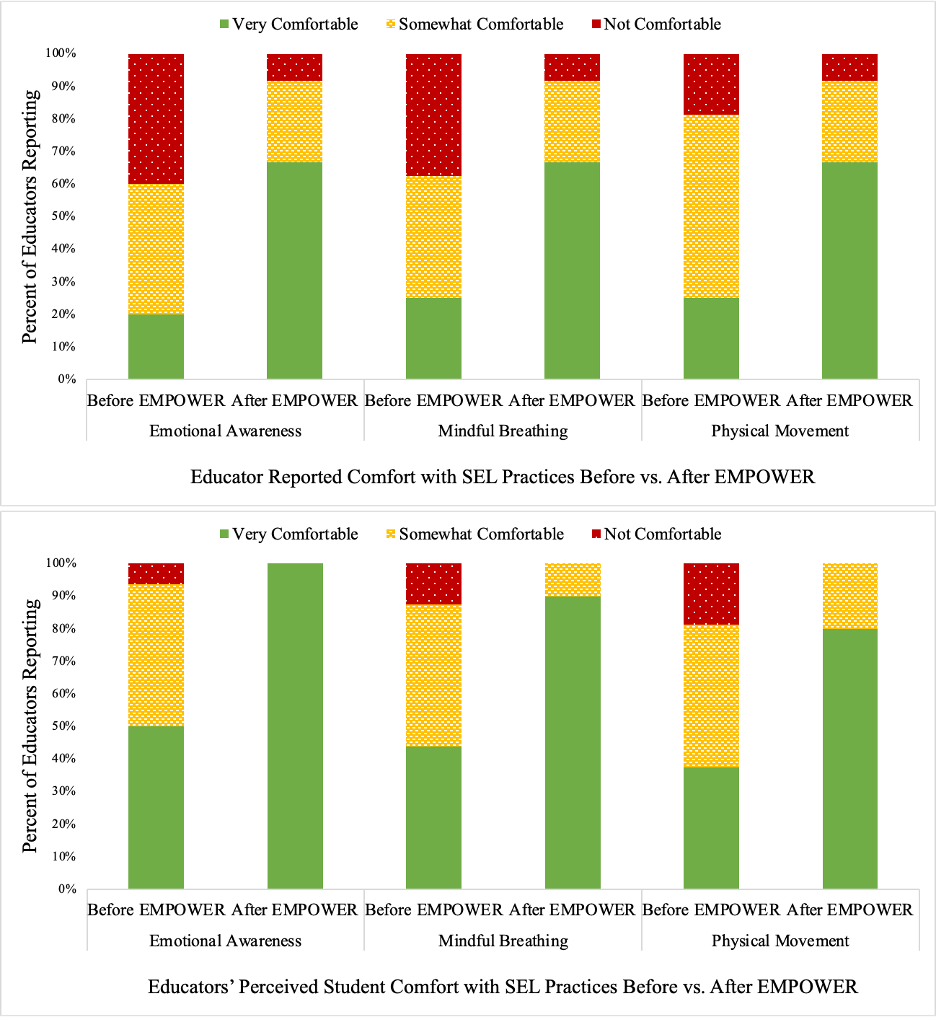
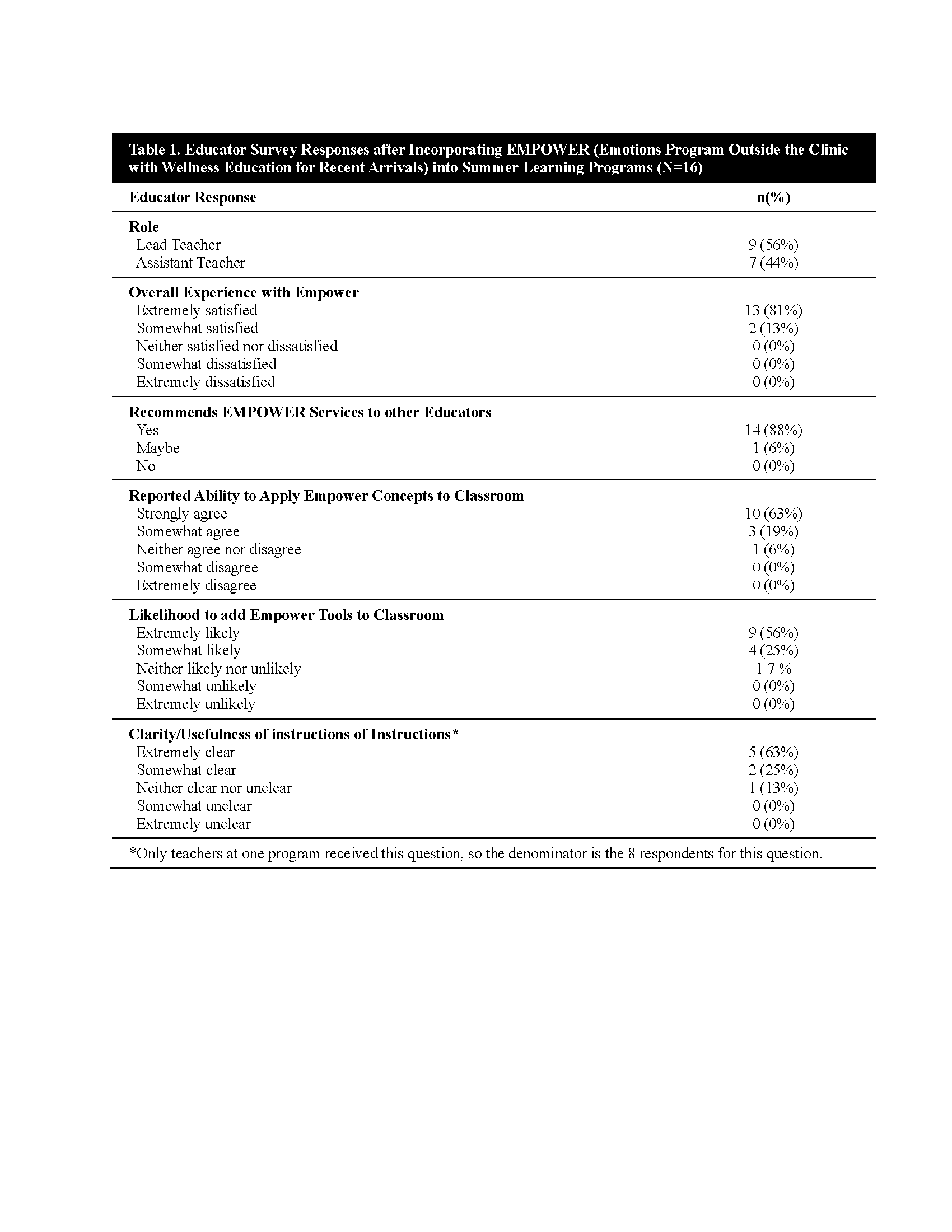
Background: Refugee and immigrant youth face heightened risks for emotional and physical health challenges due to trauma and systemic barriers experienced during resettlement, yet they often have limited access to timely mental and behavioral health care. EMPOWER (Emotions Outside the Clinic with Wellness Education for Recent Arrivals) was developed as a culturally responsive, trauma-informed social-emotional learning (SEL) intervention that fosters emotional wellness, language development, and self-awareness while equipping youth with social-emotional skills. Objective: To evaluate and guide refinement of the EMPOWER intervention by examining educator acceptability and perception of changes in student engagement within two community-based summer learning programs for refugee and immigrant youth. Design/Methods: All instructional staff who implemented the EMPOWER intervention in summer learning programs were invited to complete an anonymous online survey at the end of the intervention. Administered via Qualtrics, the cross-sectional survey included Likert-scale, retrospective pre-post, and open-ended items assessing acceptability, educator experiences, and perceived program impact. We analyzed quantitative data descriptively and performed thematic analyses of open-ended qualitative responses to identify strengths and opportunities for program improvement. Results: A total of 16 educators (9 (56%) lead and 7 (44%) assistant teachers) completed surveys. All respondents were satisfied with the intervention (81% extremely, 13% somewhat satisfied). Almost all (88%) reported they would recommend EMPOWER to other educators. Most respondents (63%) found the instructions "extremely" clear and useful (Table 1). According to retrospective pre-post analyses, educators' individual comfort and perception of student comfort with EMPOWER activities (emotional awareness, mindful breathing, physical movement) improved before vs after participation (Figure 1).
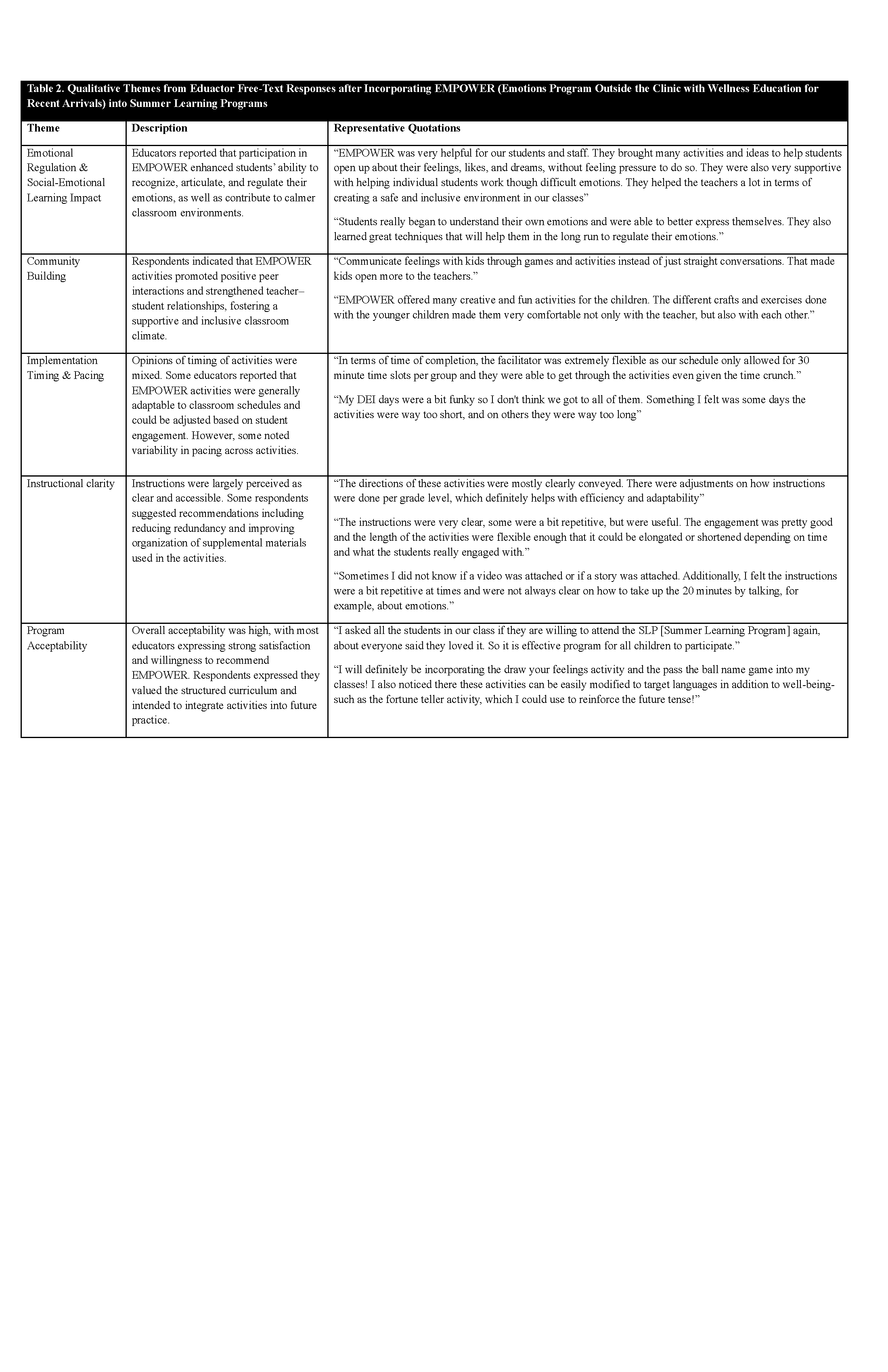
In free text responses, educators noted that EMPOWER supported students' emotional regulation and facilitated communication and community-building. They noted strengths of EMPOWER to include clarity of instruction, inclusiveness of activities and delivery, and overall program acceptability among both students and teachers (Table 2).
Conclusion(s): A preventive summer mental health intervention with refugees was found to be acceptable among educators, with improvement in comfort with SEL activities for teachers and students. Future iterations could allow more adaptability to the situations of specific programs.
Educators' Reported Comfort for Self and Pereceived Comfort of Students with SEL Practices Before vs After EMPOWER: Results from Retrospective Pre-Post Survey
Educator Survey Responses after Incorporating EMPOWER (Emotions Program Outside the Clinic with Wellness Education for Recent Arrivals) into Summer Learning Programs (N=16)
Table 2. Qualitative Themes from Eduactor Free-Text Responses after Incorporating EMPOWER (Emotions Program Outside the Clinic with Wellness Education for Recent Arrivals) into Summer Learning Programs