Session: Health Equity/Social Determinants of Health 5
629 - Who Declines to Answer: An Analysis of a Multilingual Social Drivers of Health Screening Across a Health System
Sunday, April 26, 2026
9:30am - 11:30am ET
Publication Number: 3610.629
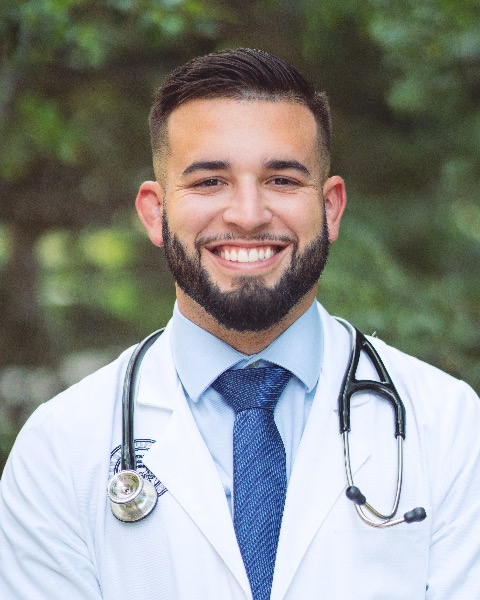
Jose Cabas Peraza, University of Colorado School of Medicine, Colorado Springs, CO, United States; Julie Katz, Nicklaus Children's Health System, Miami, FL, United States; Gabriel Cardenas, Nicklaus Children’s Hospital, miami, FL, United States; Joanna Perdomo, Nicklaus Children’s Hospital, Miami, FL, United States
Medical Student University of Colorado School of Medicine Colorado Springs, Colorado, United States
Background: Social drivers of health (SDOH) screenings are used in many health care settings to screen and identify social needs and connect families with resources. Families may be given an option to “decline to answer,” however this response could mean various things, including hesitancy to disclose true needs, having no needs, or ambivalence towards the survey itself. Characterizing who declines to answer may help elucidate trends behind these responses. Objective: Our aims were to 1) examine the prevalence of declining to answer questions across social needs domains 2) compare characteristics of patients who declined to answer vs answered SDOH screening questions. Design/Methods: This cross-sectional study analyzed caregiver responses to an 8-item electronic SDOH screener completed during ambulatory visits at a large pediatric health system between October 2023 and September 2024. The screener was available in English, Spanish, and Haitian Creole. Caregivers could “decline to answer” each of the seven domain specific questions: food, nutrition, housing, utilities, transportation. The final resource-needs question lacked this option and was omitted. For domains with two items (food, housing), a decline in either question counted as declined. Descriptive statistics were used to describe rates of declining to answer. Odds ratios and 95% CIs were used to assess rates of declining to answer across demographic variables. Results: Between October 2023 and September 2024, 69,042 unique patients were screened for social needs (Table 1). 10.5% of caregivers declined to answer all items (Table 2), with higher odds for those who were between ages 6-11 (OR, 1.23 [95% CI 1.15-1.31]) and 12-17 (OR, 1.18 [95% CI 1.11-1.26]), with Spanish (OR, 1.13 [95% CI 1.07-1.19]), Creole (OR, 4.28 [95% CI 3.06-5.99]), or Other vs English as their preferred language (OR, 1.36 [95% CI 1.18-1.56]), and who were insured by Medicaid vs non-Medicaid (OR, 1.29 [95% CI 1.23-1.36]) (Table 2). Similar patterns were seen within individual domains, although higher odds were also seen for Hispanic vs. Non-Hispanic patients (Table 3).
Conclusion(s): Our study highlights that caregivers of pediatric patients above age 5, identifying as Hispanic, insured by Medicaid, and without-English as the primary language had higher odds of declining to answer, despite offering the screener in multiple languages. Given these groups have shown higher odds of social needs in prior studies, these findings suggest that “decline to answer” responses should prompt further inquiry into possible undisclosed social needs.
Table 1. Demographics of Patients Screened for Social Needs (N=69,042) Table 1.pdf
Table 2. Odds of Declining to Answer All Questions versus Answering at Least One Question by Demographic Characteristics (N=69,042) Table 2.pdf
Table 3. Odds of Declining to Answer by Domain and Demographic Characteristics (N=69,042) Table 3.pdf