








Neonatal Neurology
Session: Neonatal Neurology 8: Neonatal Neurology & Neurodevelopment

Sadori Khawaja, MD (she/her/hers)
Fellow
University of Texas Southwestern Medical School
DALLAS, Texas, United States
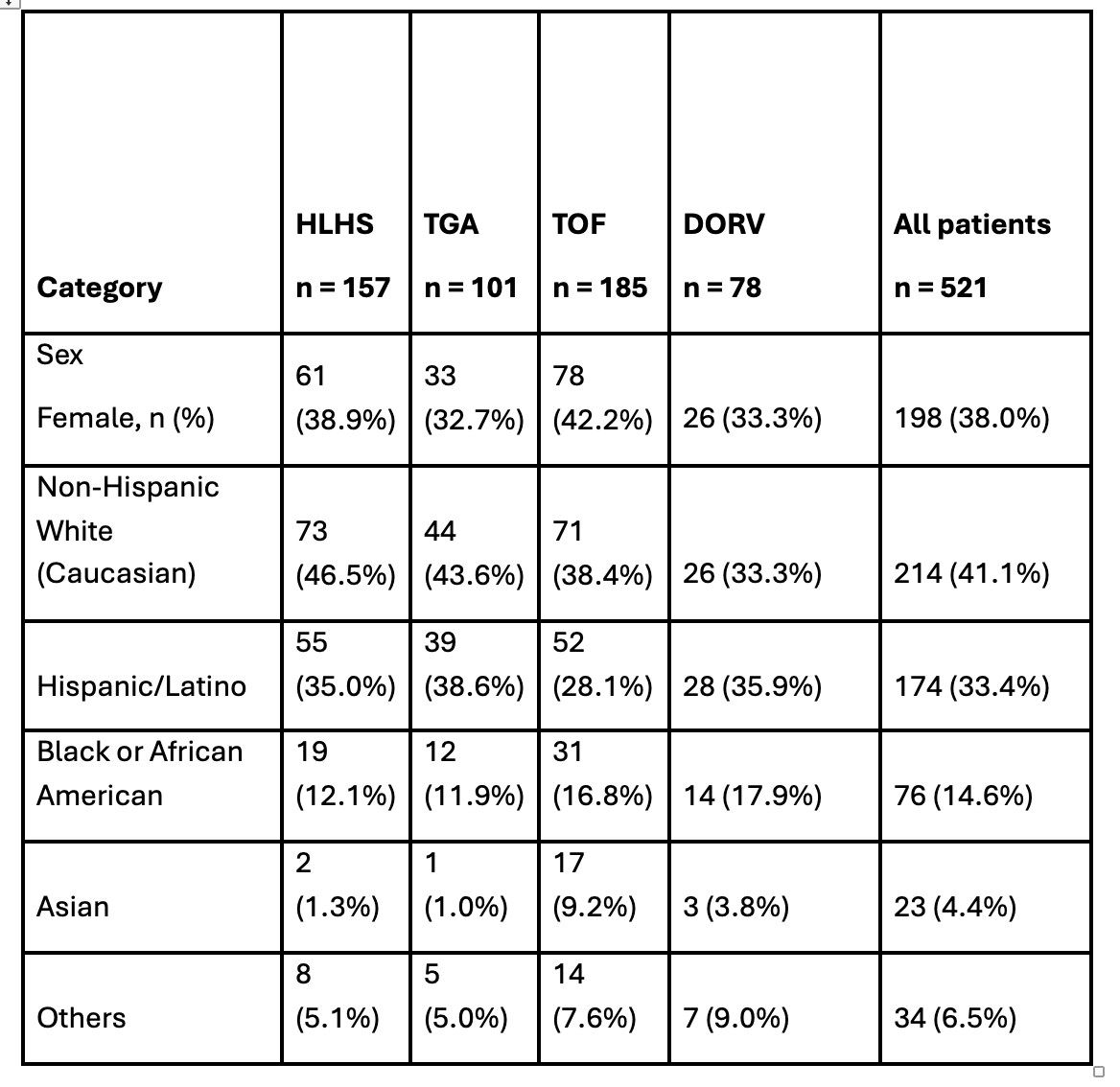 This table summarizes baseline characteristics for infants and toddlers with tetralogy of Fallot (TOF), hypoplastic left heart syndrome (HLHS), double outlet right ventricle (DORV), and transposition of the great arteries (TGA), as well as the combined cohort ("All patients")
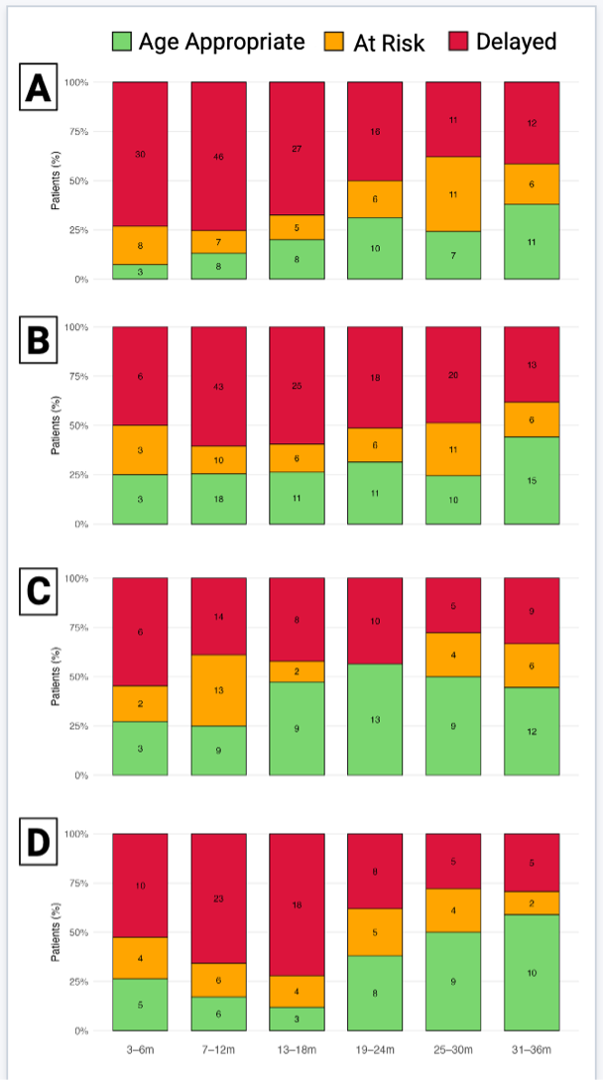 Stacked 100% bar plots show the proportion of patients categorized as Age Appropriate (green), At Risk (yellow), or Delayed (red) within each age band (3-6 months through 31-36 months) for four congenital heart disease (CHD) diagnoses: (A) hypoplastic left heart syndrome (HLHS), (B) transposition of the great arteries (TGA), (C) tetralogy of Fallot (TOF), and (D) double outlet right ventricle (DORV). Each bar represents one age band; numbers inside segments indicate the number of patients in that category at that age. The y-axis reflects percent of patients within that diagnosis and age group.
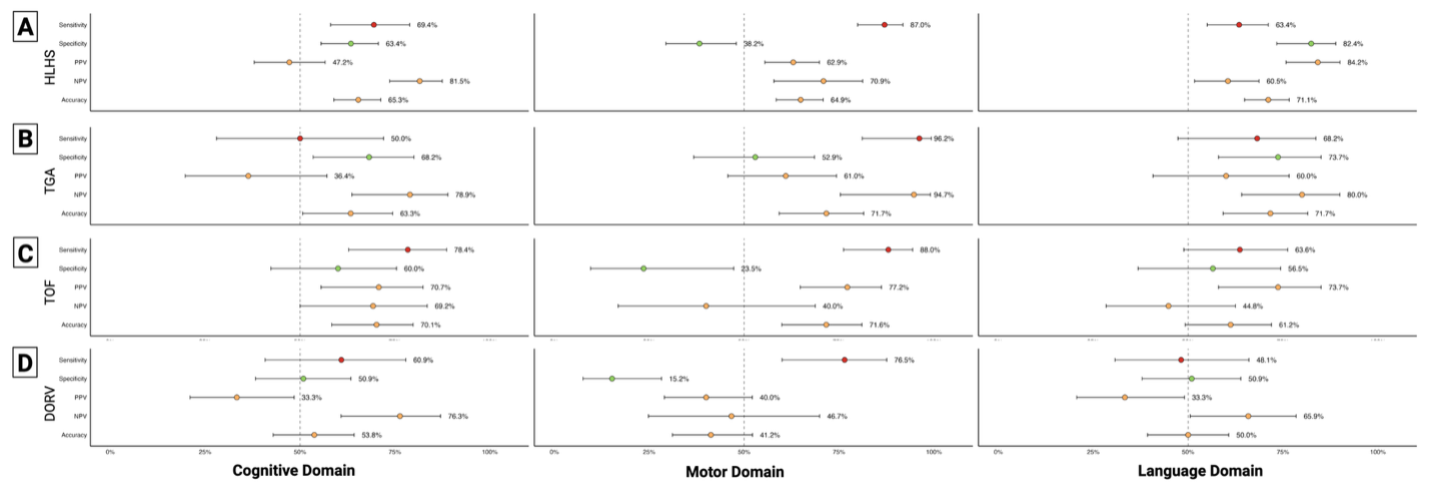 This figure summarizes the diagnostic test characteristics of the ASQ-3 for detecting below-age developmental performance on Bayley-III in three domains: Cognitive, Motor (Gross and Fine Motor), and Language. Results are shown separately for (A) hypoplastic left heart syndrome (HLHS), (B) transposition of the great arteries (TGA), (C) tetralogy of Fallot (TOF), and (D) double outlet right ventricle (DORV). Within each domain, point estimates and 95% confidence intervals are displayed for sensitivity, specificity, positive predictive value (PPV), negative predictive value (NPV), and overall accuracy. Vertical dashed lines at 50% aid visual comparison to chance-level classification.