60 - Assessing appropriateness of hospital admissions at pediatric hospitals
Sunday, April 26, 2026
9:30am - 11:30am ET
Publication Number: 3057.60
Benjamin Klahr, Boston University School of Medicine, Boston, MA, United States; Phillip D.. Hahn, Boston Children's Hospital, Boston, MA, United States; Al Ozonoff, Harvard Medical School, Boston, MA, United States; Carly E.. Milliren, Boston Children's Hospital, Boston, MA, United States
Biostatistician IV Boston Children's Hospital Boston, Massachusetts, United States
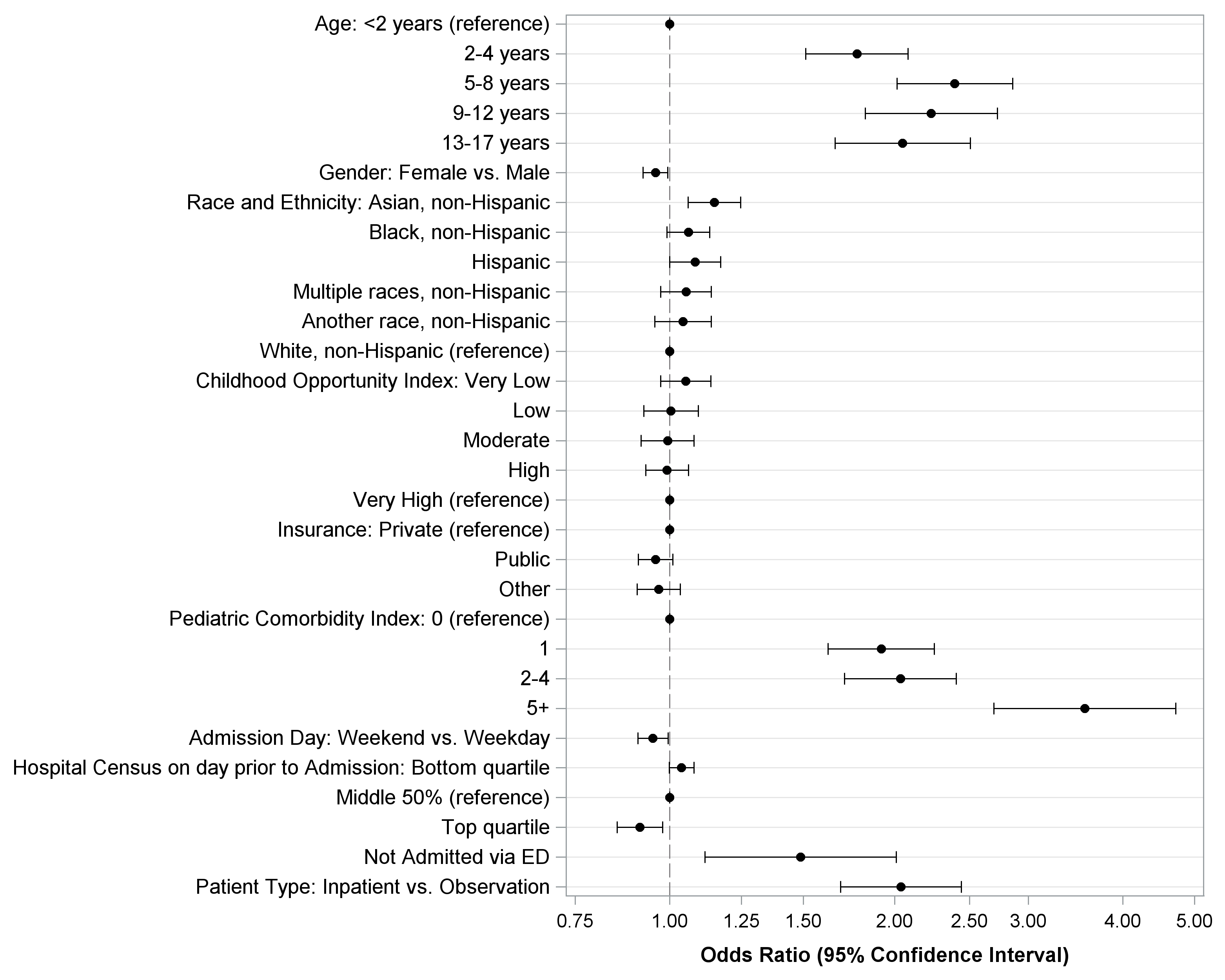
Background: Inappropriate hospital admissions can expose children to unnecessary risks, limit bed availability for those most in need, and contribute to hospital overuse and rising costs. The Pediatric Appropriateness Evaluation Protocol (PAEP), developed as an adaptation of the adult AEP, provides criteria to assess admission appropriateness, but its application at scale in pediatric populations using administrative data has not been extensively evaluated. Objective: We mapped PAEP criteria to billing data from the Pediatric Health Information System (PHIS) and examined demographic, clinical, and hospital factors associated with the appropriateness of pediatric hospital admissions. Design/Methods: We extracted hospitalizations for pediatric patients discharged January 2022-December 2024 from tertiary care pediatric hospitals in PHIS. We mapped billing data to PAEP criteria using ICD-10 diagnosis and procedure codes, and billing codes for pharmacy, supply, and other services. Admissions not meeting any criterion were classified as inappropriate. We included only the first admission per patient during the study period and limited our analysis to stays ≤7 days. We summarized demographic and clinical characteristics and determined factors associated with appropriateness. Adjusted analyses were performed using multivariable logistic regression accounting for hospital-level clustering, including length of stay as an offset term. Results: We included 1.2 million pediatric hospitalizations from 48 hospitals. The mean age was 7.5 years (SD=6.1), and 54.5% were male. Seizures (6.4%), asthma (5.8%), and lower respiratory infections (4.9%) were the most common reasons for admission. Overall, 92.3% were classified as appropriate admissions. Adjusted models (Figure 1) indicated older age, higher pediatric comorbidity index, and inpatient status vs. observation (OR=2.03; 95% CI: 1.69-2.45) were associated with higher odds of appropriate admission. Admissions on the weekend (OR=0.95; 95% CI: 0.91-0.99), from the ED (OR=0.67; 95% CI: 0.50-0.90), or during busy high census periods (OR=0.91; 95% CI: 0.85-0.98) were associated with lower odds of appropriate admission.
Conclusion(s): Nearly 8% of admissions were classified as inappropriate, with meaningful variation by age, comorbidity index, and hospital-level factors. These findings highlight potential inefficiencies in pediatric hospital utilization. Limitations include reliance on billing codes and limited generalizability to non-tertiary care hospitals. Future studies should explore associations with safety, quality, and costs.
Figure 1. Factors associated with appropriateness of hospital admission at pediatric tertiary care hospitals (N=1,205,362 discharges)