619 - Vitamin D Deficiency in Preterm Birth: Maternal-Cord Correlations and the Association with Neonatal Illness Severity
Friday, April 24, 2026
5:30pm - 8:00pm ET
Publication Number: 1596.619
Sania Iftekhar, University of New Mexico, Albuquerque, NM, United States; Sunil K. Jain, University of Texas Medical Branch, Galveston, TX, United States; Bingrui Chen, McGovern Medical School at the University of Texas Health Science Center at Houston, Houston, TX, United States; Claudia Pedroza, McGovern Medical School at the University of Texas Health Science Center at Houston, Houston, TX, United States; Martin Kaufmann, Queen's University, Kingston, ON, Canada; Mar Romero-Lopez, UT Health. Houston, Houston, TX, United States
Fellow University of New Mexico Albuquerque, New Mexico, United States
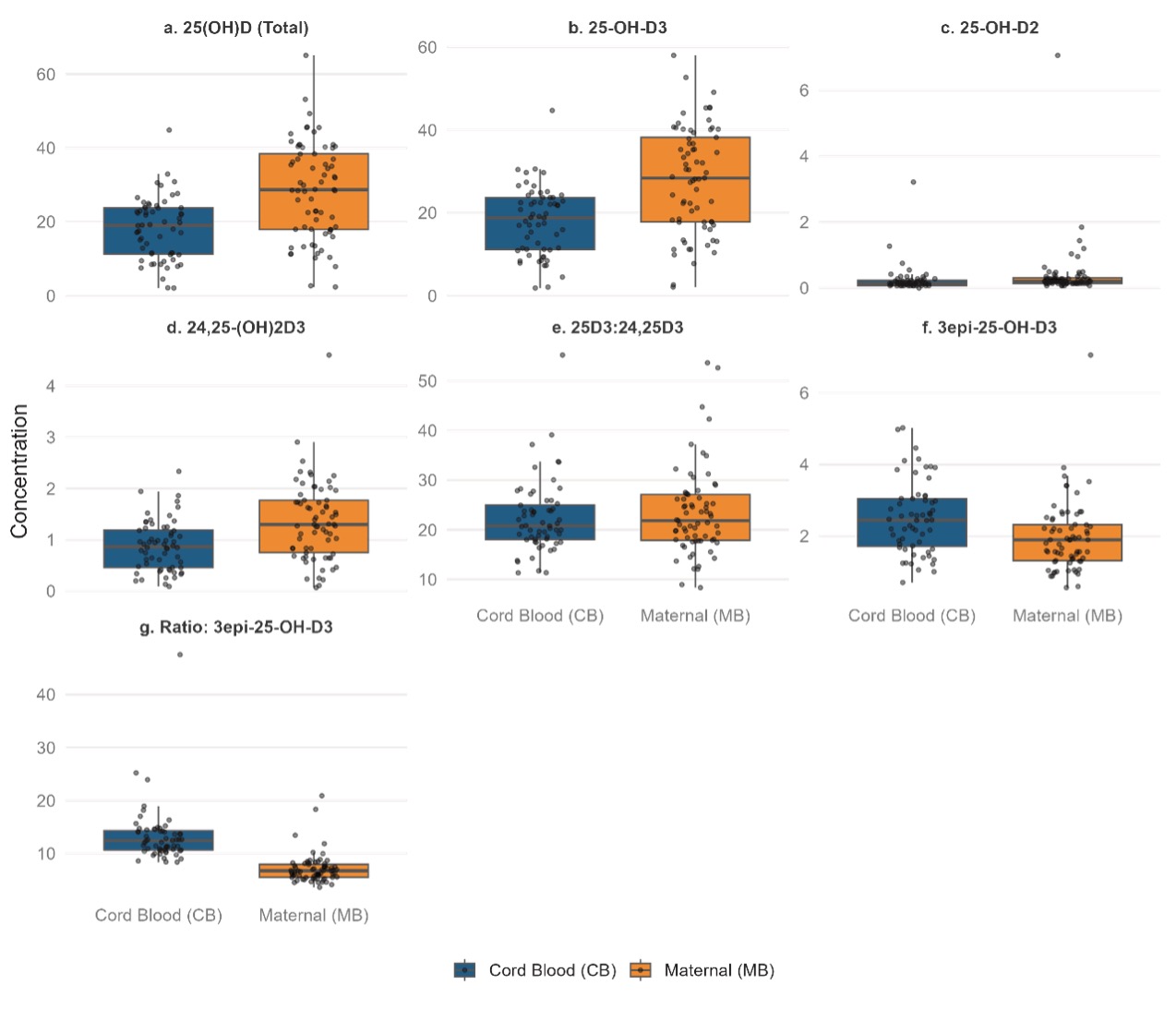
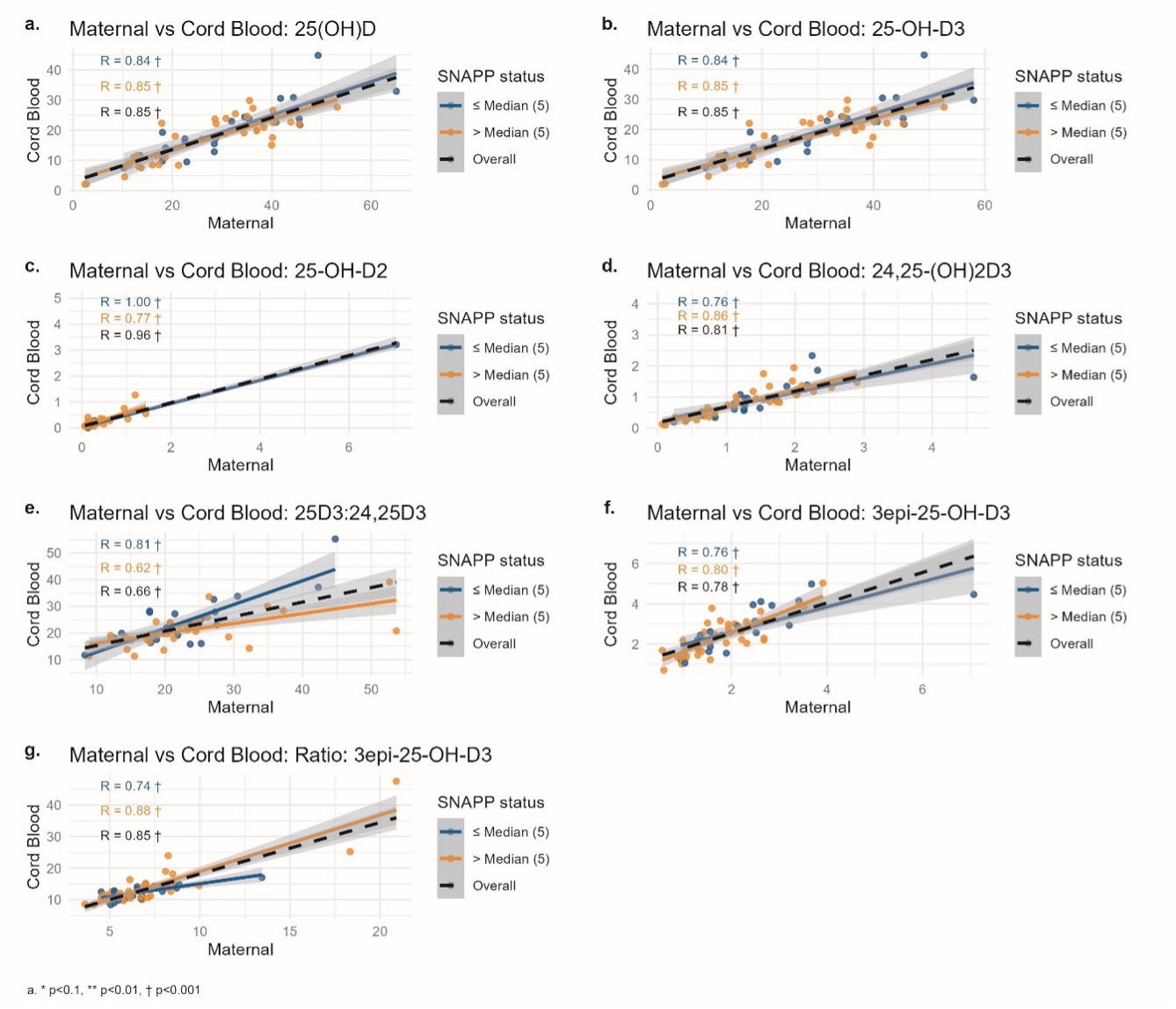
Background: Pregnant women with preterm delivery and their newborns often have Vitamin D deficiency. The relationship between maternal and cord blood comprehensive vitamin D metabolite profiles and early neonatal outcomes remains incompletely understood. Objective: To perform comprehensive vitamin D metabolite profiling in maternal-cord blood pairs from preterm deliveries and investigate their relationship and associations with illness severity as measured by the Score for Neonatal Acute Physiology Perinatal Extension-II (SNAPPE-II). Design/Methods: Prospective cohort study of 63 mothers delivering 70 infants at 24-33 weeks of gestation (56 singletons, 7 twin pairs). We performed a state-of-the-art vitamin D metabolite analysis using LC-MS/MS to measure 25(OH)D3, 25(OH)D2, 3-epi-25(OH)D3, and 24,25-(OH)2D3 and SNAPPE-II scores to assess illness severity within 12 hours of admission. Results: The mean gestational age at delivery was 29.47 ± 2.71 weeks (range 24-33 weeks), with 24% of mothers delivering before 28 weeks. Antenatal corticosteroids were administered to 65% of mothers. Among infants, 42% were male, 77% were delivered by cesarean section, and the mean birth weight distribution showed 20% under 750g, 8.3% between 750-999g, 18.3% between 1000-1250g, and 53.3% over 1250g. The mean maternal 25(OH)D3 was 27.94 ± 12.71 ng/mL, with 35.5% deficient ( < 20 ng/mL), and 25(OH)D3 in cord blood samples 17.94 ± 8.23 ng/mL, with 56.7% deficient and strong maternal-cord correlation (r = 0.84, p < .001). The 3-epi-25(OH)D3 comprised 8.8 ± 3.2% in mothers and 7.4 ± 2.8% in cord blood. No vitamin D metabolite correlated with SNAPPE-II scores were found. Maternal vitamin D deficiency was associated with preeclampsia (OR 4.88, 95% CI 1.83-13.8, p = 0.002).
Conclusion(s): Maternal and neonatal Vitamin D metabolite profile has a strong correlation but no association with early illness severity using the SNAPPE-II scores. The high prevalence of deficiency and association with pre-eclampsia support screening during early pregnancy.
Table 1: Maternal and Infant Cord Blood Vitamin D Status and Demographics










.png)