








Neonatal Fetal Nutrition & Metabolism
Session: Neonatal Fetal Nutrition & Metabolism 4

Nicole C. Weitzel, BA (she/her/hers)
Medical Student
Weill Cornell Medicine
New York, New York, United States
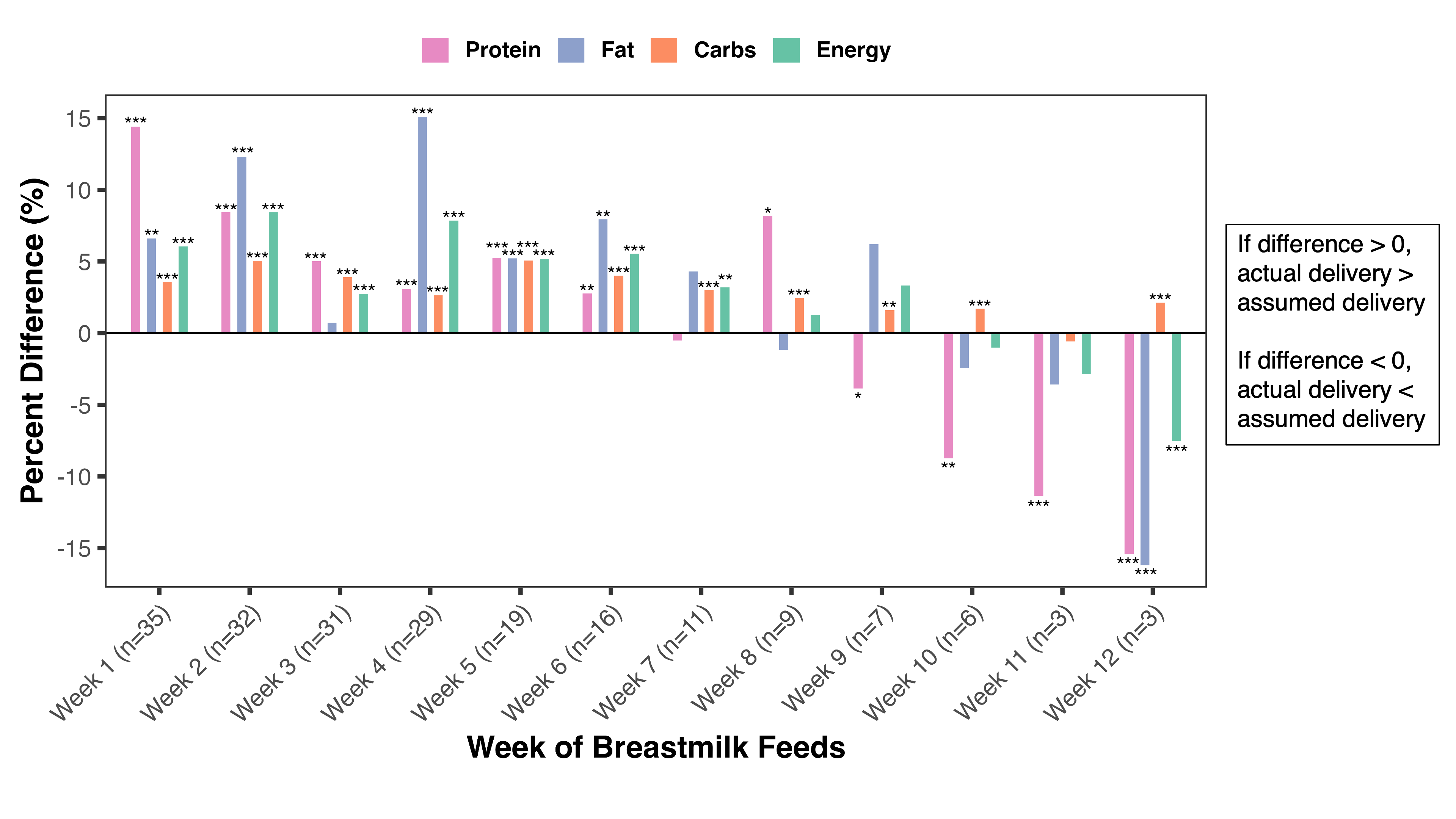 The percent difference was calculated as (actual value- assumed value)/assumed value X 100%). Positive values indicate greater actual delivery, and negative values indicate that the assumed content was greater than the actual content, resulting in nutrient under-delivery. *p < 0.05, **p < 0.01, *** p < 0.001
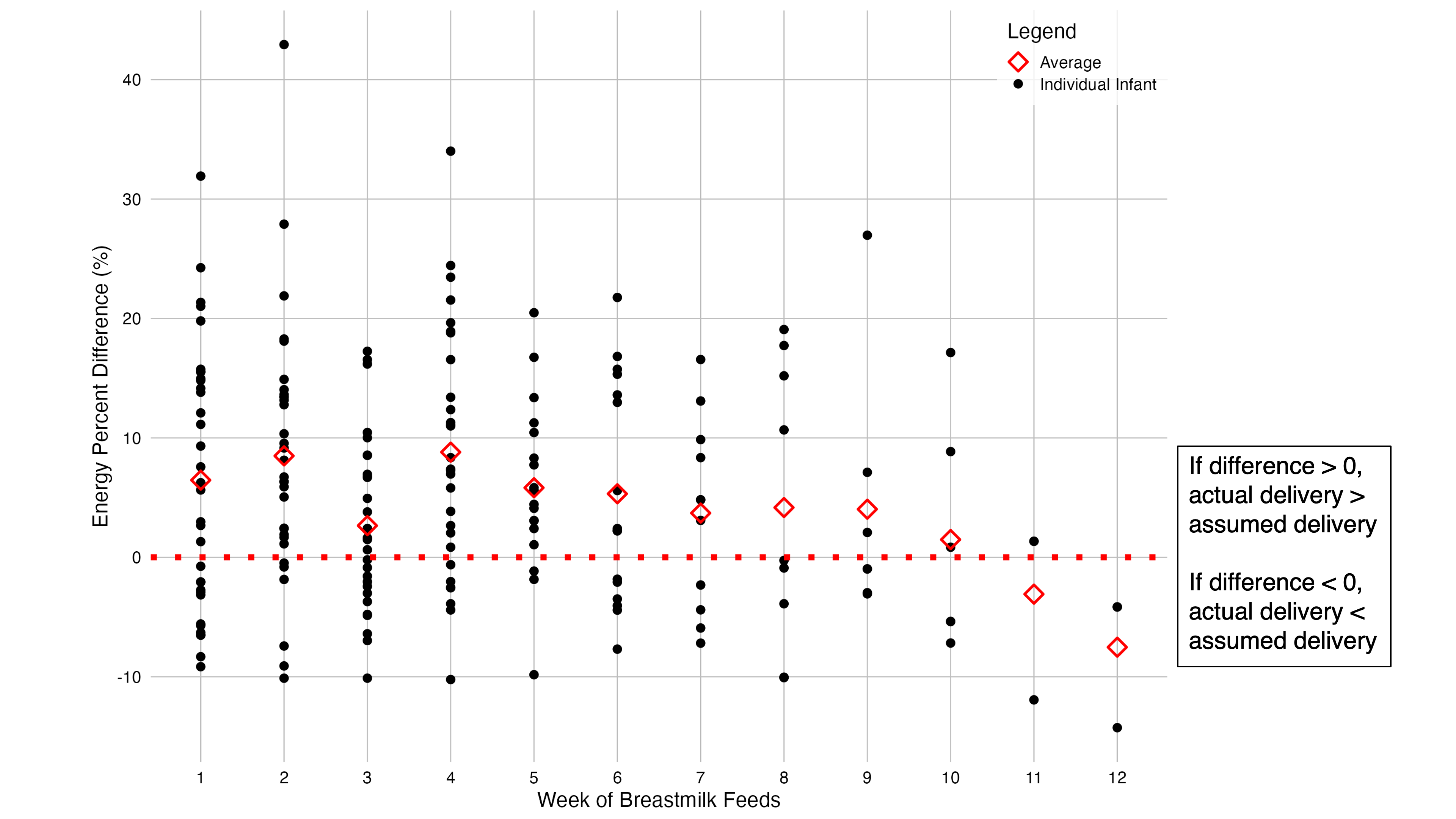 Energy percent difference was calculated using the percent difference formulation described in Figure 1. An energy percent difference <0 indicates the infant received less calories from breastmilk than anticipated. Individual infants are represented with black dots, while the average energy percent difference for that week of breastmilk feeds is represented by the red diamond.
 .png) Weekly nutrient differences were compared with weekly growth velocity (GV) and weight z-scores across weeks of breastmilk feeding using linear regression. Analyses that examined nutrient difference in the week prior compared weekly nutrient differences to growth metrics in the following week. Nutrient difference was defined as actual intake minus assumed intake, with positive values indicating greater nutrient delivery than assumed. Values represent β coefficients and 95% confidence intervals (CI). Only significant results are shown.
Weekly nutrient differences were compared with weekly growth velocity (GV) and weight z-scores across weeks of breastmilk feeding using linear regression. Analyses that examined nutrient difference in the week prior compared weekly nutrient differences to growth metrics in the following week. Nutrient difference was defined as actual intake minus assumed intake, with positive values indicating greater nutrient delivery than assumed. Values represent β coefficients and 95% confidence intervals (CI). Only significant results are shown. 