Session: Mental Health 3: Interventions and Clinical Integration
272 - Understanding Practice Intentions and Barriers Following Pediatric Mental Health ECHO Participation
Sunday, April 26, 2026
9:30am - 11:30am ET
Publication Number: 3261.272
McKenzie James, Wichita State University, Wichita, KS, United States; Sarah Krogman, University of Kansas School of Medicine-Wichita, Wichita, KS, United States; Carolyn Ahlers-Schmidt, KUSM-W CRIBS, Wichita, KS, United States; Nicole Klaus, University of Kansas School of Medicine, Wichita, KS, United States; Kari Harris, KU Wichita Pediatrics, Wichita, KS, United States
Graduate Student Wichita State University Wichita, Kansas, United States
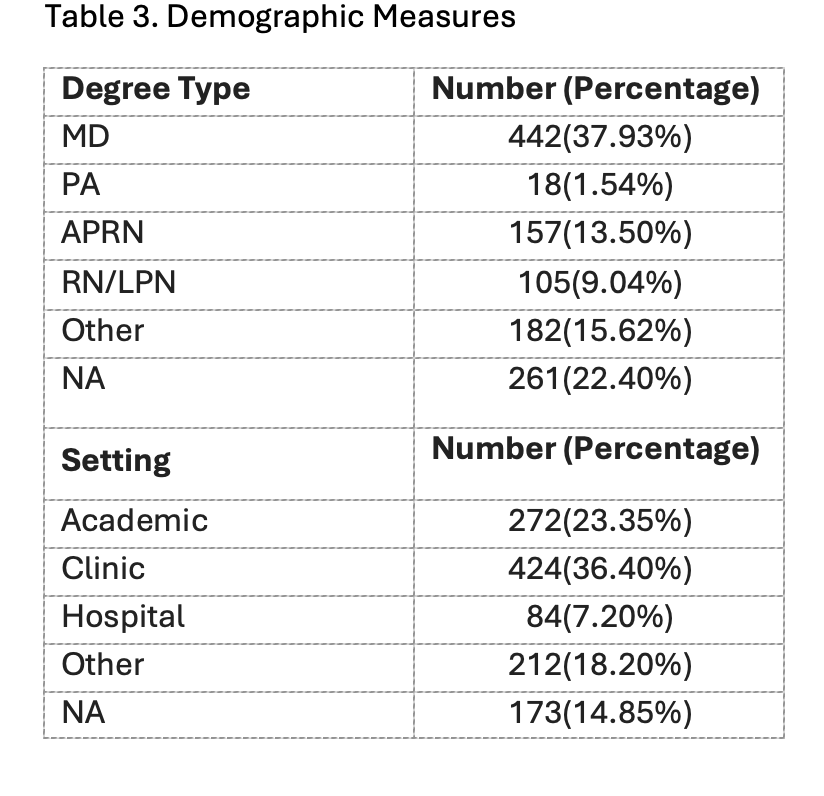
Background: A nationwide shortage of mental health professionals has increasingly shifted youth mental and behavioral health (MBH) care to primary care professionals (PCPs). However, PCPs consistently report discomfort or lack of education in managing MBH disorders in youth. In the rural state of Kansas, this gap is amplified as 96 of 105 counties are designated mental health professional shortage areas. Project ECHO (ECHO) programs can address this gap by offering continuing medical education (CME) that strengthens PCPs' knowledge and confidence in managing pediatric MBH. Objective: To examine PCPs' intent to apply knowledge gained, changes in confidence, and perceived barriers to implementation following Kansas pediatric MBH ECHOs in order to inform statewide strategies to address pediatric MBH disparities. Design/Methods: A ten-item survey was distributed to participants immediately following ECHO sessions between April 2020 and October 2024. A cross-sectional evaluation of 512 ECHO CME surveys was conducted. Descriptive statistics were used to summarize variables across topics. Results: Participants included MD/DOs (n=346), APRNs (n=114) RN/LPN (n=81), PAs (n=18), and/or others (e.g., social workers, therapists, PhDs; n=157). Number of survey respondents varied by topic: ADHD (n=92), Anxiety (n=65), Autism (n=28), Depression (n=59), ID/DD (n=56), Sleep (n=86), Suicide (n=41), and Trauma (n=85). Regardless of topics, PCPs (50%-71%) strongly agreed they learned something to improve outcomes (Table 1). Additionally, many (45%-70%) reported no barriers to applying the information or strategies learned (Table 2). Of barriers listed, knowledge was the top cited for all topics (19%-30%) except suicide, for which other was the most frequent barrier (17%).
Conclusion(s): Participation in ECHO sessions appears to strengthen PCPs' readiness to integrate evidence-based strategies into practice. The majority of participants reported no barriers to applying new knowledge, suggesting ECHO sessions translate effectively into clinical care. The Kansas program's interdisciplinary team (child and adolescent psychiatry, psychology, social work, and pediatrics) likely enhances learning by offering diverse, practical perspectives that mirror integrated care models. Among those who identified challenges, the primary barrier was knowledge, suggesting that continued education may help overcome remaining gaps. These findings support the value of interdisciplinary ECHO programs in expanding pediatric MBH capacity across underserved regions.
Table 1. Frequency of Responses Across Topics: Question 6
Table 2. Frequency of Responses Across Topics: Question 4









.png)
.png)