708 - Teaching pediatric residents cardiac point-of-care ultrasound using didactic and hands-on training: A pre-/post-intervention study.
Sunday, April 26, 2026
9:30am - 11:30am ET
Publication Number: 3685.708
Priya R. Gupta, University of New Mexico School of Medicine, Albuquerque, NM, United States; Lynne Fullerton, University of New Mexico School of Medicine, Albuquerque, NM, United States
Pediatric Emergency Medicine Fellow University of New Mexico School of Medicine Albuquerque, New Mexico, United States
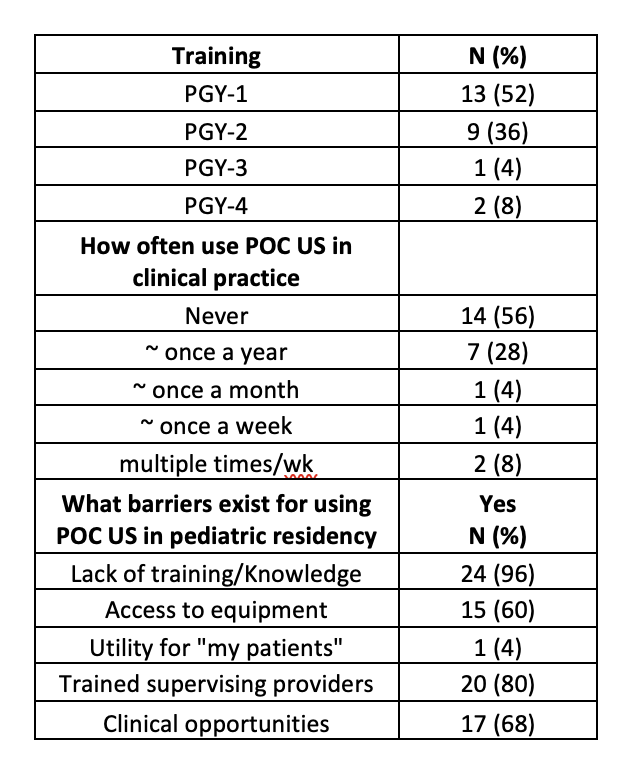
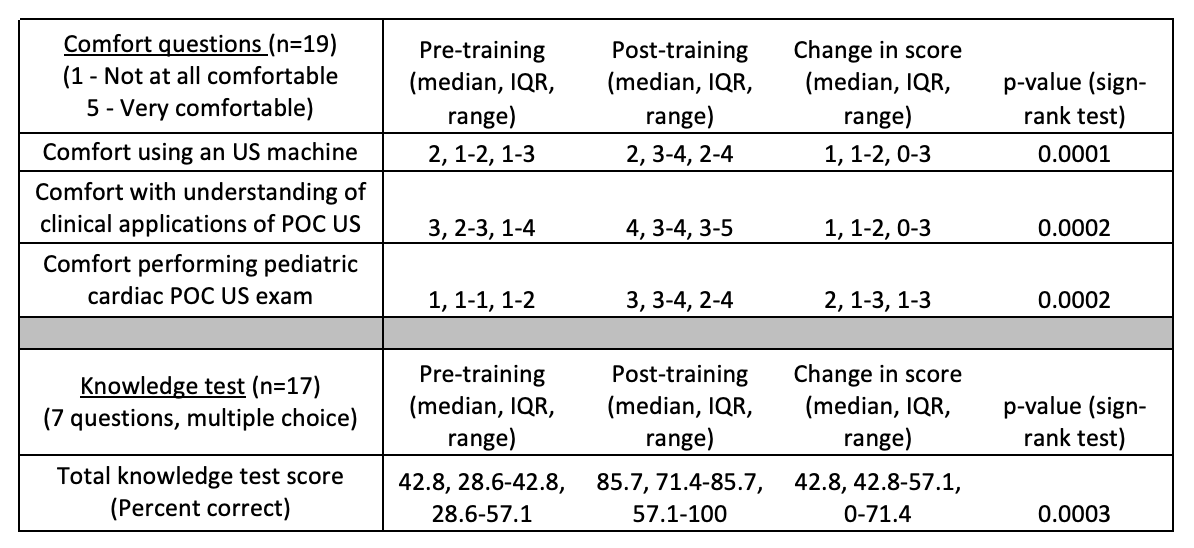
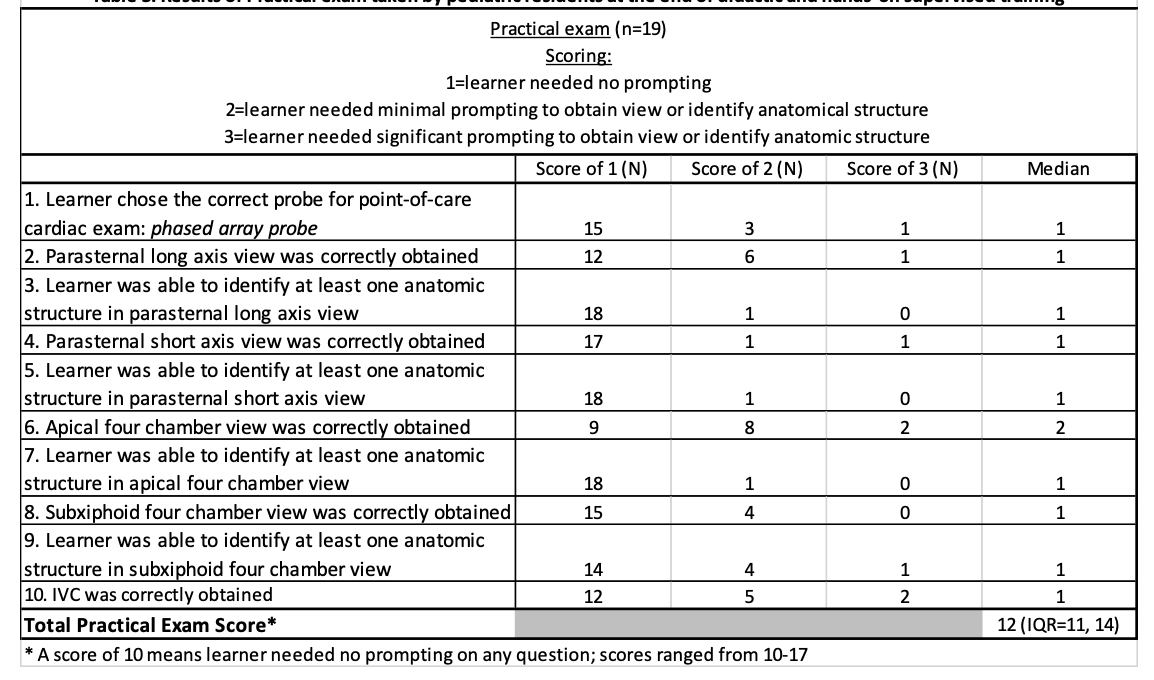
Background: Point-of-care ultrasound (POCUS) is an increasingly important diagnostic tool for the care of pediatric patients. Despite the known patient safety benefits and diagnostic ability that ultrasound provides for pediatric patients, there is a need for a dedicated pediatric residency ultrasound curriculum. Objective: The purpose of our study was to: 1) address these gaps in POCUS education by creating a training course with both didactic and hands-on components; and, 2) assessing pediatric resident comfort, knowledge, and skill in obtaining cardiac POCUS views specifically. We hypothesized that participants' knowledge and comfort would improve following the training. Design/Methods: Pediatric residents were invited to participate in a 3-hour course designed to teach pediatric cardiac POCUS. This included a 20-minute didactic lecture, a pre- and post-intervention survey and knowledge test (20 mins), guided hands-on practice with experts in ultrasound (90 minutes), and a post-training practical exam (10 minutes). Pre- and post-surveys and knowledge tests were paired and tested for differences using nonparametric tests. The 10-question practical exam was scored on an ordinal scale based on how much prompting the learner required to achieve success in obtaining the five POCUS cardiac views, where 1=no prompting required, 2=minimal prompting, and 3=a significant amount of prompting was needed. Results: Of 25 total participants, most were 1st or 2nd year residents and had never used POCUS in clinical practice (Table 1). All participants completed the comfort pre-survey, and 19 completed both pre- and post-comfort surveys. The knowledge test was completed by 24 participants prior to training; 17 of those completed the post-training knowledge test. All pre-post changes were significant (Table 2). Nineteen participants took the practical assessment (Table 3). Scores ranged from 10-17, with a median and IQR of 12 (11-14). Two participants had an overall score of 10, indicating they needed no prompting on any of the ten questions.
Conclusion(s): These results demonstrate that in a 3-hour training period, pediatric residents can improve significantly in comfort, knowledge, and skill in the use of cardiac POCUS. Given the need and demand for an ultrasound curriculum in pediatric training, a training course with this design could be implemented with success.
Table 1. Descriptive data on participants in a pediatric point-of-care (POC) cardiac ultrasound course, NM, 2025.
Table 2. Bivariate tests comparing participants before, and after didactic and skills training in Point-of-Care (POC) cardiac ultrasound (US) use, NM, 2025 (median, IQR, and range) for matched pre-post participants.
Table 3. Results of practical exam taken by pediatric residents at the end of didactic and hands-on supervised training.