Megan R. Bader, University of Massachusetts Medical School, Worcester, MA, United States; Catrina Goulet, UMass Memorial Children's Medical Center, Marlborough, MA, United States; Duncan Smith-Freedman, UMass Memorial Children's Medical Center, Worcester, MA, United States; Kathryn Wynne, UMass Memorial Children's Medical Center, Worcester, MA, United States; Catherine Ezzio, UMass Memorial Children's Medical Center, Worcester, MA, United States; Hannah McFadden, UMass Memorial Children's Medical Center, Worcester, MA, United States
Assistant Professor of Pediatrics UMass Memorial Children's Medical Center Worcester, Massachusetts, United States
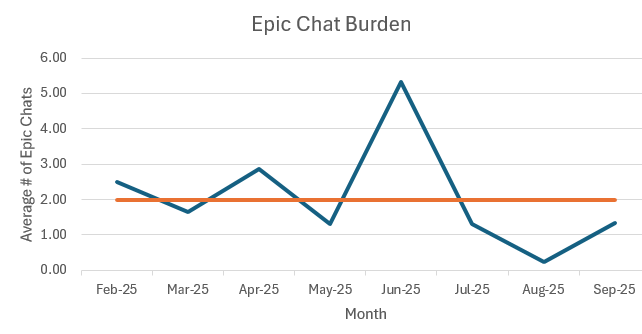
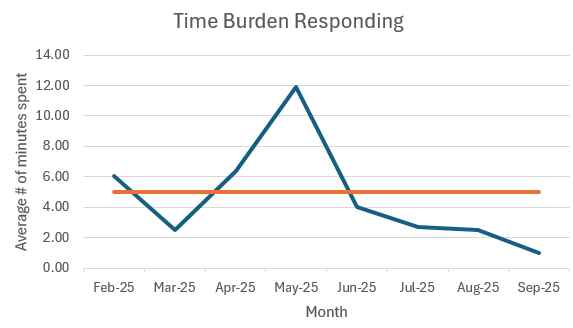
Background: The ACGME requirements for Pediatric and Medicine-Pediatric residents state that "residents must be provided with protected time to participate in core didactic activities." However, rotating on the wards is clinically intensive. Often, residents are caring for a high census of medically complex, ill patients, leading to interruptions in didactic time. Due to these clinical responsibilities, only a minority of residents feel "very satisfied" or "somewhat satisfied" with the current protection of resident learning while rotating on the pediatric wards. Objective: The aim of this Quality Improvement project is to improve resident protected education time by decreasing clinical interruptions during morning conference. From February 2025 to September 2025, our goal was to decrease Epic Chats received to 2 or less, decrease time spent addressing clinical concerns to less than 5 minutes, and increase percentage of residents arriving on time to 80%. Design/Methods: A root cause analysis was performed which revealed three chief problems contributing to the current state of dissatisfaction: a high number of new admissions during morning conferences, lack of knowledge regarding resident education time amongst nursing, and the frequency of Epic "Chats". Three plan-do-study-act (PDSA) cycles were developed to address each of these concerns. After each PDSA cycle, residents were re-surveyed to quantify the effect on number of interruptions via Epic "Chats", time spent responding to chats, and ability to arrive to conference on time. Results: For the first PDSA cycle, the pediatric hospitalist Nurse Practitioner began holding the admission pager during conference time rather than residents. The second PDSA cycle addressed nursing education by placing posters explaining resident protected education time in several common areas. The third PDSA cycle provided residents with an automated "away message" on Epic Chat during protected education time, directing urgent messages to the on call pediatric attending and explaining non-urgent messages will be addressed after conference. After three PDSA cycles, Epic Chat burden and time spent responding to clinical concerns during conference both decreased and the percentage of residents arriving to conference on time has increased.
Conclusion(s): The first three PDSA cycles have successfully improved resident timeliness and decreased clinical interruptions during conference. With further PDSA cycles, we hope to create a sustainable response in the improvement we have already seen.
Number of Epic Chats during Morning Conference
Time Spent Addressing Clinical Concerns during Morning Conference