62 - Trends of Observation Stays at Children’s Hospitals (2019-2024)
Sunday, April 26, 2026
9:30am - 11:30am ET
Publication Number: 3059.62
Bridget Allard, Children's National Health System, Washington, DC, United States; Valerie Jurgens, Children's National Health System, Alexandria, VA, United States; Paul Michel, Children's National Health System, Falls Church, VA, United States; Yao Tian, Northwestern University The Feinberg School of Medicine, Chicago, IL, United States; Matt hall, Children's Hospital Association, Lenexa, KS, United States; Kavita Parikh, Children's National Health System, Washington DC, DC, United States
Attending Physician Children's National Hospital Washington, District of Columbia, United States
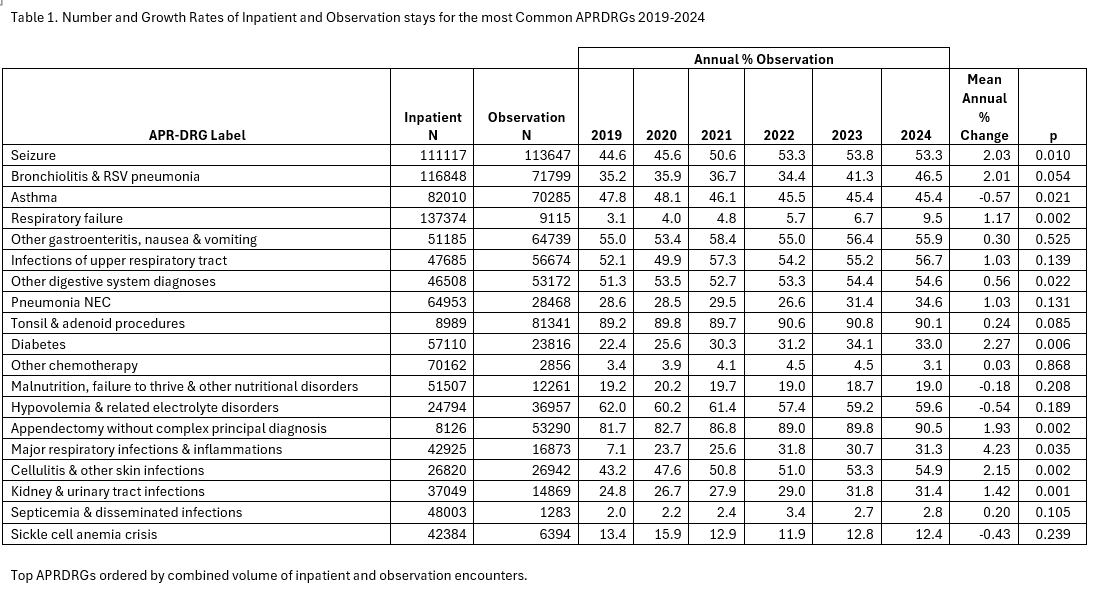
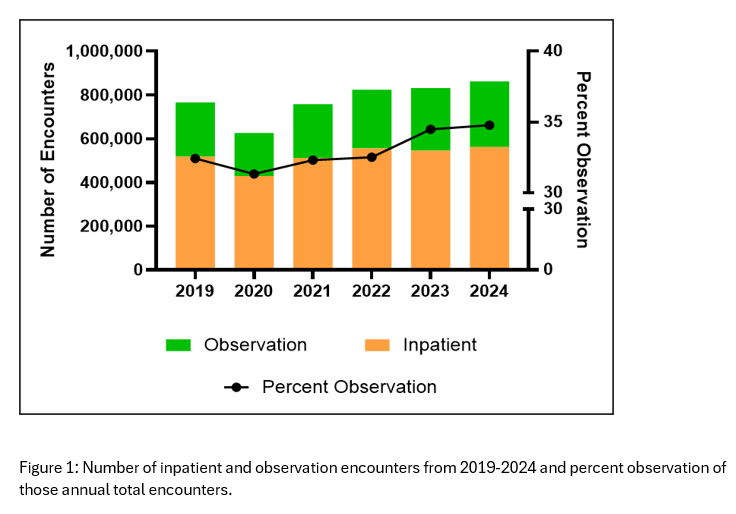
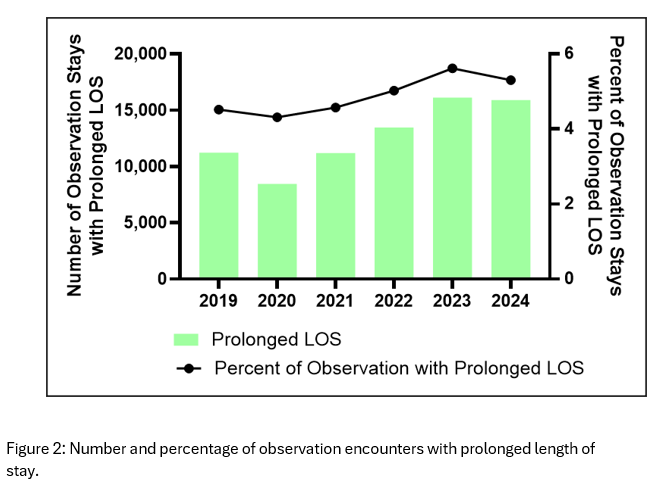
Background: Observation status (Obs) hospital stays were originally designed for low-acuity adults but later extended to children. However, this often underestimates the acuity and complexity of pediatric patients as well as the intensity of services provided. Prior studies have demonstrated a marked increase in Obs for pediatric patients through 2019. Objective: The goal of this project was to describe the trend and characteristics of Obs at children's hospitals from 2019-2024. Design/Methods: This was a retrospective study of inpatient (IP) and Obs encounters in 41 children's hospitals participating in the Pediatric Health Information System database (PHIS) from 2019-2024. The Obs growth rate for the common All Patient Refined Diagnosis Related Groups (APR-DRGs) were calculated. The top five APR-DRGs were evaluated for severity of illness based on intensive care unit charges and severity of illness level. To evaluate for intensity of resources in obs encounters length of stay was measured with long length of stay defined as hospitalization over 48 hours. Comparisons between IP and Obs were made using chi-square or rank-sum test. Results: There were 4.7 million encounters included, 33.1% were Obs. From 2019 to 2024, the percent of encounters overall classified as Obs increased from 32.4% to 34.8% (figure 1), but variably among the top APR-DRGs. Acute respiratory failure increased from 3.1% in 2019 to 9.5% in 2024, Diabetes from 22.4% to 33%, Appendectomy from 81.7% to 90.5%, Cellulitis from 43.2% to 54.9% and Kidney and urinary tract infections from 24.8% to 31.4% (all p< 0.05) (Table 1). Obs encounters with prolonged length of stay also increased from 2019 to 2024 (figure 2). For high acuity APRDRGs such as acute respiratory failure, 6.3% of the Obs encounters had intensive care charges and 20% were classified as severity of illness level 3 or 4 by the APRDRG system.
Conclusion(s): Given the rise in observation status stays for high acuity APR-DRGs like acute respiratory failure and evidence demonstrating similar resource use between observation and inpatients encounters, the applicability of observation status for pediatrics should be re-considered.
Table 1: Number and Growth Rates of Inpatient and Observation stays for the most Common APRDRGs 2019-2024
Figure 1: Number of inpatient and observation encounters from 2019-2024 and percent observation of those annual total encounters.
Figure 2: Number and percent of observation encounters with prolonged length of stay.