125 - Multidrug-resistant organism (MDRO) colonization rates during a sustained antibiotic stewardship program in a Level IV NICU
Sunday, April 26, 2026
9:30am - 11:30am ET
Publication Number: 3119.125
Lochana KC, St. Christopher's Hospital for Children, Philadelphia, PA, United States; Vilmaris Quinones-Cardona, Drexel University College of Medicine, Philadelphia, PA, United States; Alison J.. Carey, St. Christopher's Hospital for Children, Philadelphia, PA, United States
Fellow St. Christopher's Hospital for Children Philadelphia, Pennsylvania, United States
Background:
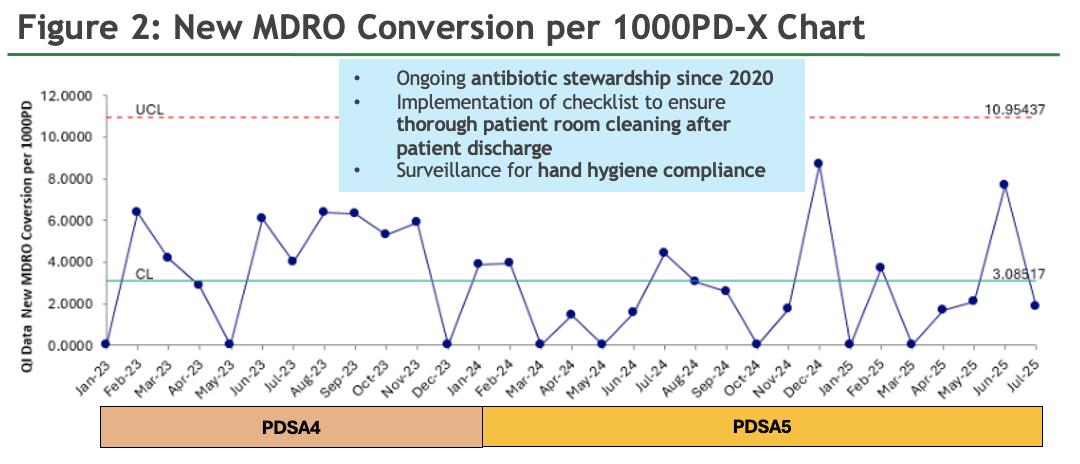
Background: Antibiotic overuse is a well-recognized contributor to antimicrobial resistance and the emergence of multidrug-resistant organisms (MDROs) in neonatal intensive care units (NICUs). In 2020, our team implemented an antibiotic stewardship program in our Level IV NICU, achieving a significant reduction in total antibiotic days of therapy (DOT) without adverse effects on patient outcomes. Objective: To evaluate the impact of an established, successful antibiotic stewardship program on the rate of MDRO conversions in a free-standing children's hospital referral-based Level IV NICU. Design/Methods: The antibiotic stewardship initiative started in January 2020, with a significant reduction in DOT in January 2021. A retrospective chart review was conducted for all neonates admitted between January 2023 and July 2025. Total antibiotic DOT and surveillance MDRO conversion status was determined for each patient (positive on admission, positive conversion during hospitalization, or negative). Data tracked included: (1) days between new conversions, (2) days from admission to conversion, and (3) rate of new MDROs per 1000 patient-days (PD). Our NICU performs MDRO surveillance routinely on all admissions and then monthly. Established infection control measures include hand hygiene, chlorhexidine bath policy, isolation precautions, and thorough room cleaning after discharge or room change. Statistical process control (SPC) charts were used to evaluate trends and identify special cause variations. Results: A total of 425 patients were included. Between 2020 and 2023, total DOT decreased by 51%; however, sustained adherence to the antibiotic stewardship program led to an additional 13% reduction by July 2025. During this last PDSA cycle, the total DOT/1000 PD decreased from 140 to 121 (Figure 1). MDRO analysis showed a median of 34 days between new conversions, 50 days from admission to conversion, and 3 new MDROs per 1000 PD (Figure 2). There was no significant change in the MDRO conversion rate.
Conclusion(s): Sustained implementation of an antibiotic stewardship program in an outborn, referral level IV NICU significantly reduced antibiotic exposure by 58% since program inception. To date, this improvement has not impacted surveillance MDRO conversions in our high-risk population. Ongoing surveillance will help determine the long-term impact of stewardship on MDRO trends.
Figure 1: Total days of therapy /1000PD - X Chart
Figure 2: New MDRO Conversion per 1000PD/ - X Chart










.png)