365 - Ethnic and Racial Differences in Mesenchymal Stem Cells from Preterm Human Milk
Sunday, April 26, 2026
9:30am - 11:30am ET
Publication Number: 3352.365
Mohammed Malik, University of California, Irvine, School of Medicine, Anaheim, CA, United States; Fayez Bany-Mohammed, University of California, Irvine, Irvine, CA, United States; Cherry Uy, University of California, Irvine, School of Medicine, Orange, CA, United States; Muhammad Aslam, UC Irvine, Orange, CA, United States
Fellow University of California, Irvine, School of Medicine Anaheim, California, United States
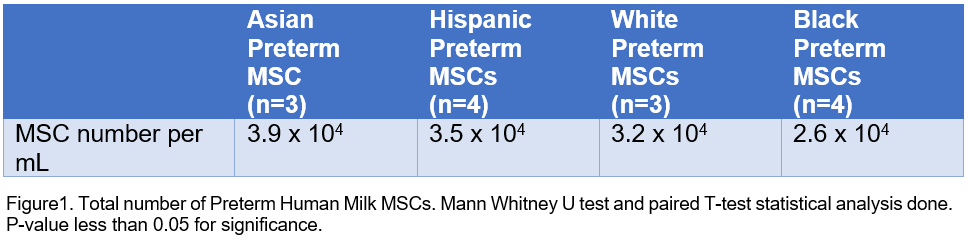
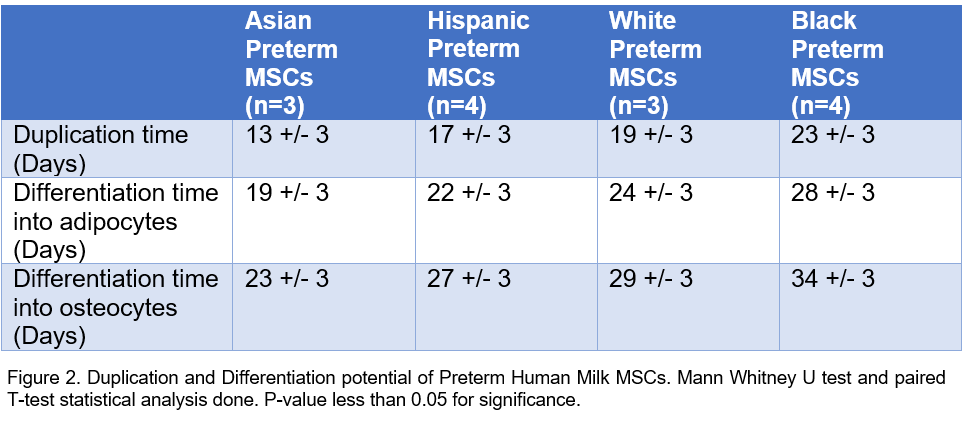
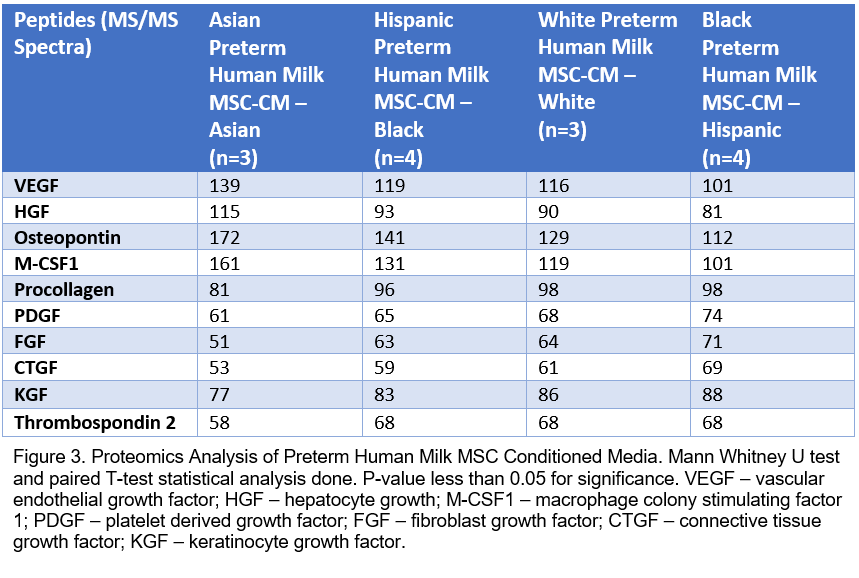
Background: The benefits of human breastmilk for newborns have been recognized for centuries. Human breastmilk is a complex biofluid, rich in both macronutrients and micronutrients essential for infant growth and development. Its composition is dynamic, influenced by factors such as gestational age (GA) at delivery, duration of breastfeeding, maternal health, and environmental influences. Recent evidence suggests that racial and ethnic factors may also impact the nutritional and cellular content of human milk. Previous studies, including our own, have reported the presence of mesenchymal stem cells (MSCs) and stem cell markers in breast milk. Objective: We hypothesized that human preterm breastmilk at 23-28 weeks' GA contains an abundance of MSCs with distinct biological properties, and that these properties may be influenced by ethnic and racial differences. Design/Methods: Breastmilk samples were obtained from 14 lactating mothers within target GA after informed consent. The cohort consisted of 4 non-Hispanic Black (Black), 3 non-Hispanic White (White), 3 non-Hispanic Asian (Asian), and 4 Hispanic mothers. Milk samples were collected 7-14 days postpartum to exclude colostrum. In the laboratory, human milk was processed according to previously published protocols to isolate MSCs. The isolated MSCs were then analyzed for growth, differentiation potential into adipocytes and osteocytes, and the concentration of injury and repair biomarkers in the conditioned media (MSC-CM). Results: To date, 14 participants have been enrolled, with a target enrollment of 40. The highest MSC concentrations were observed in samples from Asian mothers, followed by Hispanic, White, and Black mothers (Fig. 1). Consistent with these findings, MSCs from Asian mothers demonstrated the shortest duplication times and differentiation times into adipocytes and osteocytes, followed by those from Hispanic, White, and Black mothers (Fig. 2). Analysis of MSC-CM revealed lower concentrations of injury and repair biomarkers in samples from Black mothers compared with other racial and ethnic groups (Fig. 3).
Conclusion(s): Ethnic and racial differences appear to exist in both the levels and biological properties of MSCs present in breastmilk. These variations may have important implications for infant development, immune modulation, and growth. Continued enrollment and comprehensive data analysis are underway to further validate and clarify these associations.
Figure 1. MSC Yield of Preterm Human Milk
Figure 2. Preterm Human Milk Duplication and Differentiation Potential









.jpg "Mohammed Malik, MD photo")