Session: Mental Health 3: Interventions and Clinical Integration
280 - Establishing a Mental Health integration and Development (MIND) clinic in a busy primary care Pediatric Clinic
Sunday, April 26, 2026
9:30am - 11:30am ET
Publication Number: 3269.280
Kelly Chiu, Boston Children's Hospital, Belmont, MA, United States; Katherine Barahona Paz, Boston Children's Hospital, cambridge, MA, United States; Olivia Carrick, Boston Children’s Hospital, Dept of Psychiatry and Behavioral Sciences, Jamaica Plain, MA, United States; Alexandra Epee-Bounya, Boston Children's Hospital, Boston, MA, United States
Clinical Research Specialist I Boston Children's Hospital Cambridge, Massachusetts, United States
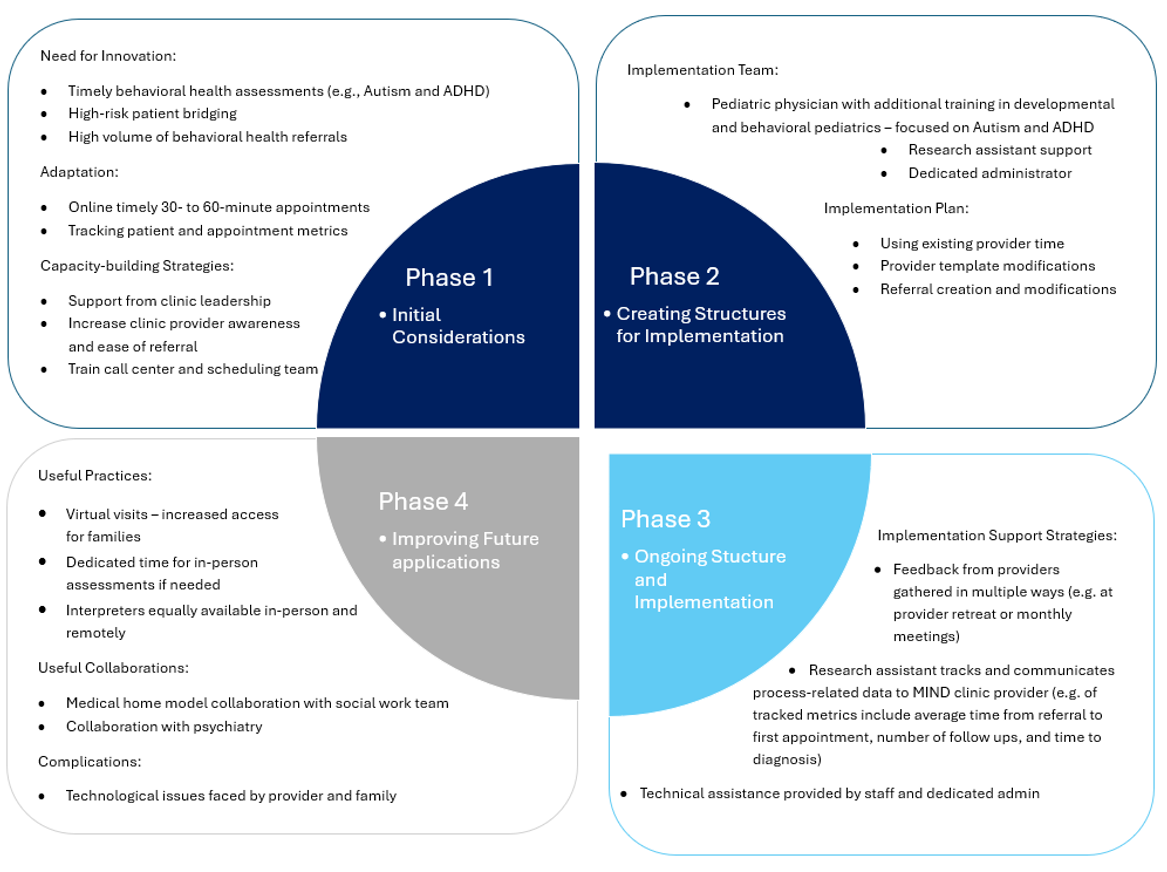
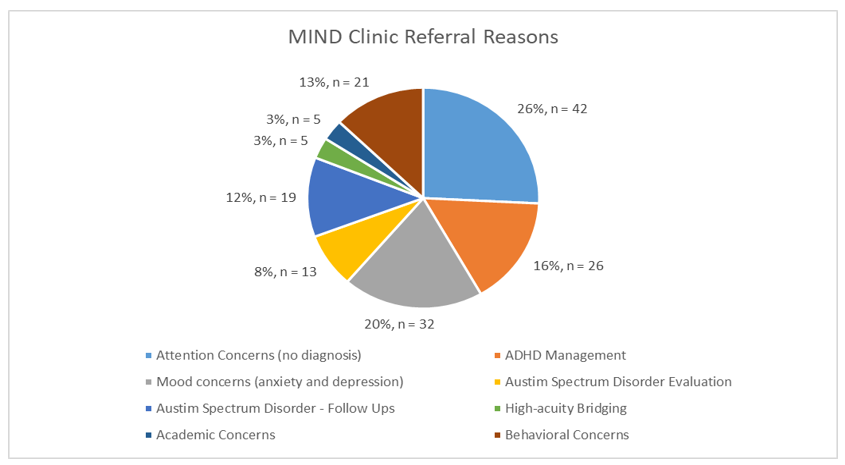
Background: The American Academy of Pediatrics (AAP) endorses embedding within primary care practices programs which support pediatric primary care clinicians (PCCs) screening for and treating behavioral health (BH) conditions. A dedicated Mental health INtegration and Development (MIND) clinic was established in our practice to provide increased BH access to patients. To increase the odds of successful implementation, The Quality Implementation Framework was followed. Objective: Describe how The Quality Implementation Framework delineates the establishment and implementation of the MIND clinic. (Figure 1) Design/Methods: With support from practice leadership, a PCC, the "MIND provider," completed additional training in developmental and behavioral pediatrics in 2023 focused on autism spectrum disorder (ASD) and complex attention deficit hyperactivity disorder (ADHD). Phase 1: To help with the high-volume of BH referrals and specialty assessment and shorten wait times, the MIND clinic started offering telehealth appointments. Phase 2: The MIND clinician provided peer education on BH topics, was available for "just in time" consultation and created a EMR -based referral system. Phase 3: Process evaluation metrics continuously reviewed for continued improvement (Figure 2). Phase 4: The model was enhanced with the addition of in-person appointments for autism assessments and follow-up (Figure 1). Results: Since 2023, 173 referrals have been made to MIND clinic (Figure 3), and 220 appointments have been completed. On average, patients were seen 35 days after referral. Most referrals (42%) were made for attention concerns or ADHD management, followed by mood concerns (20%), ASD evaluations and follow ups (20%), other behavioral concerns (13%), academic concerns (3%), and high-acuity bridging after hospitalization (3%). ADHD-specific metrics track average time from referral to diagnosis, as well as time between follow-up appointments to monitor progress and any medical management. In 2024, 15 patients were, on average, diagnosed within 25 days. In 2025, 15 patients were, on average, diagnosed within 34 days (Figure 3).
Conclusion(s): To increase access for screening and treatment of BH conditions, a MIND clinic was embedded in a Primary Care clinic. The Quality Implementation Framework was followed to ensure successful implementation and development. In line with AAP recommendations, increasing access for BH conditions can be achieved within a primary care practice using a novel care delivery model. Continued collaboration with social workers and mental health providers will ensure comprehensive patient care (Figure 1).