478 - Demographic Characteristics and Temporal Trends in Prevalence of Congenital Syphilis in Neonates in the United States from 2000 to 2022
Sunday, April 26, 2026
9:30am - 11:30am ET
Publication Number: 3462.478
Nisha Vazzalwar, University of Wisconsin-Madison, Northbrook, IL, United States; Seevitha Totapalli, University of Toronto, Toronto, ON, Canada; Balagangadhar R. Totapally, Nicklaus Children’s Hospital, Miami, FL, United States
Undergraduate Student University of Wisconsin-Madison Northbrook, Illinois, United States
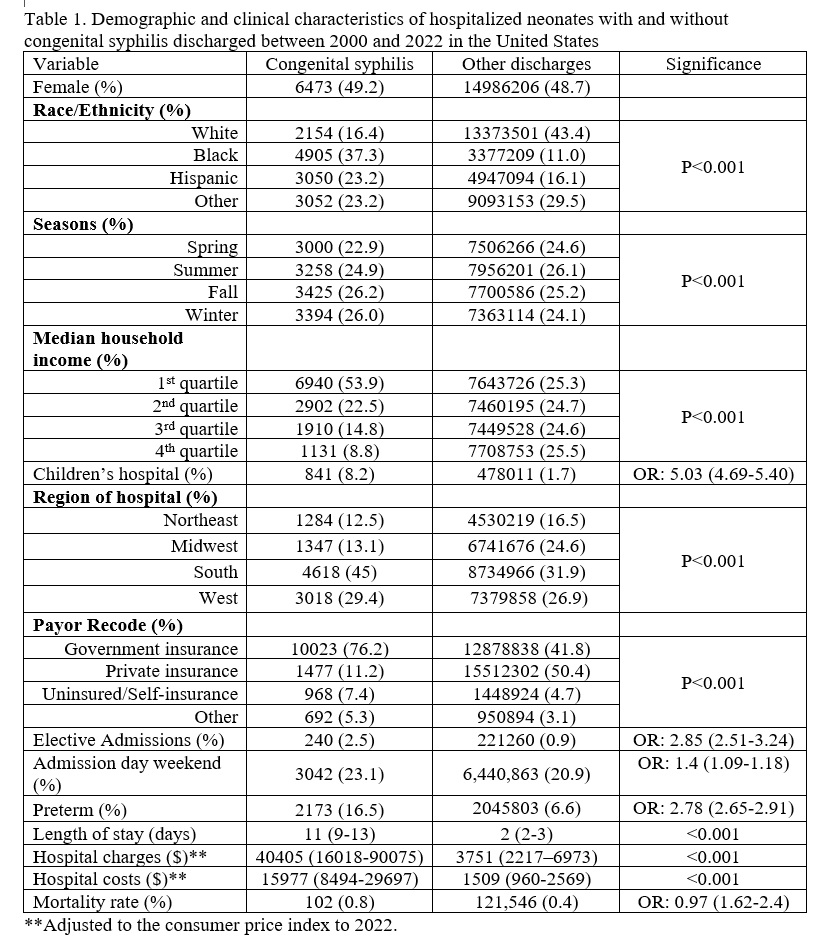
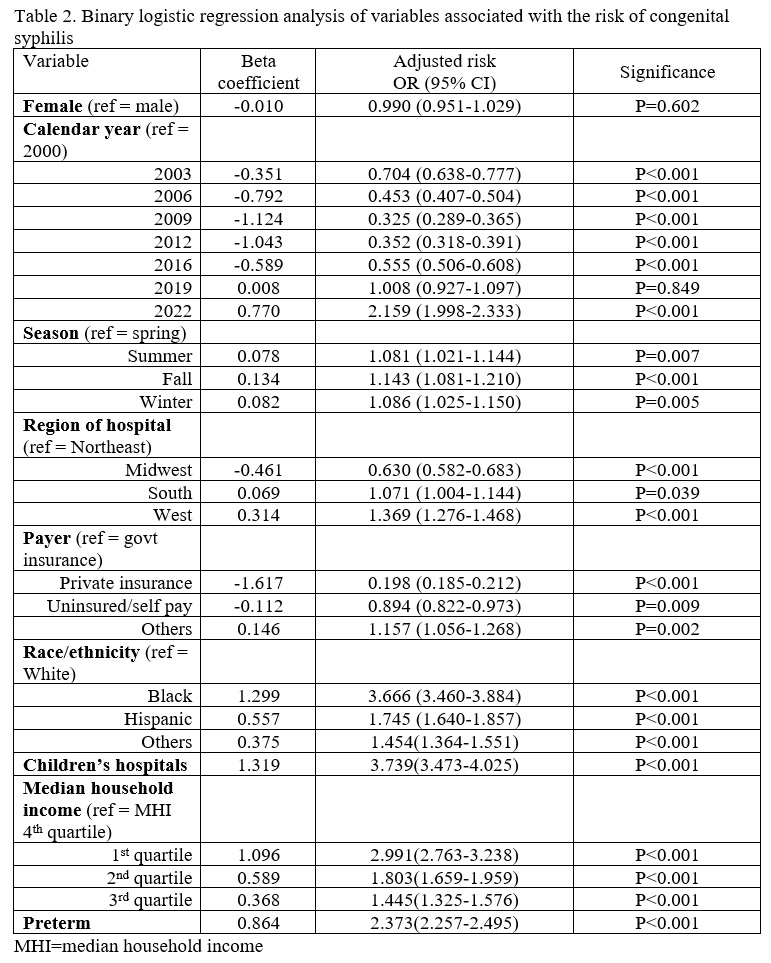
Background: Congenital syphilis (CS) occurs when Treponema pallidum is transmitted from an infected pregnant woman to her fetus. Despite the availability of effective prevention through prenatal care and penicillin therapy, cases of CS have continued to rise in the United States. Persistent racial and geographic disparities in diagnosis and treatment due to unequal access to sexual healthcare and systemic inequities contribute to this increase. Objective: The objectives of the study were to evaluate demographic characteristics and temporal trends in the prevalence of CS in hospitalized neonates in the US from 1997 to 2022. Design/Methods: After IRB approval, retrospective, serial cross-sectional analysis was performed using the Kids' Inpatient database for the years 1997, 2000, 2003, 2006, 2009, 2012, 2016, 2019, and 2022. Neonates ( < 29 days) hospitalized with congenital syphilis were compared with other neonatal discharges. Neonates who were transferred to another acute care hospital were excluded to prevent double-counting. Chi-square, Mann-Whitney U tests, and binary logistic regression analysis were used to analyze the data. The prevalence of CS is presented per 10,000 discharges. Results: During the study period, there were 13,160 neonates with CS out of 30.8 million neonatal discharges (3.74 per 10,000). The prevalence trend showed a U-shaped distribution with 8.72 in 1997 to a lowest of 1.52 in 2009 and then increased to 10.73 in 2022 (p < 0.001; Fig 1). The results of univariate analysis are presented in Table 1, and those of multivariate analysis are presented in Table 2. The adjusted odds of CS are higher in recent years (ref; 2000), in South and West regions (ref: Northeast), in Black and Hispanic neonates (ref: White), in lower quartile household income groups (ref: 4th quartile), and in preterm babies and lower in Midwest (ref: Northeast), and in neonates with private insurance and no insurance (ref: Govt insurance). Hospital charges, costs, length of stay, and mortality rate (0.8%) were higher in neonates with CS compared to other neonates (Table 1).
Conclusion(s): There is considerable variation in the prevalence of CS in the US across demographic groups, with higher rates observed among Black and Hispanic neonates, low-income populations with government insurance, and in the Southern and Western regions of the United States. The prevalence of CS has shown a steady increase since 2009. These findings highlight the urgent need for enhanced screening and timely treatment during pregnancy, with focused efforts directed toward high-risk populations.
Congenital Syphilis in Neonatal Discharges from 1997-2022
Table 1. Demographic and clinical characteristics of hospitalized neonates with and without congenital syphilis discharged between 2000 and 2022 in the United States
Table 2. Binary logistic regression analysis of variables associated with the risk of congenital syphilis










.jpg)