








Developmental and Behavioral Pediatrics
Session: Developmental and Behavioral Pediatrics 5: Developmental Disabilities

Mary Lauren Neel, MD, MSCI
Associate Professor of Pediatrics, Neonatology
Emory University School of Medicine
Atlanta, Georgia, United States
.jpg)
.png) Figure 1. Histograms depicting distribution of score frequency for authoritative (A), authoritarian (B), and permissive (C) parenting styles measured with the Parenting Styles and Dimensions Questionnaire (PSDQ) in our cohort (the largest US cohort of infants with CP) .
Figure 1. Histograms depicting distribution of score frequency for authoritative (A), authoritarian (B), and permissive (C) parenting styles measured with the Parenting Styles and Dimensions Questionnaire (PSDQ) in our cohort (the largest US cohort of infants with CP) . 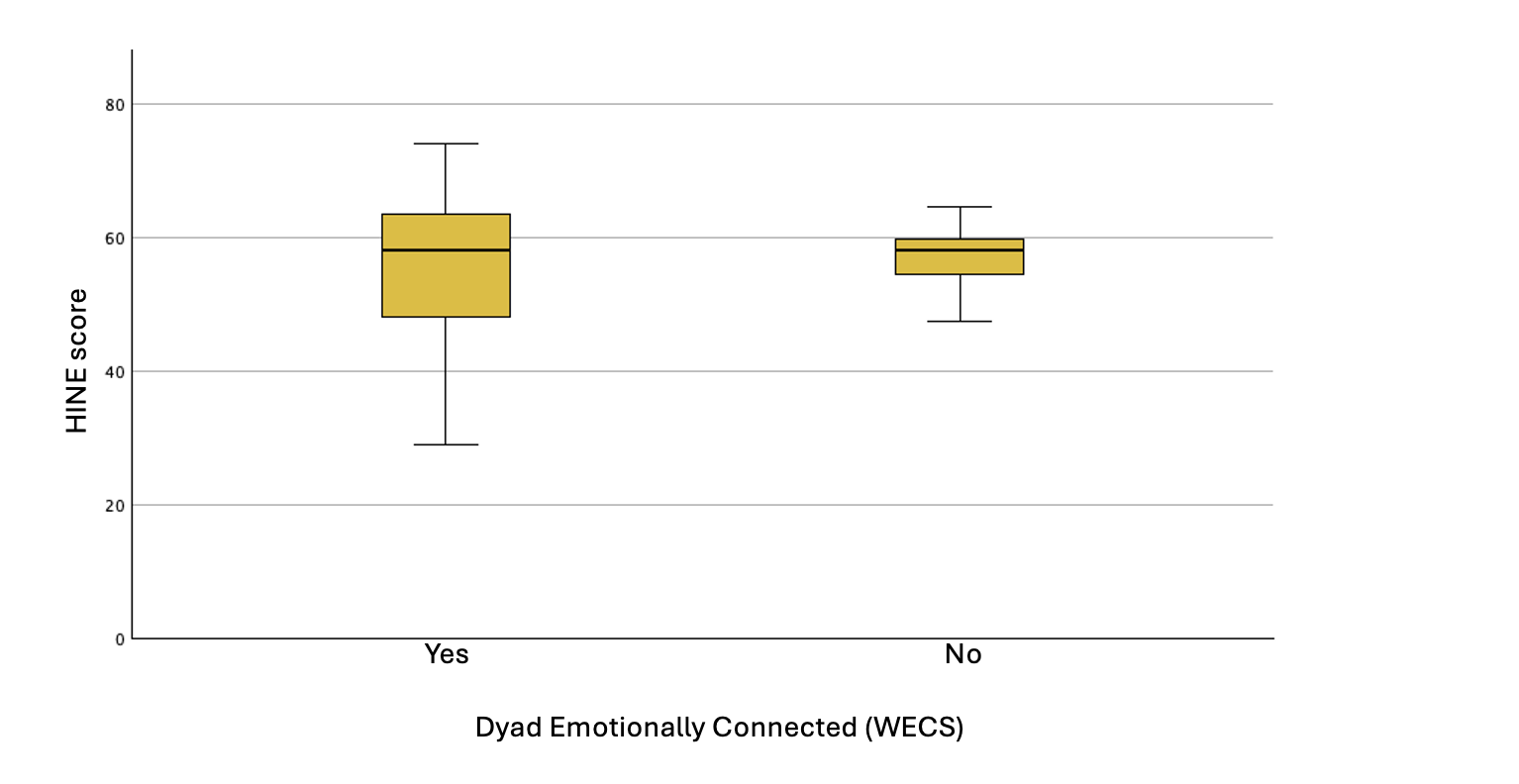 Boxplot showing median and interquartile range of child HINE scores of dyads who are (median 58, IQR 48-63.5) or who are not (median 58, IQR 54-59) emotionally connected on the Welch Emotional Connection Screen (WECS) behavioral coding. There is no difference between child HINE scores between dyads who are emotionally connected (mean 54.9, SD 11.7) as compared to dyads who are not emotionally connected (mean 55.7, SD 8.4). Chi-squared analysis showed no significant differences.