Session: Adolescent Medicine 4: Eating Disorders & Mental Health
265 - Anxiety and Depression Screening in a Mobile Adolescent Clinic: Three-Year Prevalence, Trends, and Longitudinal Changes
Sunday, April 26, 2026
9:30am - 11:30am ET
Publication Number: 3255.265
Jonathan Tang, Stanford University School of Medicine, Stanford, CA, United States; Arash Anoshiravani, Stanford School of Medicine, Palo Alto, CA, United States
Medical Student Stanford University School of Medicine Stanford, California, United States
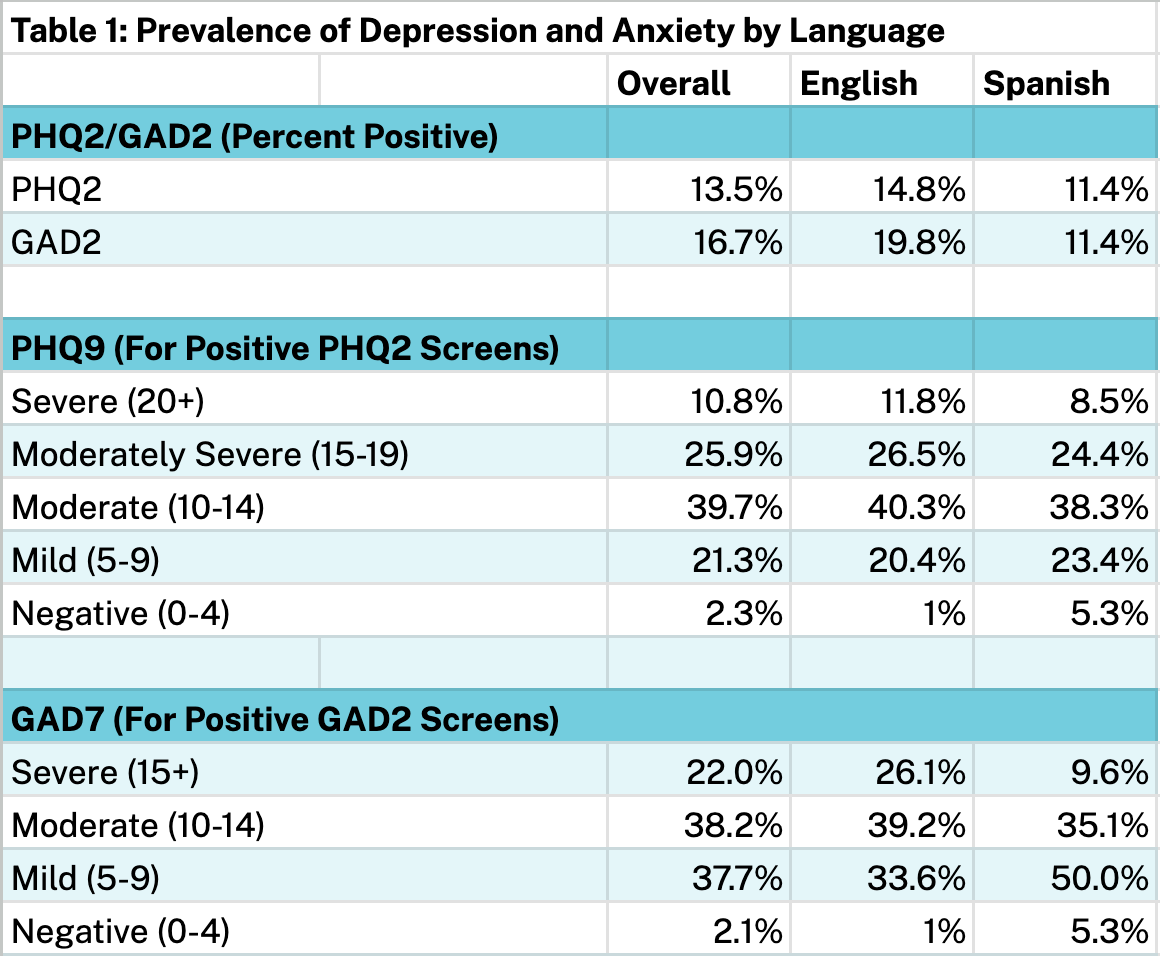
Background: Adolescents face increasingly high rates of depression and anxiety, particularly among under-resourced, ethnic minority, and immigrant populations. In community-based clinics, it is often difficult to track the scope of depression and anxiety. Consistent screening and longitudinal monitoring are key challenges. Three years ago, our adolescent mobile clinic implemented a screening tool that included a full PHQ and GAD questionnaire to better screen for depression and anxiety. Objective: To evaluate the prevalence and longitudinal trends of depression and anxiety among adolescents receiving care through a mobile clinic serving under-resourced communities, improving the care we provide. Design/Methods: Based on literature demonstrating increased adolescent comfort with computer-based screening, we created a computer-based screening tool in English and Spanish. As part of the screening, patients were provided with the PHQ-2 and GAD-2, automatically branching into the PHQ-9 and GAD-7 for positive initial screens. Results were shared with the clinician and social worker, informing the interventions they provided. To better understand the interventions provided, we evaluated the prevalence and severity of depression and anxiety over time and trends among returning patients. Results: From 9/1/22 to 10/30/25, 2255 total screenings were completed with 1193 unique patients. 36.6% of surveys were given in Spanish. Overall, 13.5% of screenings were positive for PHQ2 (14.8% in English speaking patients, 11.4% in Spanish speaking patients), and 16.7% were positive for GAD2 (19.8% English, 11.4% Spanish) (Table 1). Mean anxiety (as measured by GAD2 scores if negative, and total GAD7 scores if GAD2 is positive), and depression (as measured by PHQ2 scores if negative, and total PHQ9 scores if positive) scores peaked with the school year. Scores were lowest in the summer and highest in the middle of the school year. Anxiety and depression scores have generally decreased since 2022 (Figure 1). Among returners, the mean within-person change (most recent screening compared to first screening) was -0.815 (95%CI: -1.19, -0.442) for depression scores, and -1.17 (95%CI: -1.70, -0.643) for anxiety scores.
Conclusion(s): Our PHQ/GAD screening program incorporated into a brief online screening tool is clinically relevant three years into its implementation, and is effective for monitoring depression and anxiety in adolescents in our mobile clinic. Longitudinal monitoring showed that returning patients had less depression and anxiety burden at their return visits over time, and showed the times of the year where support is most needed.
Table 1: Prevalence of Depression and Anxiety Over Time (September 2022-October 2025)
Monthly PHQ and GAD Scores (September 2022-October 2025)










.png)
