Session: Developmental and Behavioral Pediatrics 5: Developmental Disabilities
228 - Disability Perspectives on Clinical Research Participation Using Positive Health as an Outcome
Sunday, April 26, 2026
9:30am - 11:30am ET
Publication Number: 3220.228
Melissa M. Murphy, University of Colorado School of Medicine, Aurora, CO, United States; Judy L. Aschner, Hackensack Meridian Health, Nutley, NJ, United States; Paige S. Ryals, Emory University School of Medicine, Atlanta, GA, United States; A. Joselyn Barahona, Emory University School of Medicine, Atlanta, GA, United States; Jennifer Lyman, Cerebral Palsy Foundation, Ponte Vedra Beach, FL, United States; Ashley Harris Whaley, Cerebral Palsy Foundation, New York, NY, United States; Rachel Byrne, Cerebral Palsy Foundation, New York, NY, United States; Nathalie L. Maitre, Emory University and Children's Healthcare of Atlanta, Atlanta, GA, United States
Executive Director Cerebral Palsy Foundation New York, New York, United States
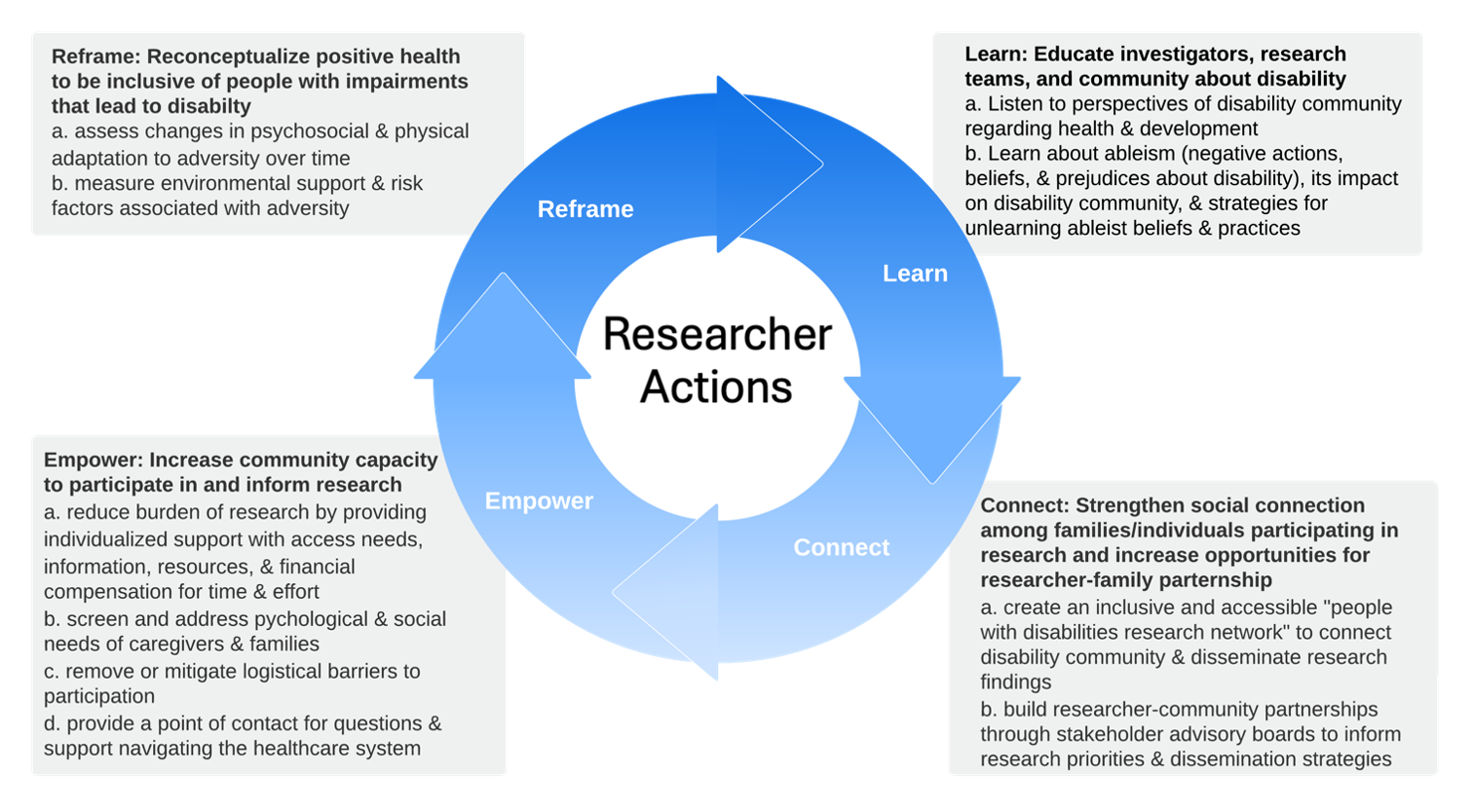
Background: "Positive health" is an important research outcome. When conceptualized as a continuum from presence to "absence of disease", it can exclude those with child-onset impairments associated with disability. Objective: We sought to capture perceptions of research inclusion in the disability community, queried individual perceptions of positive health among people with lived experience of child-onset disability, and derived a stakeholder-driven action plan for research with positive health as an outcome. Design/Methods: Part I of this mixed methods study surveyed participants nationally (N=436; Table 1). The survey was distributed via Survey Monkey through a broad-reaching social media campaign conducted between 10-11/2022 by the stakeholder organization. Part II consisted of focus group discussions from 7/2024-12/2024 with adults with a disability (n=4) or caregivers of a child with a disability (n=8) serving on a disability stakeholder advisory board to inform the environmental influences on child health outcomes study (ECHO). Transcripts were analyzed in MAXQDA by 3 coders using an inductive thematic analysis approach and 2 agreement cycles. Themes related to positive health and research participation were returned and refined by stakeholders. Results: Nationally, only 25% of survey respondents had participated in research NOT targeting disability; 24% had been excluded because of their disability. Research inclusion, especially related to positive health, was rated as extremely important (76-78/100). Qualitatively, SAB-derived themes aligned with principles of autonomy, capacity, beneficence, and justice leading to 4 recommended researcher actions (Figure 1): 1-Reframe a-positive health definition to recognize a-child-onset disability precludes the "absence of disease"; b-impairments amplify reciprocity of caregiver & child/adult wellbeing; c-expectations of resilience can lead to burden undermining positive health; d-biological and environmentally-imposed limitations lower baseline capacity (Figure 2); 2-Learn about disability & impact of ableism by listening to disability community perspectives; 3-Connect people with disabilities to each other through research networks & build research-community partnerships; 4-Empower the community by increasing capacity to participate in & inform research.
Conclusion(s): Individuals with disabilities want to be included in research on positive health. To achieve this, a research action plan with an ethically familiar framework provides a roadmap to study and improve positive health in the disability community.









.png)
