378 - Effects of Maternal Diet on Human Milk Composition
Sunday, April 26, 2026
9:30am - 11:30am ET
Publication Number: 3365.378
Claire Gallibois, MedStar Georgetown University Hospital, Washington, DC, United States; Julia Perry, Georgetown University School of Medicine, Washington, DC, United States; Gianna M. Sciullo, n/a, Bethel Park, PA, United States; Loredana L.. Cunningham, MEDSTAR GEORGETOWN UNIVERSITY, WASHINGTON, DC, United States; Sejal Dave, Medstar Georgetown University Hospital, Washington, DC, United States; Lewis P. Rubin, Georgetown University School of Medicine, Washington, DC, United States
Neonatology Fellow MedStar Georgetown University Hospital, United States
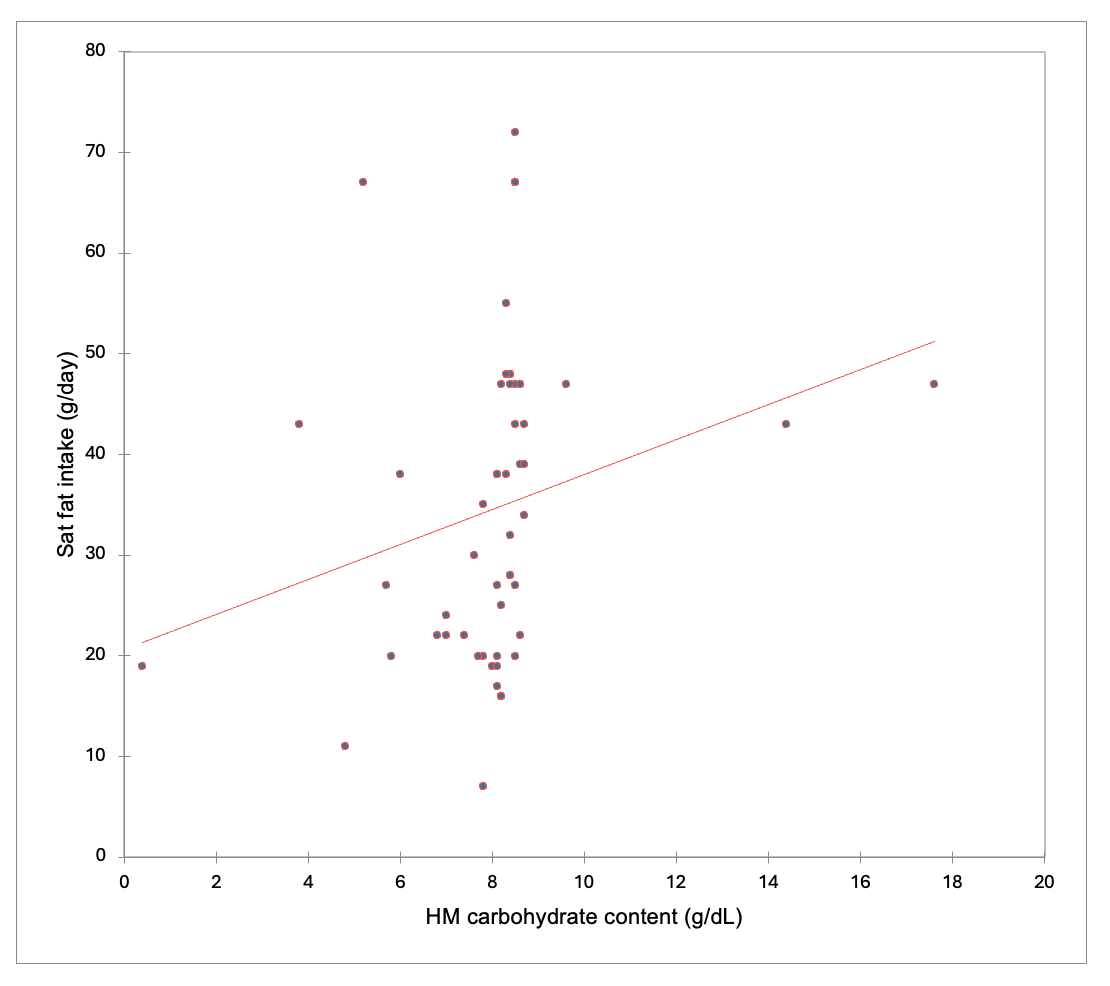
Background: Human milk (HM) is recommended for all infants. Particularly for high-risk including preterm infants, a detailed knowledge of HM composition and variation can inform nutritional management. However, with some exceptions, the effects of maternal diet and health on HM macronutrient abundance and specific micronutrient/bioactive profiles are not well-understood. Objective: To perform a prospective longitudinal study on relationships of maternal diet and modifying health factors on HM composition in a diverse population of mother/infant dyads. We focused on a high-risk population of NICU infants fed maternal expressed HM. Design/Methods: We enrolled lactating mothers of newborns admitted to a Level IV NICU. Mothers completed up to 3 rounds of study tests, >2 wks apart, including detailed dietary assessments (ASA24); skin carotenoid measurements (portable reflection spectrometry, Veggie Meter), which is a validated biomarker of fruit and vegetable intake; stress and depression scales; and salivary samples (stress hormone, inflammation markers). Mid-morning expressed HM was analyzed for energy/macronutrient content by mid-infrared spectroscopy (Miris) and global metabolite profiling by UHPLC-MS/MS. Statistical comparisons were Student's t and non-parametric tests and principal component analysis for metabolomic data. Results: 30 mothers were enrolled. Median age was 34 (range 21-45) years, newborn GA 322 (226-39) wks, BMI 28.5 (17.5-49.1) kg/m2; 26.6% had a behavioral health diagnosis (Table 1). 26 subjects had at least 2 HM analyses over time (Table 2). HM protein decreased over time from 1.55 to 1.1 g/dL (p=0.012); energy content did not significantly differ. Saturated fat intake was related to HM carbohydrate (CHO) content (r2=0.241; Figure 1). Maternal caloric intake was related to HM CHO content. Over time, maternal skin carotenoid levels increased (p=0.026). HM metabolomic profiling detected 848 metabolites; 760 were identifiable using a reference library of authenticated standards and included amino acids, sugars (including HMOs), lipids, choline species, phytonutrients (including carotenoids), vitamins, other micronutrients, and xenobiotics. Multiple micronutrients were related to maternal intakes.
Conclusion(s): Maternal diet influences HM nutrient composition. Despite the benefits of HM for preterm infants, some infants may have insufficient intakes of certain neurodevelopmentally/metabolically important factors. Nutritional interventions for mothers of high-risk infants may improve HM composition and, consequently, infant growth and neurodevelopment.
Table 1: Maternal Demographics
Table 2: Dietary, Skin Carotenoid, and HM Macronutrient Results
Figure 1: Correlation Between Maternal Saturated Fat Intake and HM CHO Content (r2=0.241)










.png)
.png)