491 - Real-World Effectiveness of Nirsevimab against RSV-Related and All-Cause Respiratory Tract Infections in Chinese Infants: A Multicenter Cohort Study
Sunday, April 26, 2026
9:30am - 11:30am ET
Publication Number: 3473.491
Yujie Wu, Peking University Third Hospital, Beijing, Beijing, China (People's Republic); Tongyan Han, Peking University Third Hospital, Beijing, Beijing, China (People's Republic); Yanhong Yu, Peking University Third Hospital, Beijing, Beijing, China (People's Republic); Pengxiang Zhou, Peking University Third Hospital, Beijing, Beijing, China (People's Republic)
n/a Peking University Third Hospital Beijing, Beijing, China (People's Republic)
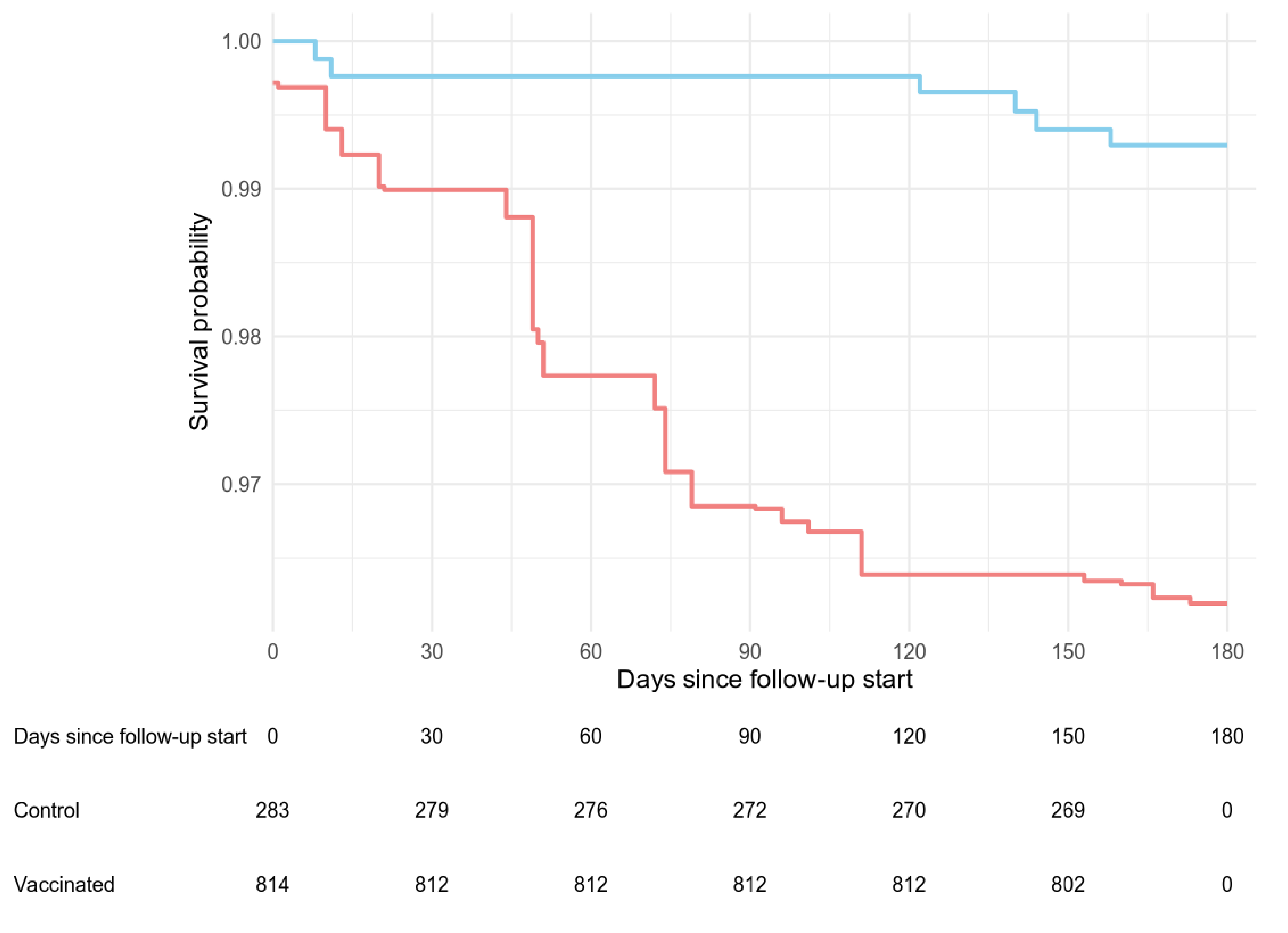
Background: Nirsevimab, a long-acting monoclonal antibody, has shown efficacy against Respiratory Syncytial Virus (RSV) in clinical trials. However, real-world effectiveness data remain limited, particularly from diverse populations such as Chinese infants. This study addresses this important knowledge gap by evaluating Nirsevimab's impact in a large, real-world Chinese cohort. Objective: To evaluate the real-world effectiveness of Nirsevimab against RSV-related and all-cause respiratory tract infections in infants in China. Design/Methods: This observational cohort study enrolled 1097 infants (814 Nirsevimab recipients; 283 non-recipients) from 11 hospitals in China. Infants were eligible for immunisation during the 2024-2025 RSV season and followed for up to 180 days. Endpoints included: (1) RSV-related lower respiratory tract infection (LRTI) incidence, (2) RSV-LRTI hospitalization; (3) all-cause LRTI incidence, (4) all-cause LRTI hospitalization, and (5) all-cause RTI incidence. To control for confounding, Inverse Probability of Treatment Weighting (IPTW) was used, based on covariates including gestational age, birth weight, gender, region, congenital heart disease, and chronic lung disease. Weighted Cox proportional hazards models were fitted to estimate Hazard Ratios (HR). Vaccine Effectiveness (VE) was calculated as (1-HR)×100%. Results: After IPTW, baseline characteristics were well-balanced. Nirsevimab demonstrated significant effectiveness against RSV-LRTI (VE: 81%, 95% Confidence Interval [CI]: 50-93%) and RSV-LRTI hospitalization (VE: 82%, 95% CI: 47-94%). Significant protection was also observed for all-cause LRTI (VE: 62%, 95% CI: 31-79%), all-cause LRTI hospitalization (VE: 75%, 95% CI: 49-88%), and all-cause RTI (VE: 42%, 95% CI: 13-62%).
Conclusion(s): In this real-world study of Chinese infants, a single dose of Nirsevimab was significantly effective in reducing the risk of both RSV-related and all-cause respiratory tract infections, as well as their associated hospitalizations.