Associate Professor AIIMS Bhubaneswar Bhubaneswar, Orissa, India
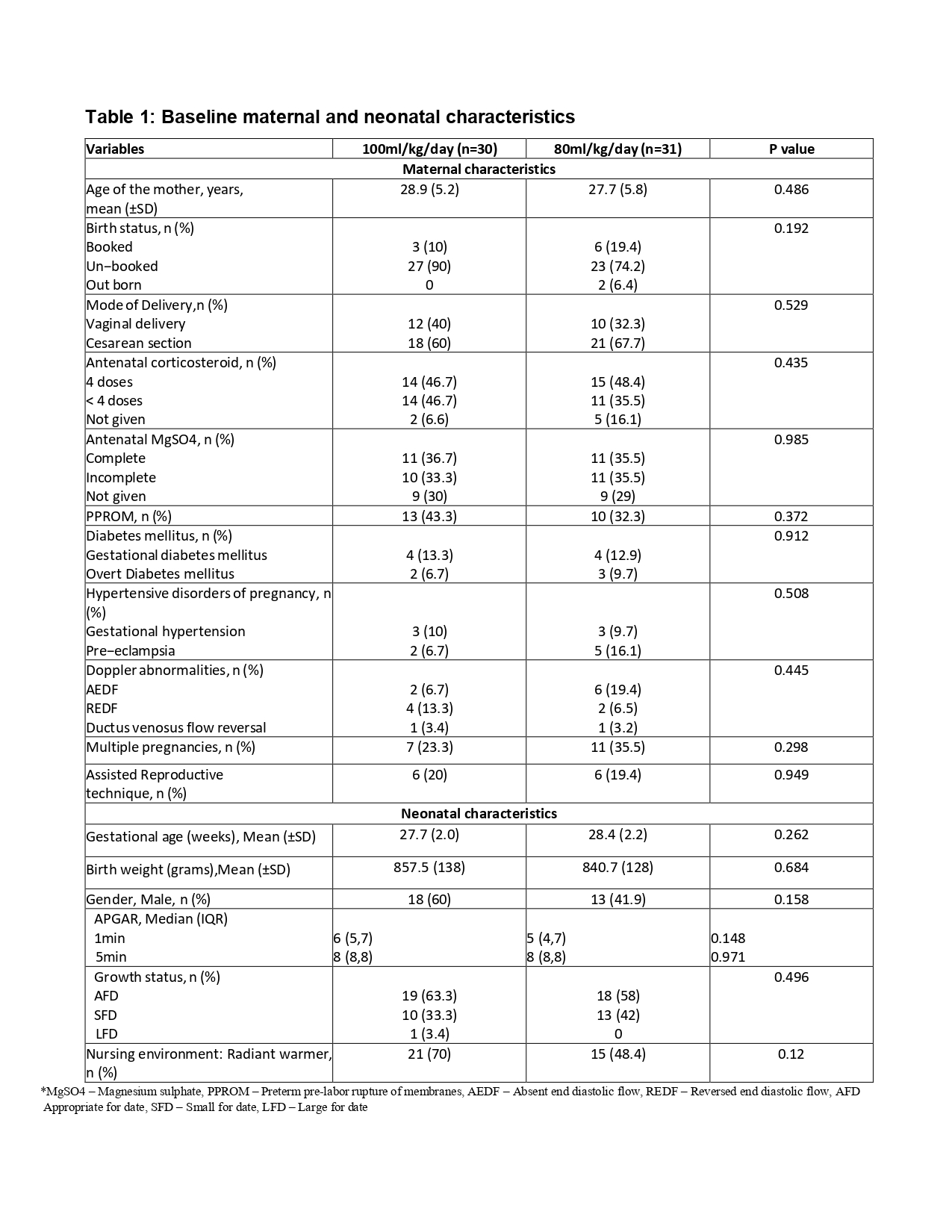
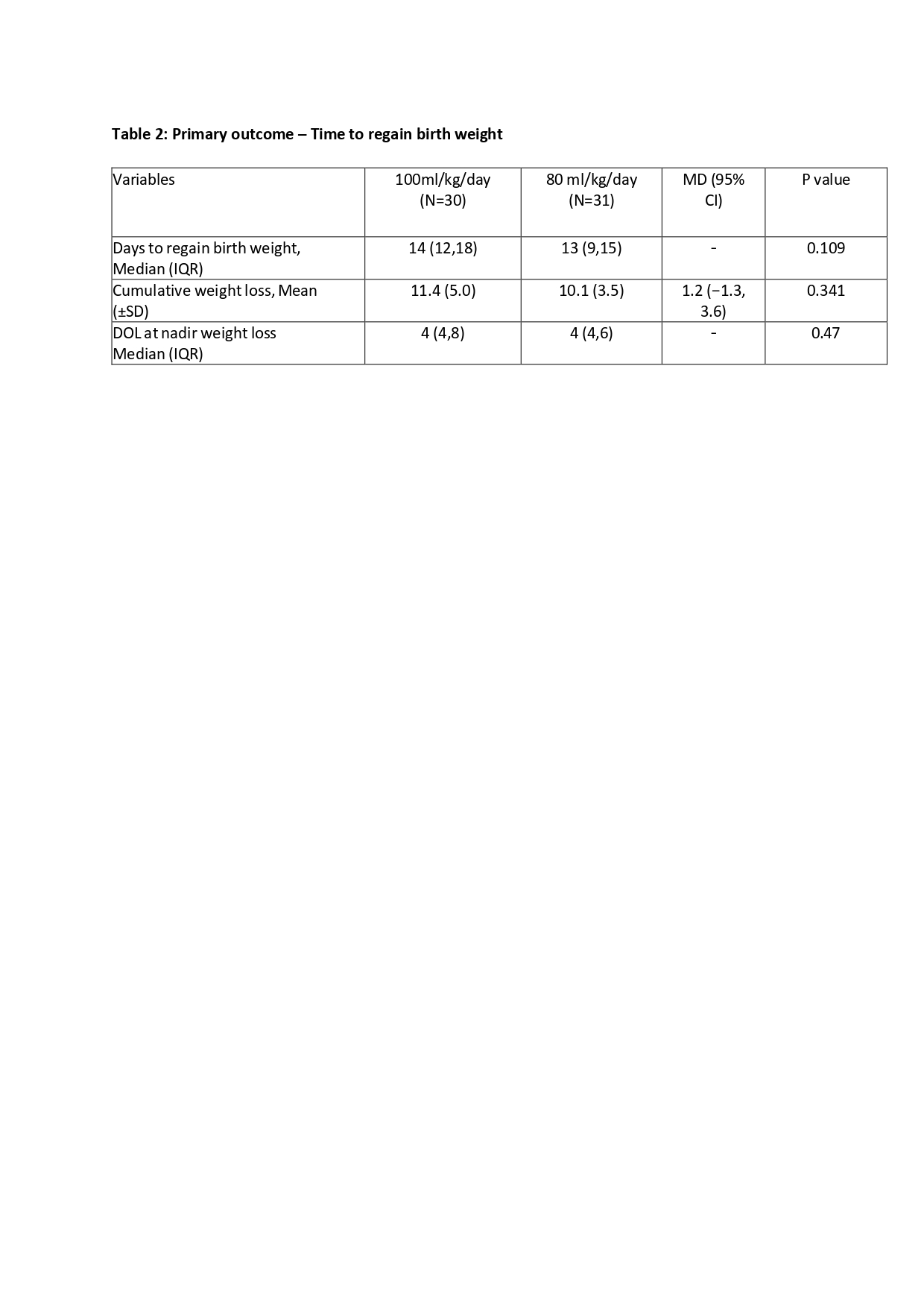
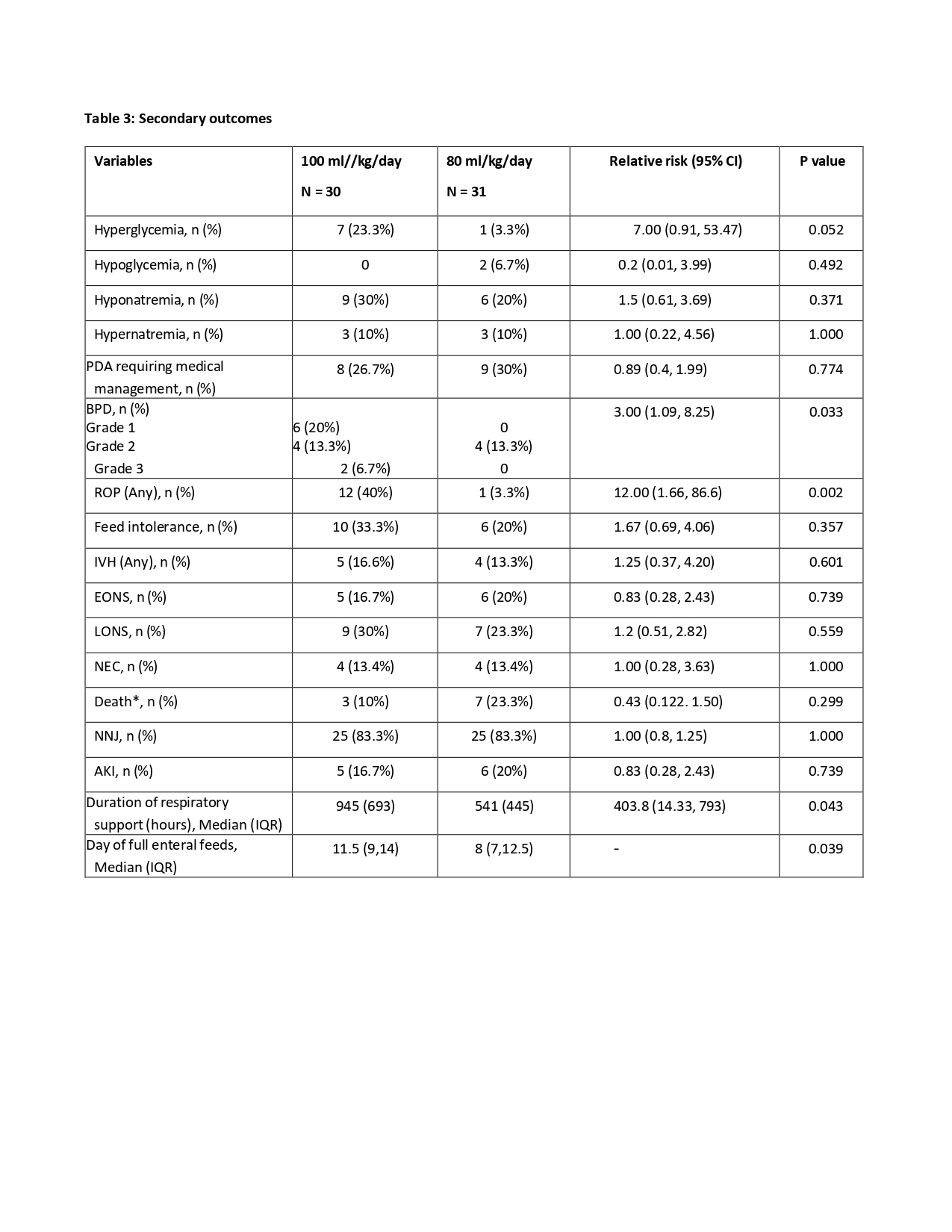
Background: Extremely low birth weight neonates (ELBW) with their immature renal and skin barrier, are at risk of fluid and electrolyte disturbances warranting careful fluid and electrolyte management. Fluid overload can impact many short-term morbidities like hyponatremia, PDA, IVH, NEC; long term morbidities like BPD and increases the risk of mortality. Dehydration can lead to excessive postnatal weight loss, hypernatremia and kidney injury. Thus, both fluid overload and dehydration can have an impact on short-term and long-term outcome of the baby. Wide variations in fluid practices on DOL 1 in this vulnerable population (nationally and globally) can contribute to difference in morbidities observed across units with some influence in survival of this population. Objective: Objective of the study was to compare two different fluid regimens in extremely low birth weight neonates Design/Methods: This study, a single-centre, open labelled, randomized control trial compared 100ml/kg/day vs. 80ml/kg/day in 61 babies with birth weight < 1000g or gestational age at birth < 28 weeks, initiated on parenteral nutrition. Babies were started on planned TFR on DOL 1 with hiking of fluids once in 24-hour period, based on clinical parameters like - weight gain/ loss, urine output, urine SG, serum sodium and clinical status of the baby. Planned sub-group analyses were - babies cared under radiant warmer vs. incubator, SGA vs. AGA/ LGA population and extreme preterm ( < 28 week) population Results: During the 20 months study period (From April 2023 to November 2024), out of 69 babies who qualified the inclusion criteria, we enrolled 61 babies - 31 in 80ml/kg and 30 in 100ml/kg. Baseline maternal and neonatal characteristics were similar between the groups. Median (IQR) time to regain birth weight was similar in both groups: i.e. 14 (12,18) [100 ml/kg/day group] vs. 13 (9,15) [80 ml/kg/day group], p value 0.05. There was higher incidence of hyperglycaemia, BPD, ROP in the intervention group. There was longer time to full enteral feeds, longer duration of respiratory support in the intervention group (100ml/kg) group.
Conclusion(s): Time to regain birth weight is dependent on several interrelated factors like nutrition, presence of other comorbidities apart from the amount of fluid administration on day one. A future adequately powered study with larger sample size is required to establish a causal association of co-morbidities while effectively controlling for confounding factors. Trial registration: CTRI/ 2023/ 04/ 051387 Keywords: extremely low birth weight neonates, parenteral nutrition, fluid overload, electrolyte disturbance
Table 1 Baseline maternal and neonatal characteristics
Table 2 Primary outcome - Time to regain birth weight