Session: Medical Education 6: Resident - Curriculum I
742 - The Development and Early Evaluation of an Outpatient Endocrinology Core Rotation
Sunday, April 26, 2026
9:30am - 11:30am ET
Publication Number: 3718.742
Julianna Lee, Children's Hospital of Philadelphia, Philadelphia, PA, United States; Samuel McKinnon, Childrens Hospital of Philadelphia, Philadelphia, PA, United States; Marissa Kilberg, Childrens Hospital of Philadelphia, Glenside, PA, United States
Resident Children's Hospital of Philadelphia Philadelphia, Pennsylvania, United States
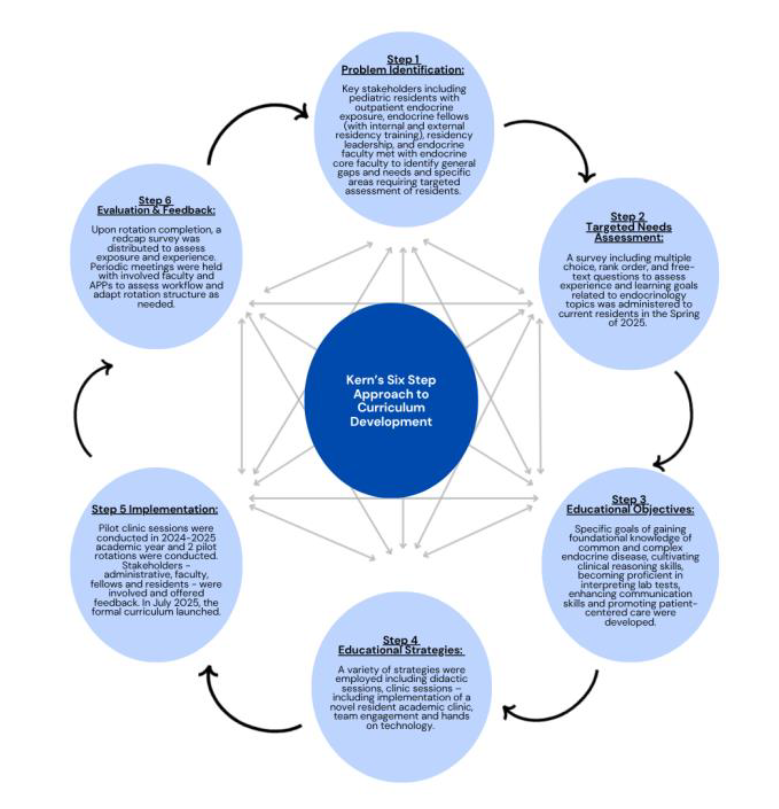
Background: Mandated changes from the ACGME, increasing ambulatory care, have spurred curricular adaptations in Pediatric Residency. To align with these changes, our program at a large, tertiary academic hospital, has transitioned the Endocrinology rotation from an exclusively inpatient (IP) to primarily outpatient (OP) experience. Objective: To design, implement and evaluate a comprehensive Pediatric Resident Endocrinology Educational Experience. Design/Methods: Kern's Six Step Approach to curriculum development was utilized (Figure 1). Here we highlight the targeted needs assessment (distributed to all residents prior to change in rotation structure) and program evaluation and feedback surveys (distributed to PGY1s upon rotation completion). Results: Needs
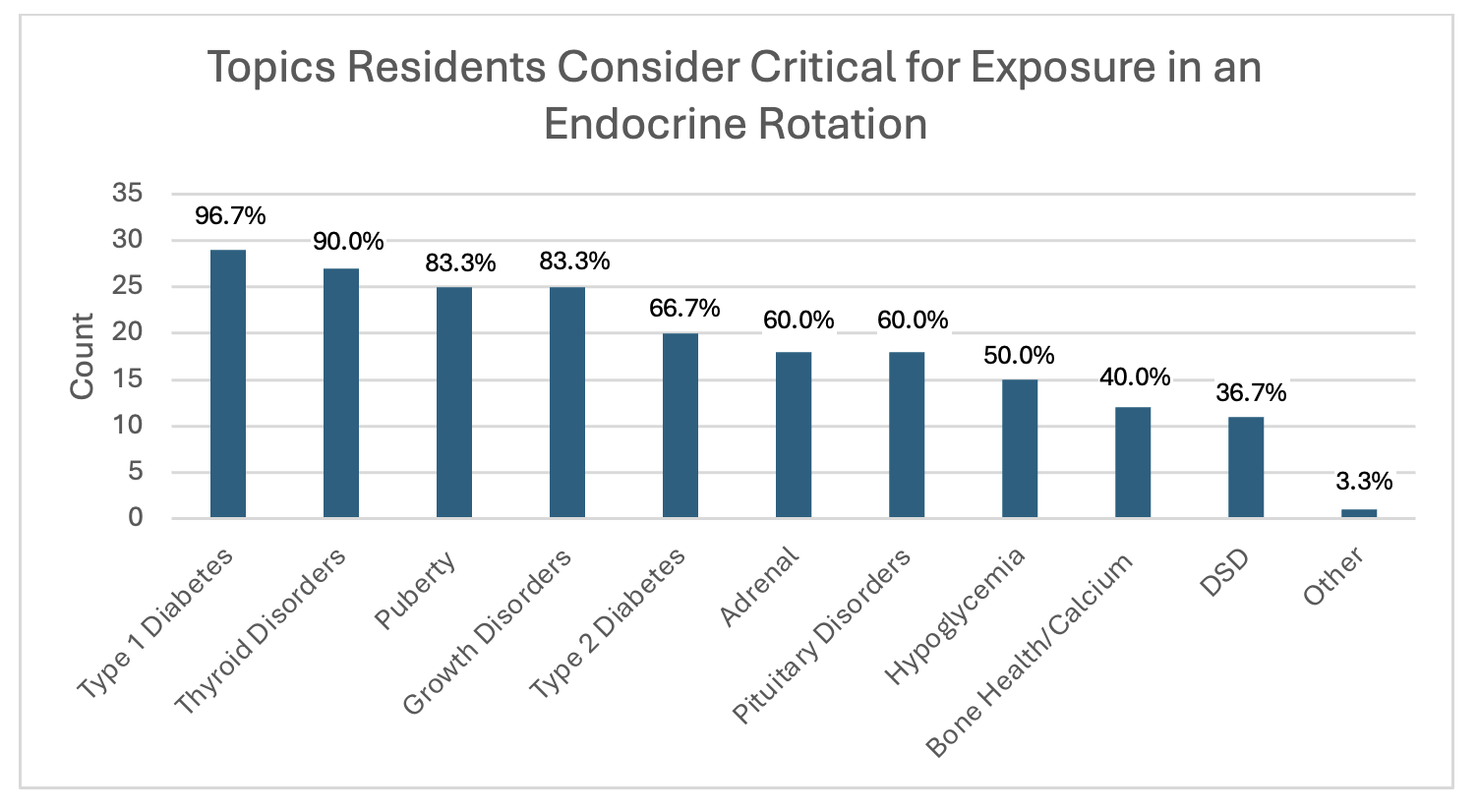
Assessment: Thirty PGY1 thru PGY3 residents responded. Top perceived benefits of an OP endocrinology rotation included: broader exposure to endocrinology (97%), improved understanding for referrals (83%), and understanding follow-up management of endocrine patients (77%). Residents considered diabetes mellitus (DM), thyroid, growth and puberty disorders (Figure 2) to be critical to their learning. The majority were concerned about acquiring DKA management, insulin titration, and subcutaneous insulin management (79%, 75%, and 61% respectively) without the IP service. Residents highlighted need for structured didactic learning and active roles in clinic visits during OP training. Post-
Assessment: 12 of 14 eligible (86%) PGY1 residents responded. Overall breadth of exposure was felt to be appropriate with General Endocrinology, DM, and Subspecialties scoring 4.3, 4.5, and 4.1 out of 5, respectively. Specifically, most respondents assigned excellent or good ratings to OP DM exposure (11/12) and all (12/12) assigned excellent or good ratings to didactic sessions, novel hands-on pump training and resident academic clinic sessions. Qualitative responses highlighted resident graduated autonomy as a positive educational tool in clinics. Two areas of desired exposure included new onset DM education and general endocrinology consultations.
Conclusion(s): Understanding the learning goals and objectives of key stakeholders provided important insight to curriculum development. The post-assessment of this curriculum highlighted appreciation of resident autonomy, exposure to a variety of common conditions, and hands on teaching. This framework can provide a replicable approach for other training programs. Future steps include incorporation of additional educational exposures including a DKA simulation and IP endocrine consultations to ensure clinical needs are met.
Figure 1: Kern's Six-Step Approach to Curriculum Development for an Outpatient Endocrinology Rotation
Figure 2: Topics Residents Consider Critical for Exposure in an Endocrine Rotation - Counts and % of Respondents DSD: Differences in Sex Development Other: One resident included interest in endocrine genetic disorders such as adrenoleukodystrophy, MEN1/MEN2, lipid disorders.










 DSD: Differences in Sex Development