369 - Improving Human Milk Use at Discharge through a Lactation Time Out (LTO) Initiative for Very Low Birth Weight Infants (VLBW)
Sunday, April 26, 2026
9:30am - 11:30am ET
Publication Number: 3356.369
Jennifer Jones, University of California, Irvine, Fountain Valley, CA, United States; Robin Koeppel, University of California, Irvine Health, Orange, CA, United States; Cherry Uy, University of California, Irvine, School of Medicine, Orange, CA, United States
NICU Lactation Consultant University of California, Irvine Fountain Valley, California, United States
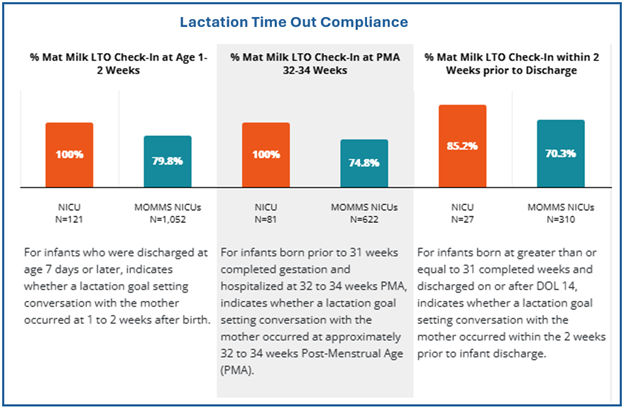
Background: Human milk (HM) is recognized as the optimal feeding for newborn infants providing ideal nutrition, immune protection, healthier growth and improved neurodevelopmental outcomes. For preterm infants, the benefits of HM are well-documented and extend across short- and long-term outcomes, including decreasing the incidence of major morbidities such as necrotizing enterocolitis, late-onset sepsis, bronchopulmonary dysplasia and retinopathy of prematurity. Despite these proven advantages, the rate of HM feeding at discharge among VLBW infants remains suboptimal. Our NICU baseline data from Jan-Dec 2023 indicated that only 51% of VLBW infants were discharged on any HM feedings. To address this gap, we joined a statewide QI collaborative - Motivating & Optimizing Maternal Milk in Safety Net NICUs in June 2024 Objective: Our initiative aimed to increase the rate of HM feedings at discharge among VLBW infants ( < 32 weeks and/or < 1500gm) by 15% from 51% to 59% by July 2025. Design/Methods: A driver diagram was developed to identify the barriers to maternal milk production and to outline targeted interventions to support breastmilk initiation and maintenance. A multimodal strategy using PDSA cycles was implemented. Interventions included accessibility to hospital-grade breast pumps, creating a new pump log and parent education handout emphasizing the benefits of early pumping and skin to skin contact, and collaborating with perinatal units to promote early pumping initiation. A weekly LTO, involving physicians, Clinical Nurse Specialist, dieticians, and lactation, served as key process measure. LTO reviews the percentage of maternal milk used, breastfeeding and non-nutritive breastfeeding practices within the last three days, and mothers' milk volumes at postpartum day 14. Outcome measure was the percentage of VLBW infants discharged on any human milk. Results: The percentage of VLBW infants discharged on any breastmilk increased to over 65% by July 2025, surpassing the target goal of 59%. To date, the mean percentage has remained above 75% indicating sustained improvement beyond the project goal.
Conclusion(s): This QI initiative achieved and maintained significant improvements in HM use at discharge for VLBW infants. The integration of LTO emphasized that multidisciplinary collaboration and standardizing lactation practices, was essential for sustaining progress and fostering a supportive NICU breastfeeding culture.
Human Milk Feeding at Discharge: Baseline and Post Intervention










.gif)