370 - Practices for breast milk feeding promotion in very low birth weight premature infants: A multicenter survey from the Neocosur Network
Sunday, April 26, 2026
9:30am - 11:30am ET
Publication Number: 3357.370
Francisca Wormald, Pontificia Universidad Católica de Chile, Santiago, Region Metropolitana, Chile; Angélica Domínguez, Pontificia Universidad Católica de Chile, Santiago, Region Metropolitana, Chile; Jose L Tapia, Pontificia Universidad Catolica de Chile, Santiago, Region Metropolitana, Chile; Alberto Toso, Pontificia Universidad Catolica de Chile, Santiago, Region Metropolitana, Chile; Alvaro J. González, Pontificia Universidad Católica de Chile, Santiago, Region Metropolitana, Chile
Perinatal Psychologist and researcher Pontificia Universidad Católica de Chile Santiago, Region Metropolitana, Chile
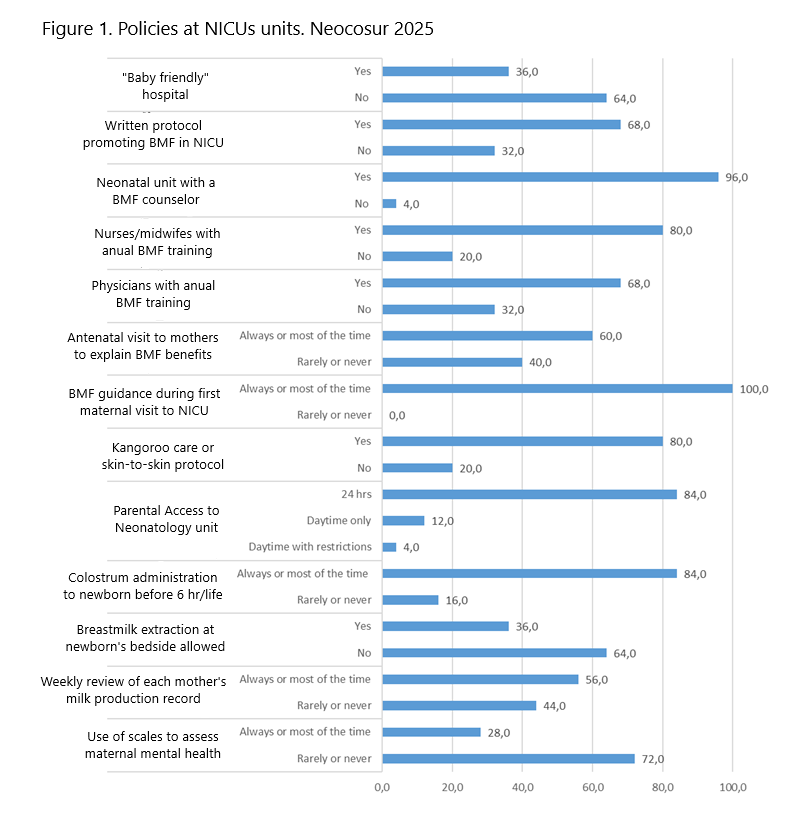
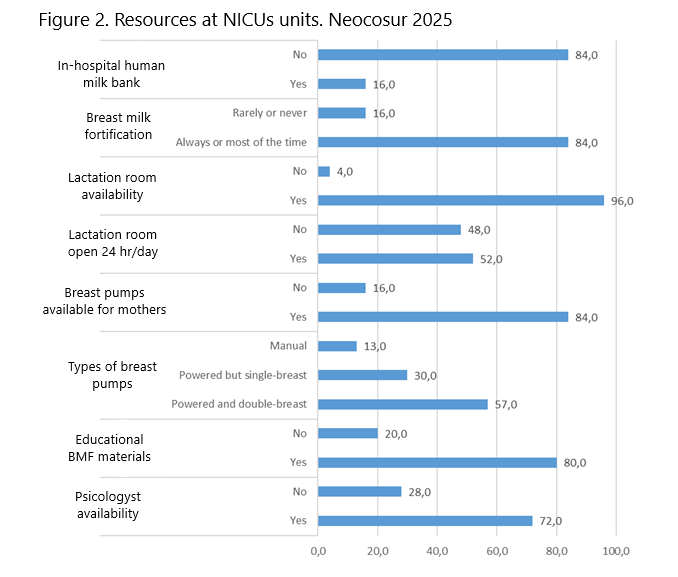
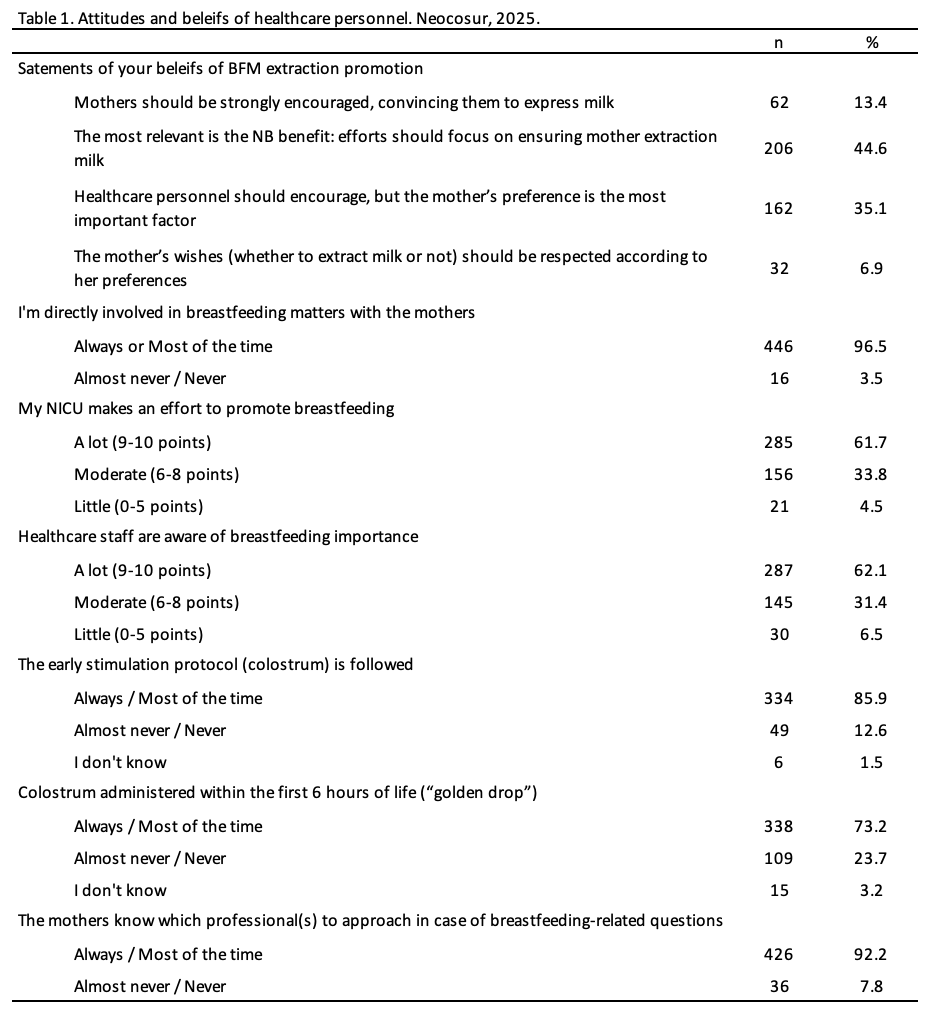
Background: There is increasing evidence of multiple benefits of breast milk feeding (BMF) in very low birth weight (VLBW) infants. This evidence includes several practices that contribute to increasing the use of BMF in these infants. Nevertheless, these practices may not be adequately implemented due to barriers like policies, insufficient resources and from diverse health personnel attitudes/beliefs. Objective: To describe practices and resources for the promotion of BMF for VLBW infants, 400 - 1500g, in a south American, middle-income country setting. Design/Methods: A prospective, observational, and multicenter study was carried out from August to October 2025. An online anonymous survey was sent to health care personnel from Neonatal Intensive Care Unit (NICUs) affiliated to the NEOCOSUR neonatal network (Argentina, Chile, Paraguay, Perú, and Uruguay). We also collected objective information from NICUs directors and from NEOCOSUR registry. Results: Twenty five out of 35 (71.4%) eligible centers participated in this study. Two hundred physicians and 246 nurses/midwives answered the survey. BMF practices appear to be of significant concern (Figure 1). However, standardized policies and some resources are insufficient in several centers (Figure 2). Only 4 out of 25 of centers have a breast milk bank and some lack of fortification. Overall, there are several areas with space for improvement. The network's real data on BMF shows that 32.4% of VLBW infants receive an adequate BMF supply (> 120ml/Kg/day) at age 14 days of life. In relation to healthcare personnel attitudes and beliefs, there are differences with the center information: 62.1% respond that they are highly sensitive to BMF and 61.7% that the center does high efforts in BMF promotion (Table 1). Interestingly, 35.1% agrees with although they should encourage mothers for BMF mothers' preference is the most relevant factor.
Conclusion(s): In this middle-income country setting, there is a gap between the importance given to BMF practice and several results in policies, resources, some of the personnel attitudes/beliefs, with a relatively poor BMF supply in VLBW infants. Altogether, these findings provide important opportunities for high impact / low-cost interventions.
Figure 1. Policies at NICUs units. Neocosur 2025.
Figure 2. Resources at NICUs units. Neocosur 2025.
Table 1. Attitudes and beleifs of healthcare personnel. Neocosur 2025.