354 - A Quality Improvement Initiative to Improve First Oral Feeding at the Breast for Very Low Birth Weight (VLBW) Infants Through Staff Education and the Neonatal Enteral Support Team (NEST) Program
Sunday, April 26, 2026
9:30am - 11:30am ET
Publication Number: 3341.354
Robin Koeppel, University of California, Irvine Health, Orange, CA, United States; Jennifer Jones, University of California, Irvine, Fountain Valley, CA, United States; Cherry Uy, University of California, Irvine, School of Medicine, Orange, CA, United States
Neonatal Clinical Nurse Specialist University of California, Irvine Health Orange, California, United States
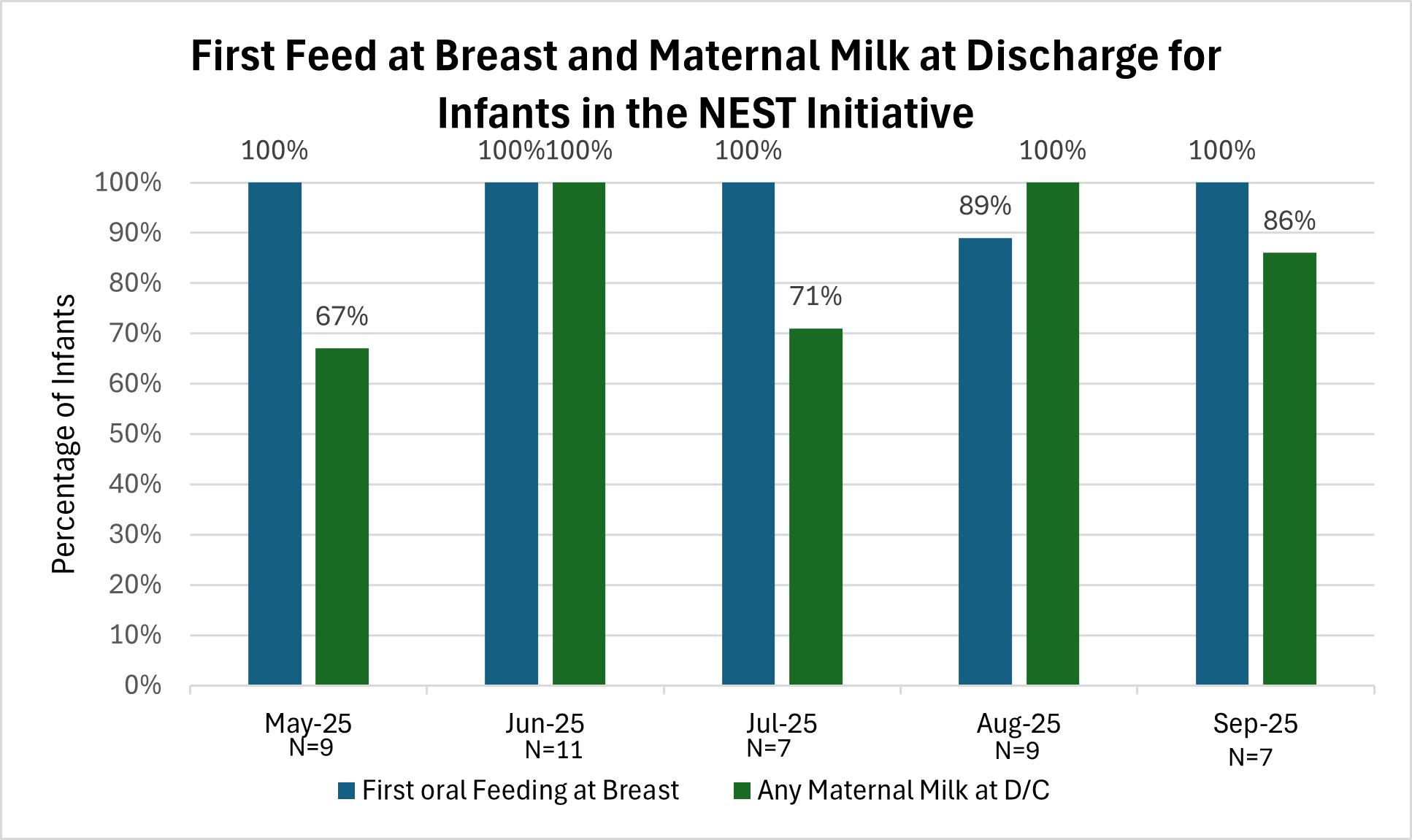
Background: Direct breastfeeding is the ideal feeding method for all infants, including those most vulnerable in the neonatal intensive care unit. For preterm infants, multiple barriers can hinder successful breastfeeding. These include challenges in initiating and maintaining maternal milk supply, physical separation between mother and infant, immature oral-motor coordination, the need for fortification to optimize growth, and the misconception that bottle feeding is easier than breastfeeding. Promoting early and sustained breastfeeding practices in the NICU particularly ensuring that the first oral feeding occurs at breast is essential to improving long-term breastfeeding outcomes until discharge and beyond. Baseline data between January 2023 through August 2024 revealed that only 70% of VLBW infants received first oral feeding at the breast. Objective: Increase the percentage of first oral feeding at breast for VLBW infants from 70% to 85% by June 2025. Design/Methods: A monthly multidisciplinary, lactation-focused team, including a neonatologist, NICU parent, clinical nurse specialist, dietician, lactation, social worker, nurses, and nursing leadership reviewed barriers to first oral feeding at the breast in VLBW infants. Using a driver diagram, the team identified key obstacles and implemented focused interventions that include comprehensive staff education and creating a parent tool for successful breastfeeding. NEST was established to conduct weekly bedside rounds for infants between 31-33 weeks corrected gestational age, developing individualized, developmentally appropriate feeding plans. Rounds focus on skin-to-skin, oral colostrum care, non-nutritive breastfeeding and early nutritive breastfeeding. Parents, bedside nurses, and lactation team members participate, and these rounds serve as the primary process measure for the initiative. Outcome measure was the percentage of VLBW infants receiving the first oral feeding at breast. Results: The percentage of VLBW infants whose first oral feeding occurred at the breast increased to 87% by June 2025, surpassing the 85% goal. To date, the mean rate is 89%. Infants that were included in NEST rounds were more likely to experience first oral feeding at breast and continue to receive maternal BM at discharge. (See figures).
Conclusion(s): Implementation of staff education and the NEST initiative successfully increased the rate of first oral feeding at the breast among VLBW infants. Ongoing multidisciplinary collaboration and education remain essential to promoting early breastfeeding practices in the NICU.
Percentage of First Feeding at Breast/Chest for VLBWs
First Feed at Breast and Maternal Milk at Discharge for infants in the Nest Initiative









.png)