Session: Emergency Medicine Trainee Ongoing Projects 2
TOP 42 - Implementation of an Asthma Pathway Including Emergency Department-Initiated Inhaled Corticosteroids and a Survey on Patient Impact
Monday, April 27, 2026
8:00am - 10:00am ET
Publication Number: 4745.TOP 42
Sybille Moesta, Goryeb Children's Hospital, Jersey City, NJ, United States; Shannon Smith, 065865996, warwick, NY, United States; Christina Melchionne Miseo, Morristown Medical Center, Morristown, NJ, United States; Ashley Flannery, Goryeb Children's Hospital, Morristown, NJ, United States; Cassie Jourdan, Goryeb Children's Hospital, Morristown, NJ, United States; Cosimo Laterza, Goryeb Children's Hospital, Morristown, NJ, United States; Isabella M. Vescera, Goryeb Children's Hospital, East Hanover, NJ, United States
PEM Fellow Goryeb Children's Hospital Jersey City, New Jersey, United States

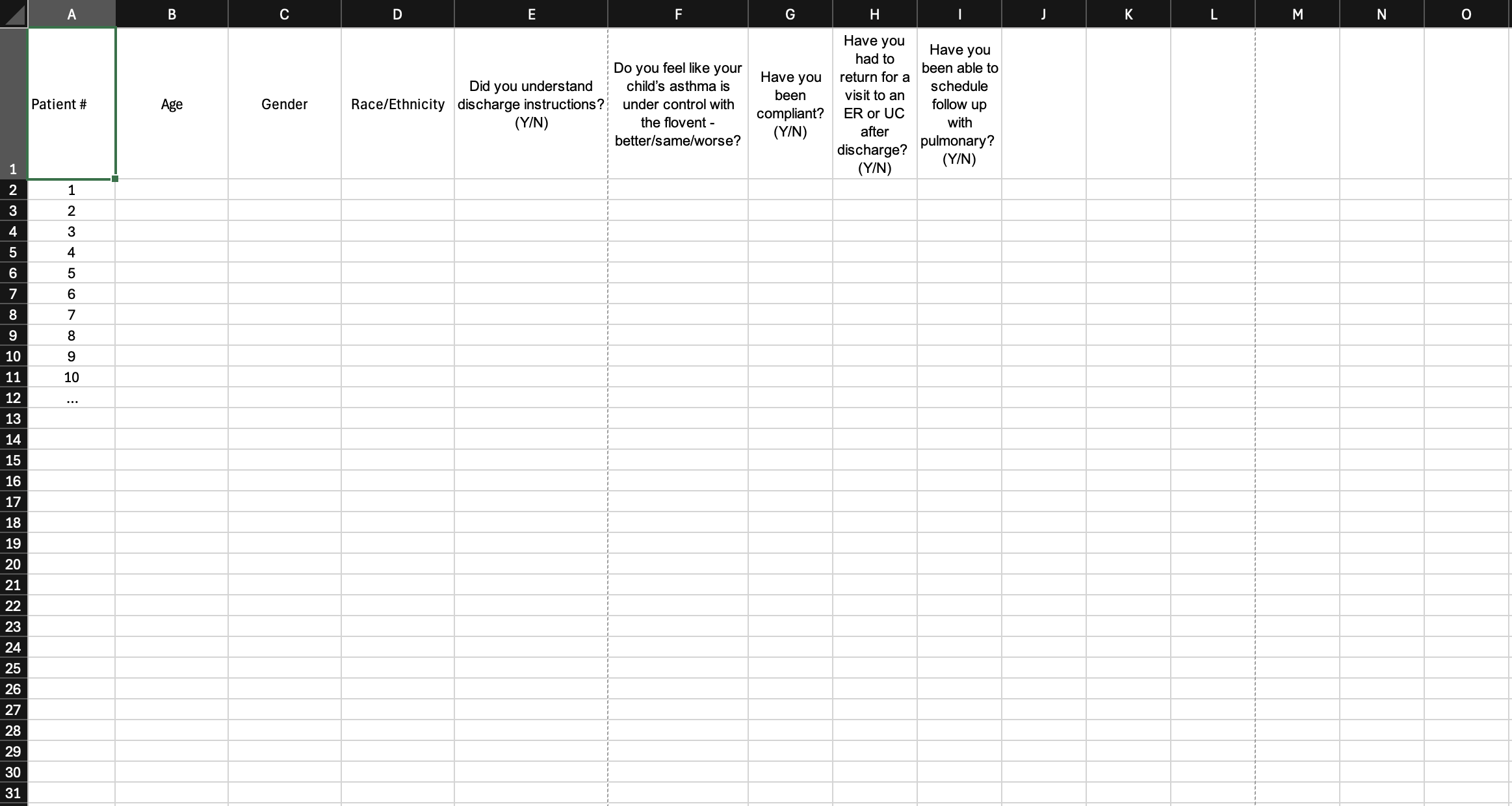
Background: Asthma is a leading cause of pediatric emergency department (ED) visits and hospitalizations. Recurrent exacerbations often reflect inadequate controller therapy and limited access to timely outpatient follow-up. In October 2025, our pediatric ED (annual volume 29,000) implemented an evidence-based asthma pathway that included criteria for initiating inhaled corticosteroids (ICS) at discharge. Eligible patients included those < 5 years old with ≥2 steroid-requiring exacerbations in 6 months or ≥5 years old with ≥2 in 12 months. The goal was to promote early controller use and reduce short-term ED return visits. Objective: To assess caregiver-reported understanding of discharge instructions, medication adherence, asthma control, and follow-up after implementation of an ED-based asthma pathway with ICS initiation. Design/Methods: This is a quality improvement evaluation conducted in a pediatric ED. Patients discharged on ICS for asthma exacerbation between October-December 2025 will be identified via electronic health record. Caregivers are being contacted by phone within 2-3 weeks of discharge and surveyed using a standardized five-question tool assessing: (1) understanding of discharge instructions; (2) perceived asthma control on the prescribed Flovent (better/same/worse); (3) medication compliance; (4) need for return visits to an ED or urgent care; and (5) success in scheduling follow-up with a pulmonary specialist or primary care provider. Responses will be summarized using descriptive statistics, and associations between reported understanding/compliance and follow-up success will be explored.