Session: Health Equity/Social Determinants of Health 7
16 - Changes in cannabis use among diverse adolescents across a decade of policy change
Monday, April 27, 2026
8:00am - 10:00am ET
Publication Number: 4015.16
Marla Eisenberg, University of Minnesota Medical School, MINNEAPOLIS, MN, United States; Ryan Watson, UConn, Storrs, CT, United States; Amy L. Gower, University of Minnesota Medical School, Minneapolis, MN, United States
Professor University of Minnesota Medical School MINNEAPOLIS, Minnesota, United States
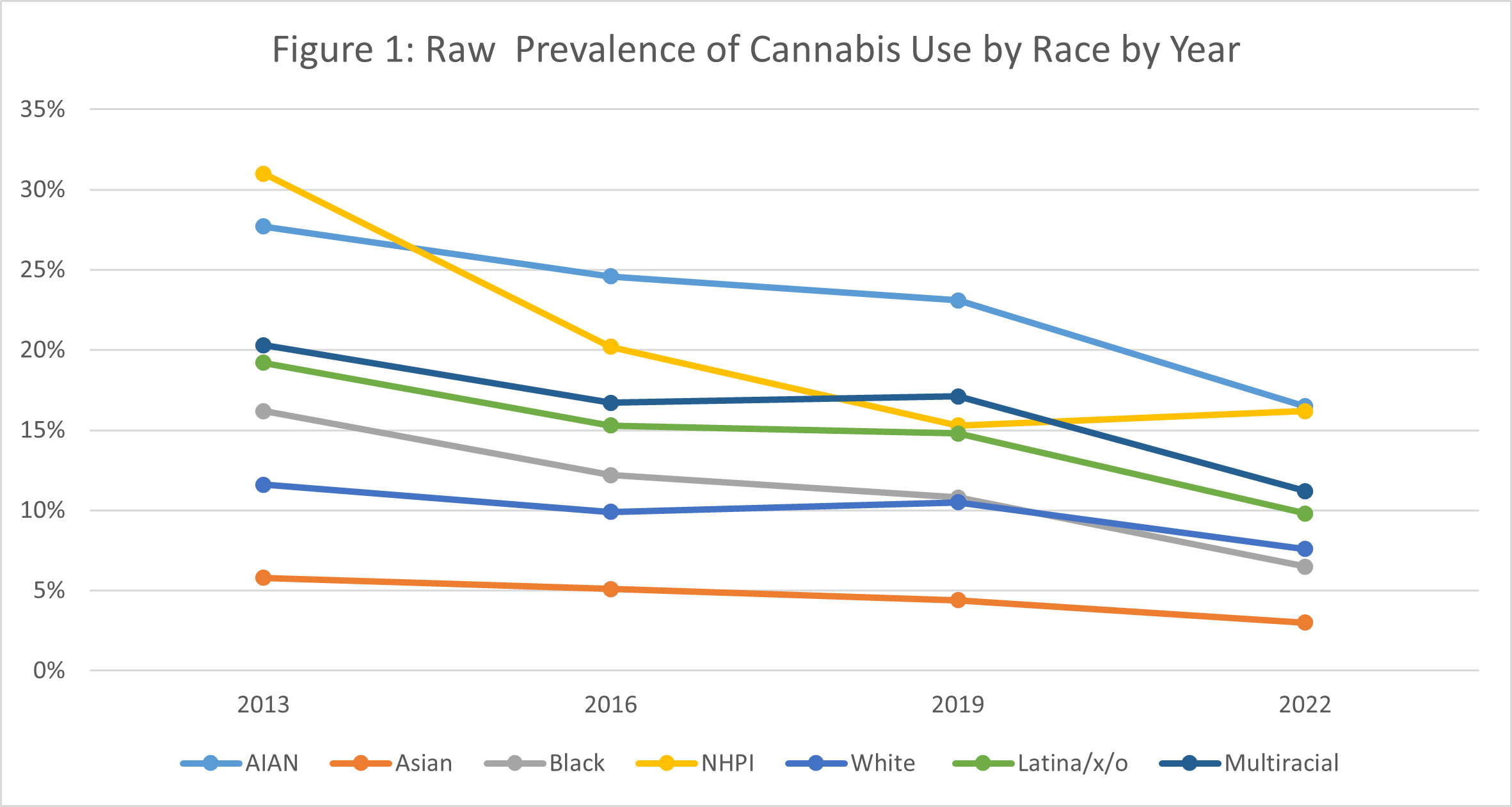
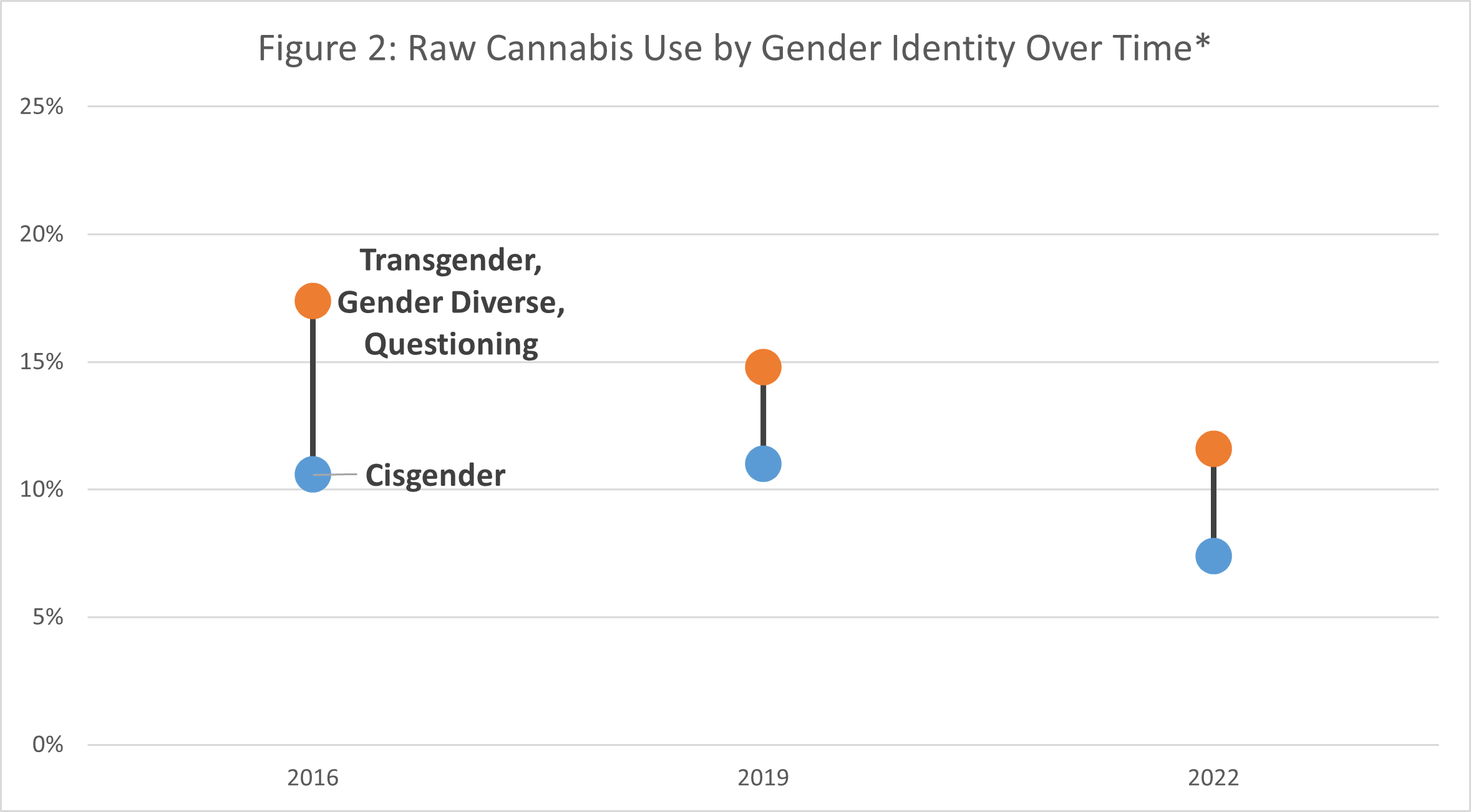
Background: In 2022, approximately 12% of 11th grade students reported past 30-day cannabis use, and preliminary evidence suggests important variation in cannabis use across intersecting marginalized identities. Understanding these nuances and changes over time is critical to the development of appropriate prevention activities that will advance health equity. Objective: We therefore used existing population-based survey data to examine how rates of cannabis use have changed in the past decade; and how trends differ across social identities of race/ethnicity, sexual orientation, and gender identity. Design/Methods: Data from 9th and 11th grade participants in the Minnesota Student Survey (MSS) were analyzed, including the 2013, 2016, 2019, and 2022 waves (N=50,000-75,000 students/wave; 2025 data will be integrated this fall). We examined raw prevalences for each year of any past 30-day cannabis use overall and by social position (racial, ethnic, gender, and sexual identity). We confirmed linear trends over time, and conducted logistic regressions with survey year as a predictor (ref=2013), adjusting for grade. Next we stratified by social position and conducted another grade-adjusted logistic regression to characterize change over time within groups (e.g., among bisexual youth). Finally, we used logistic regressions to examine interactions between each social position and year to test whether disparities in rates of any past 30-day use were increasing, decreasing, or staying the same. Results: Rates of past 30-day cannabis use have gone down, from 12.7% in 2013 to 7.8% in 2022. We observed changes in disparities in past 30-day cannabis use that varied by social position. Changes varied by racial and ethnic identity; for example, Native Hawaiian and Pacific Islander youth showed narrowing disparities in 2016 and 2019 which returned to 2013 levels in 2022. Among Black youth, disparities decreased in 2016 and 2019, further decreasing such that Black youth had lower prevalence of cannabis use relative to white youth in 2022. Disparities were constant across years for students who were transgender, gender diverse, or questioning their gender identity relative to cisgender youth (gender x survey year interaction p=.933).
Conclusion(s): As new policies regarding cannabis generate changes in access, advertising, and community norms, professionals working with adolescents will need to be mindful of disparities in use and differences in these trends across marginalized populations. Development of culturally relevant education and prevention activities are recommended.
Figure 1: Raw Prevalence of Cannabis Use by Race by Year
Figure 2: Raw Cannabis Use by Gender Identity Over Time