678 - Changing Epidemiology of Biliary Atresia in Infants Before and After the COVID-19 Pandemic: A Multi-Institutional TriNetX Analysis
Monday, April 27, 2026
8:00am - 10:00am ET
Publication Number: 4663.678
Tina Maria Moreck, State University of New York Downstate Medical Center College of Medicine, Brooklyn, NY, United States; Dana Goldner, Hassenfeld Children's Hospital at NYU Langone, New York, NY, United States; Olumide Arigbede, State University of New York Downstate Medical Center College of Medicine, New York City, NY, United States; Thomas Wallach, State University of New York Downstate Medical Center College of Medicine, Brooklyn, NY, United States
Pediatric Resident, PGY2 State University of New York Downstate Medical Center College of Medicine Brooklyn, New York, United States
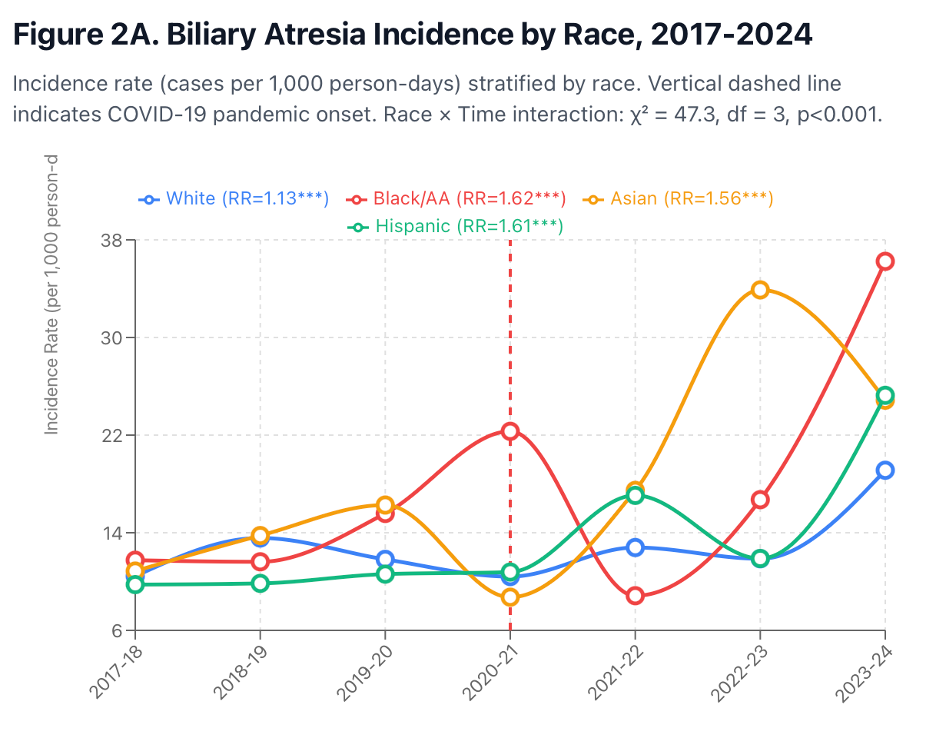
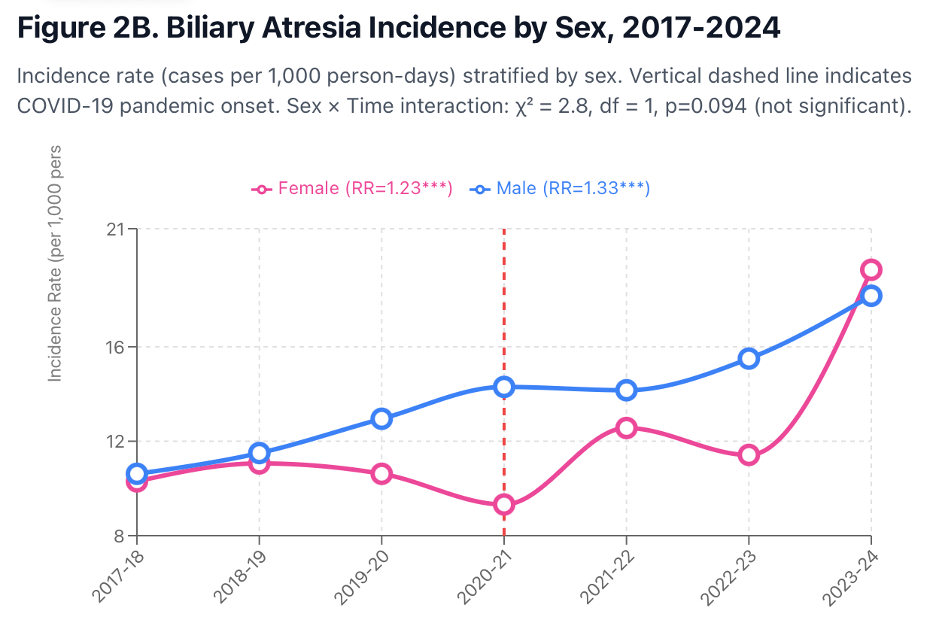
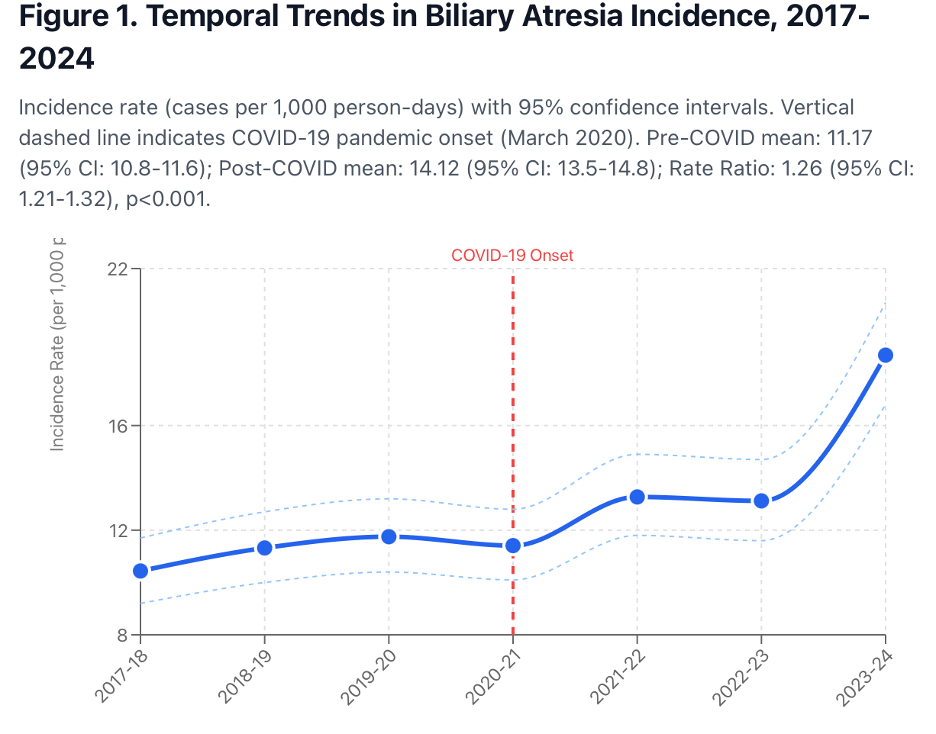
Background: Biliary atresia (BA) is a progressive fibro-obliterative cholangiopathy of infancy and the leading indication for pediatric liver transplantation. Although its etiology remains unclear, infectious and immune-mediated triggers have been proposed. Recent reports suggest changes in neonatal disease patterns following the COVID-19 pandemic, yet data on BA incidence trends remain limited Objective: To evaluate changes in the incidence and incidence rates of biliary atresia among infants aged 0-3 years before and after the COVID-19 pandemic using a large, multicenter database. Design/Methods: A retrospective cohort study was conducted using the TriNetX Research Network, encompassing 111 healthcare organizations. Infants aged 0-3 years diagnosed with BA (ICD-10-CM: Q44.2) between March 2017 and February 2024 were included. Incidence rates (cases per person-day) were calculated for the pre-pandemic period (March 2017-February 2020) and the post-pandemic period (March 2020-February 2024). Poisson regression with standard errors and chi-square tests were done for rate and proportion comparisons, respectively. Results were stratified by sex, race, and ethnicity. Bonferroni correction was applied for multiple comparisons (adjusted α=0.0083). Statistical analyses were conducted using the TriNetX platform and R Statistical Software version 4.5.1. Results: Among 3,810 infants with BA, overall incidence increased significantly from 11.17 (95% CI: 10.79-11.57) to 14.12 (95% CI: 13.52-14.75) cases per 1,000 person-days, representing a 26.4% increase ( [RR]=1.26; 95% CI: 1.21-1.32; P< 0.001). Both sexes demonstrated significant increases (female: RR=1.23, 95% CI: 1.16-1.31; male: RR=1.33, 95% CI: 1.25-1.41; P< 0.001). Profound racial differences emerged: Black/African American (RR=1.62; 95% CI: 1.48-1.77), Hispanic/Latino (RR=1.61; 95% CI: 1.48-1.76), and Asian (RR=1.56; 95% CI: 1.39-1.75) infants experienced 4-5 times greater relative increases than White infants (RR=1.13; 95% CI: 1.08-1.19), with significant race×time interaction (χ²=47.3, P< 0.001). All comparisons remained significant after Bonferroni correction.
Conclusion(s): In this large multicenter cohort, BA incidence increased significantly after the onset of the pandemic, with a 26% rise and disproportionate elevations among Black, Hispanic, and Asian infants. These findings suggest potential pandemic-related influences on early hepatobiliary and immune development and highlight racial disparities. Further studies integrating maternal-infant viral exposure, microbiome data, and social determinants are needed to clarify mechanisms and guide preventive strategies.
Biliary Atresia Incidence by Race, 2017-2024
Biliary Atresia Incidence by Sex, 2017-2024
Temporal Trends in Biliary Atresia Incidence, 2017-2024