419 - Barriers and Facilitators to Accessing Dental Care among ED Patients
Monday, April 27, 2026
8:00am - 10:00am ET
Publication Number: 4410.419
Brian O. Vazquez, Children's Hospital of Philadelphia, Philadelphia, PA, United States; Rachel Brown, Childrens Hospital of Philadelphia, Philadelphia, PA, United States; Margaret Samuels-Kalow, MassGeneral Hospital for Children, Boston, MA, United States; Dara James, MassGeneral Brigham, Boston, MA, United States; Danielle Cullen, Children's Hospital of Philadelphia, Philadelphia, PA, United States
Assistant Professor Children's Hospital of Philadelphia Philadelphia, Pennsylvania, United States
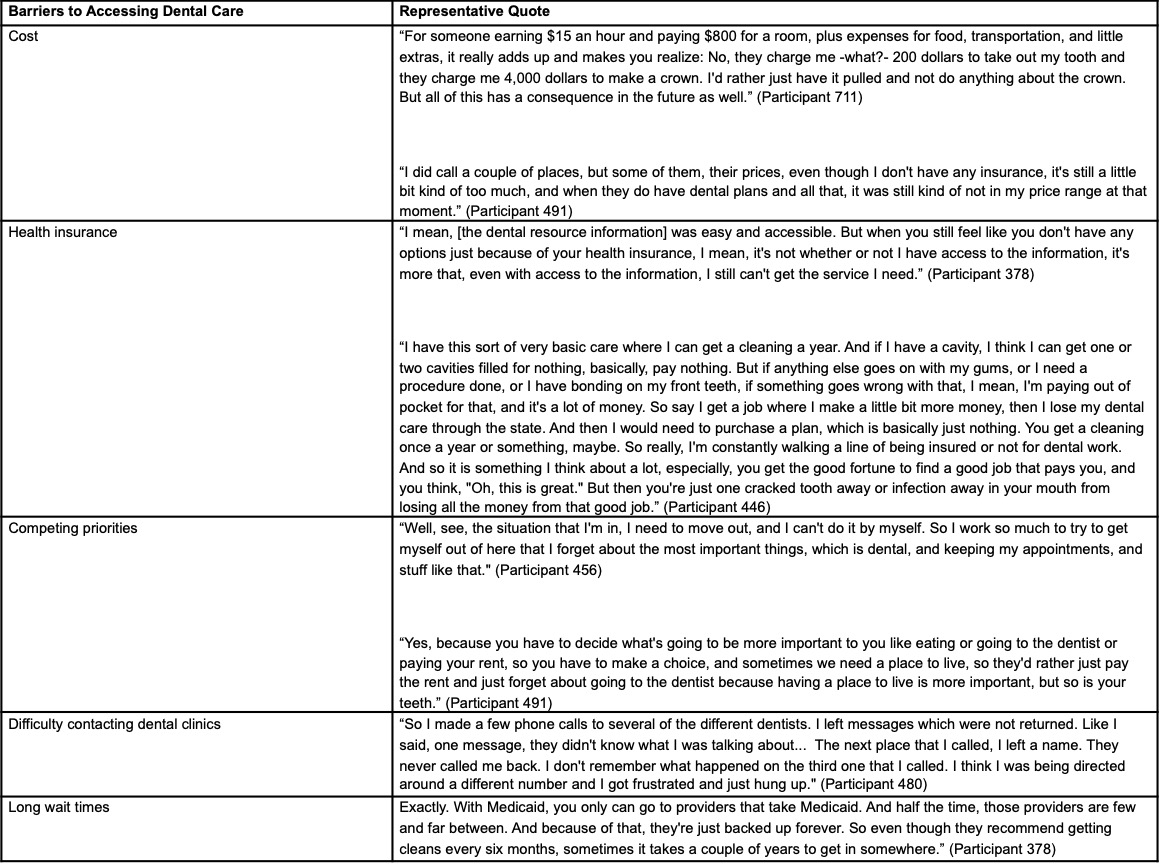
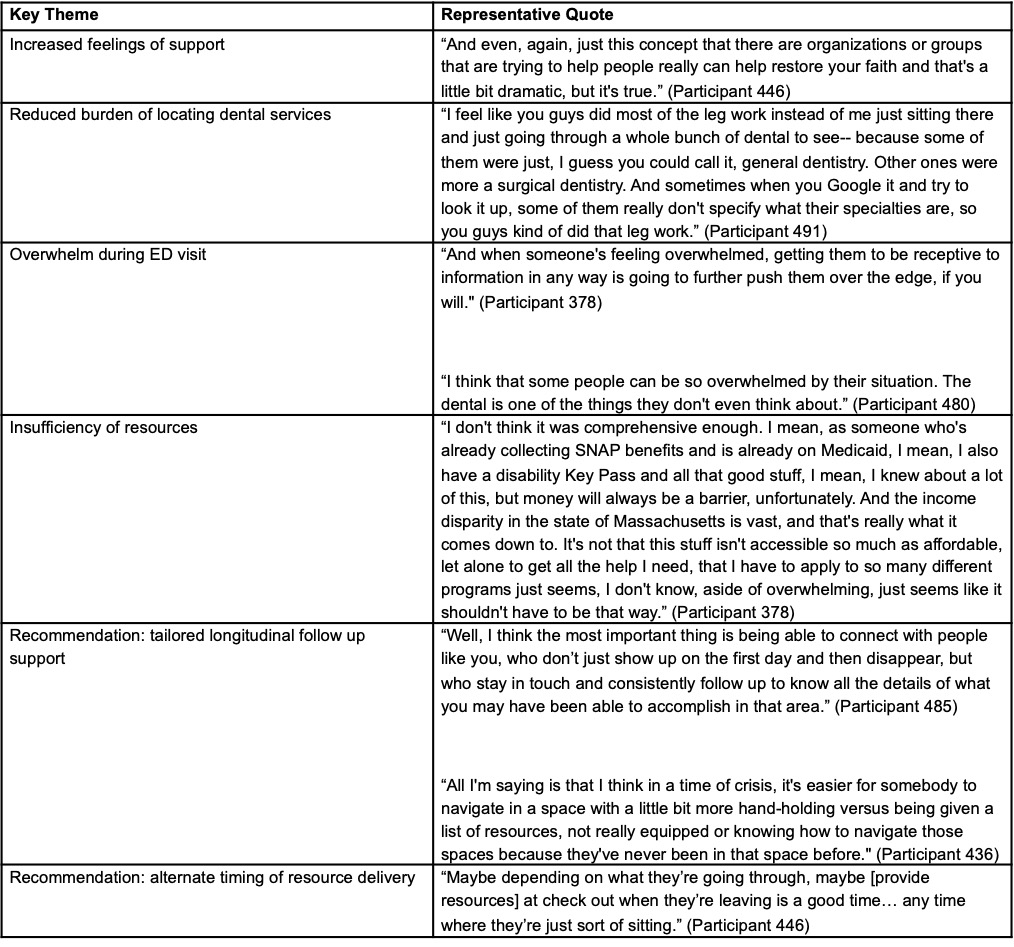
Background: There is a high burden of both unmet dental need and adverse social determinants of health (aSDOH) among emergency department (ED) patients. The ED is therefore a critical setting to address these intersecting needs, yet barriers to accessing care and strategies that target them remain underexplored. Objective: This qualitative study explored facilitators and barriers to accessing dental care among ED patients and families, and their experiences with an intervention providing geographically-proximate oral and social referrals. Design/Methods: This qualitative inquiry was embedded within the Mapping Oral health and Local Area Resources (MOLAR) study, a multisite randomized controlled trial that screens pediatric and adult ED patients for unmet oral health needs and aSDOH and provides either: 1) a general resource list, 2) a geographically-tailored resource list, or 3) a geographically-tailored list plus personalized navigation. All enrolled participants were eligible for an interview and were selected via rolling purposive sampling to ensure representation by randomization arm, language (English or Spanish), recruitment site, and reported resource use. The Integrated Behavioral Model guided interview guide and codebook development. Interviews were conducted until thematic saturation was reached. Transcripts were analyzed using thematic analysis with constant comparison. Results: We conducted semi-structured interviews in English (n=20) and Spanish (n=8). Themes emerged in 3 major areas: (1) aSDoH and health system barriers to accessing dental care, (2) participant experiences with the MOLAR study, and (3) suggestions for future intervention improvements. Many participants identified cost, insurance, and competing priorities as key barriers to accessing dental care. Participants also shared health system barriers, including difficulty contacting clinics and long wait times. Most participants described the MOLAR intervention as having a positive impact, increasing feelings of support while reducing burden locating services. However, some reported feeling overwhelmed during acute ED visits or finding resources insufficient. Recommendations to enhance care linkage included assistance navigating insurance and financial resources, more tailored and longitudinal follow-up, and delayed timing of resource delivery.
Conclusion(s): Our findings suggest policy and ED-based intervention improvements that target family-identified challenges, particularly cost and resource navigation, to overcome barriers to accessing dental care and reducing disparities in oral health outcomes.
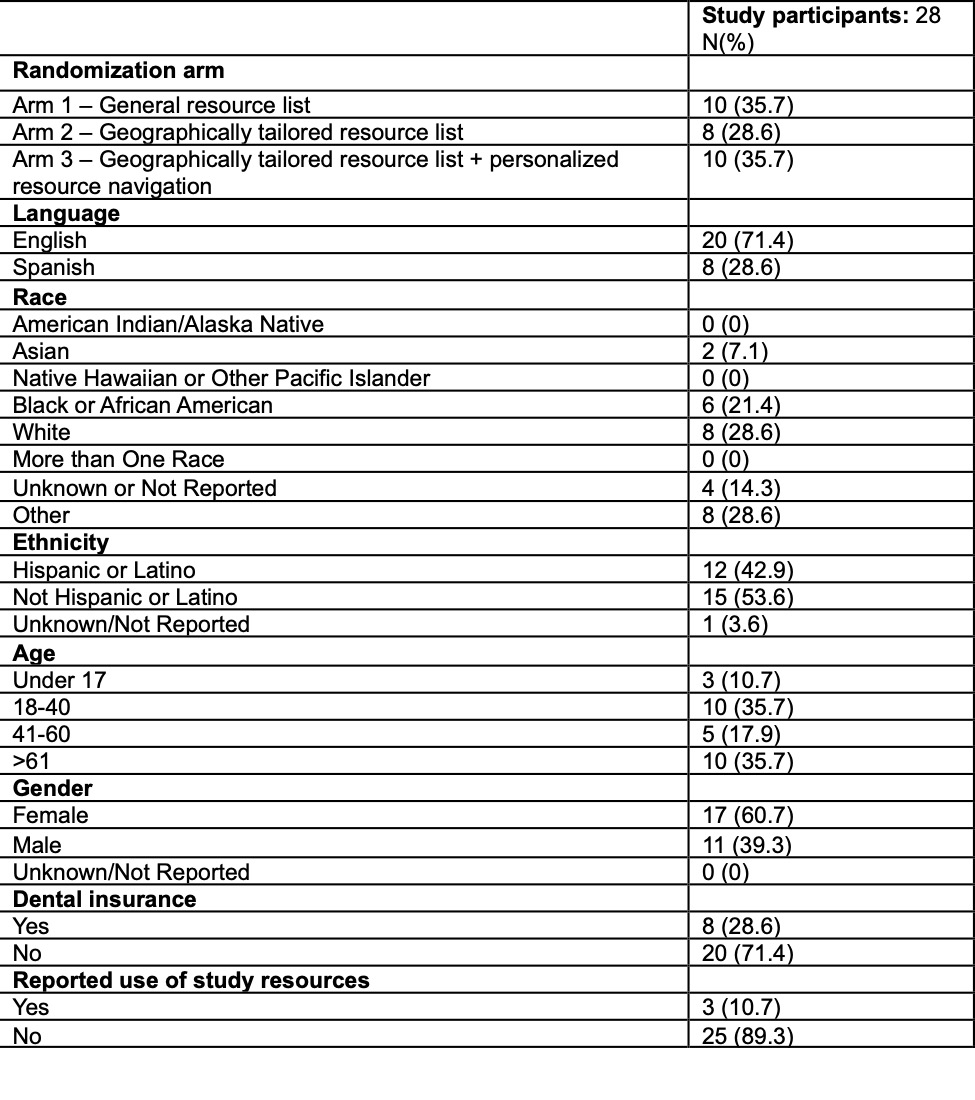
Participant demographics
Barriers to accessing dental care and representative quotes
Participant experiences with the MOLAR intervention and recommendations for improvement